How does the texture of Keta salmon generally compare to Sockeye salmon?
Answer
It tends to be firmer
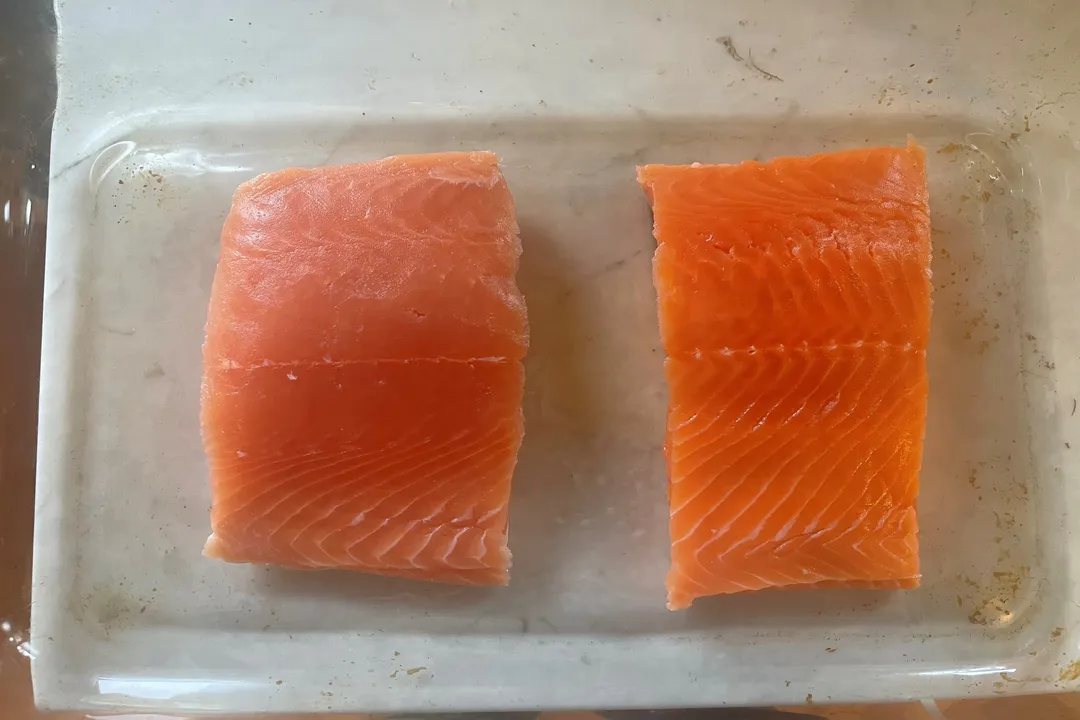
A key defining characteristic of Keta salmon is its structural integrity, which results in a texture that is noticeably firmer when compared directly to Sockeye salmon. This inherent firmness is a major culinary advantage in specific cooking applications. Because it maintains its shape well under heat, it is highly recommended for cooking methods where more delicate, higher-fat fish might disintegrate, such as preparing stir-fries. This firmer quality is directly linked to its generally lower overall fat content compared to species like Sockeye or Chinook.
Related Questions
What is the common alternative name for Keta salmon used interchangeably in the industry?How does the texture of Keta salmon generally compare to Sockeye salmon?Which preparation method is recommended for Keta due to its ability to hold structure during cooking?How is the flavor of Keta salmon frequently described relative to Sockeye or Coho?What characteristic color does Keta salmon flesh often exhibit, reflecting its flavor profile?In terms of oil content, where does Keta typically fall compared to Pink salmon?For which processing method is Keta highly sought after due to its texture integrity and mild taste?How does Keta salmon typically compare in price to Sockeye or Coho in the seafood market?What outcome often results when Keta fillet is cooked using methods optimized for fattier Coho?Which species is officially recognized as one of the five Pacific salmon alongside Keta, Chinook, and Sockeye?