Is Alaska Pollock better than salmon?
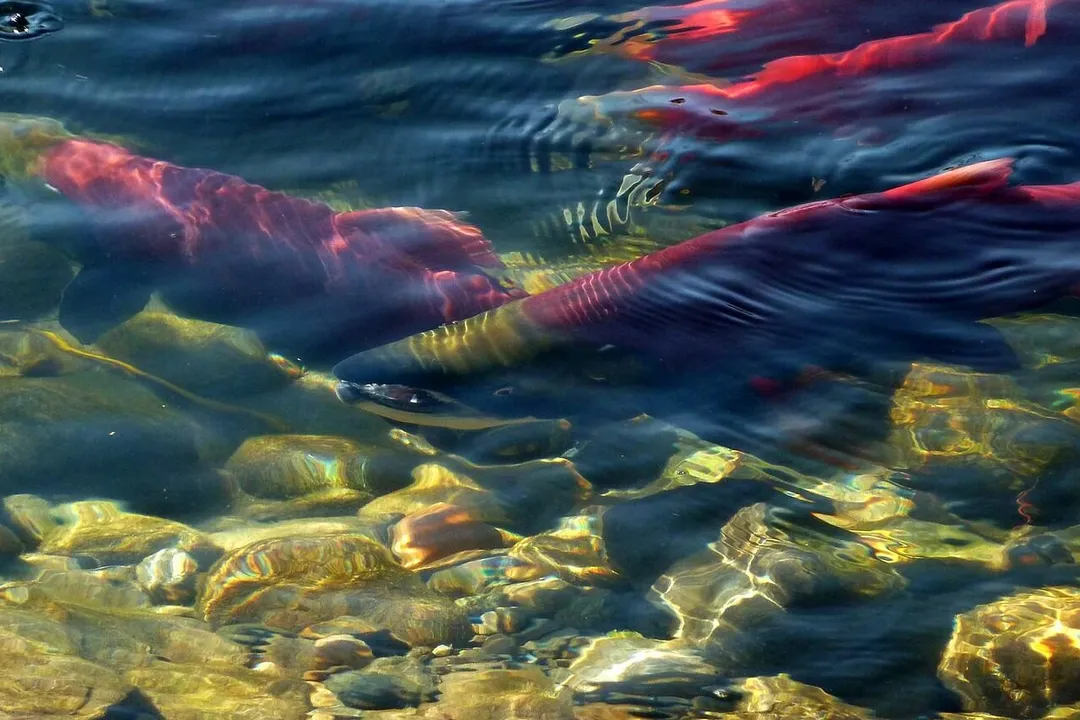
Deciding whether Alaska Pollock is "better" than salmon involves looking past the common perception that one must be the superior choice. Both species occupy important, yet distinct, niches in the seafood world, offering different nutritional profiles, flavor experiences, and price points. Salmon, with its unmistakable rosy hue, often claims the spotlight as the quintessential healthy fish, celebrated for its rich, fatty content. Alaska Pollock, conversely, presents itself as the pale, mild-mannered alternative, frequently found in processed foods but boasting its own set of impressive attributes [^2 (from first browse)].
# Appearance Contrast
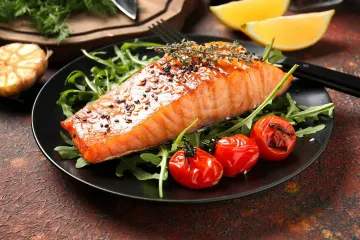
Visually, the difference is striking. Salmon flesh is typically a pink to reddish-orange color, a richness derived from astaxanthin pigments found in its diet [^2 (from first browse)]. This coloration can range from deep red in species like sockeye to a lighter pink. [3] Pollock, however, features a pale, off-white flesh that turns opaque when cooked [^2 (from first browse)]. While salmon often has silvery skin marked with black spots along its back, pollock's exterior is usually speckled with darker patterns, making them easily distinguishable raw or cooked [^2 (from first browse)].
# Nutritional Breakdown
When dissecting the nutrition labels, the fundamental difference between these two lies in their fat content. Salmon is categorized as a fatty fish, carrying significantly more total fat—about 12.4 grams per 100 grams—compared to Alaska pollock's mere 1.18 grams [^2 (from first browse)]. This fat differential directly impacts their calorie counts: salmon averages around 206 calories per 100g serving, whereas pollock contains about 111 calories [^2 (from first browse)].
This fat composition also dictates their performance regarding essential fatty acids. Salmon is among the richest sources of omega-3 fatty acids, including eicosapentaenoic acid (EPA) and docosahexaenoic acid (DHA), providing roughly 4.553 grams of polyunsaturated fats per 100g [^2 (from first browse)]. Pollock contains a much smaller amount, around 0.583 grams of polyunsaturated fats [^2 (from first browse)].
However, leaner pollock scores higher in other areas. It contains slightly more protein—about 23.5 grams versus salmon’s 22.1 grams per 100g—and its essential amino acid profile is noted as richer [^2 (from first browse)]. For those watching saturated fat, pollock is the clear winner, with only about 0.2 grams compared to salmon’s 2.4 grams [^2 (from first browse)]. Additionally, pollock tends to contain higher levels of certain minerals such as iron, phosphorus, and zinc, and notably more sodium, which is a point for hypertensive patients to note [^2 (from first browse)]. Salmon, on the other hand, contains significantly more Vitamin D, providing nearly ten times the amount of pollock in a 100-gram serving (526 IU vs. 51 IU) [^2 (from first browse)]. [3]
# Calorie Efficiency
If the goal is to maximize protein intake while minimizing calories, Alaska pollock offers a more efficient pathway. Analyzing the data shows that pollock provides nearly 21 grams of protein for every 100 calories consumed, while salmon yields only about 11 grams of protein for the same caloric intake [^2 (from first browse)]. For individuals focused strictly on weight management or increasing lean protein without adding much fat, pollock provides nearly double the protein punch per unit of energy. Conversely, if the dietary focus is on essential fatty acids for brain and cardiovascular support, the higher caloric density of salmon is simply the trade-off required to obtain those concentrated omega-3s [^2 (from first browse)]. [3]
# Health Benefits Comparison
Both fish are excellent additions to a balanced diet, supporting heart health, diabetes management, and offering cancer-protective properties [^2 (from first browse)]. Salmon’s substantial supply of EPA and DHA is widely recognized for reducing inflammation, improving arterial function, and lowering triglyceride levels, giving it a distinct edge for cardiovascular protection [^2 (from first browse)]. [3]
Pollock’s contribution to heart health is through its status as a lean white fish, which keeps saturated fat and calorie intake low, and it provides potassium for healthy heart function [^2 (from first browse)]. Furthermore, wild Alaska pollock has the advantage of low mercury content, making it a fish that many health guidelines suggest is safe for regular consumption, even for more vulnerable groups like children and pregnant women. [2][3] While frequent consumption of any fish means exposure to environmental toxicants, pollock’s lower position on the food chain often translates to lower levels of accumulated contaminants compared to larger, older predatory fish. [4]
# Texture and Cooking
Flavor and texture are where personal preference truly dictates the "better" choice. Salmon is known for its bold, distinctive flavor and firm texture, characteristics bolstered by its higher fat content [^2 (from first browse)]. This robustness makes it ideal for assertive cooking methods like grilling, roasting, and smoking [^2 (from first browse)].
Alaska pollock, by contrast, possesses a much more delicate flavor and a soft texture [^2 (from first browse)]. This mildness makes it highly adaptable, commonly found in products like imitation crab or fish sticks [^2 (from first browse)]. Since its natural flavor is not overpowering, pollock’s leaner composition allows it to absorb seasonings, marinades, and sauces exceptionally well, making it a versatile candidate for baking or poaching where the accompanying flavors are meant to lead [^2 (from first browse)].

# Culinary Adaptability
The mild nature of pollock can be viewed not as a limitation but as a culinary canvas. Salmon’s rich, oily character is difficult to mask, which is often desirable when showcasing the fish itself. However, when preparing complex international dishes or using heavy breading, pollock’s neutral profile ensures the fish complements, rather than competes with, the other ingredients [^2 (from first browse)]. This versatility means that while salmon is excellent for a simple, high-impact preparation, pollock can be successfully integrated into a wider variety of heavily seasoned recipes without the resulting flavor being dominated by the fish itself.
# Oils Beyond the Plate
The comparison doesn't stop at the dinner plate, as the oils derived from these fish are popular supplements, particularly for pets. Salmon oil is the traditional go-to, prized for its high levels of DHA, an omega-3 critical for brain and eye development, making it especially beneficial for puppies, kittens, and senior animals. [1][3]
Pollock oil offers a more cost-effective and sustainable alternative, featuring high levels of EPA, which significantly supports skin and coat health while reducing overall body inflammation—helpful for pets with arthritis or joint issues. [1][3] The limitation, however, is that pollock oil contains very little DHA. [3] This realization has led some manufacturers to create blends, combining the sustainability and EPA benefits of pollock oil with the crucial DHA found in salmon oil, providing a balanced, potent supplement that eases pressure on salmon stocks. [3] When considering fish oil supplements for dogs, the choice between pure pollock and pure salmon may come down to whether skin/coat health (Pollock/EPA) or cognitive function (Salmon/DHA) is the priority, though some owners find them equally effective for general coat maintenance. [1]

# Sourcing and Sustainability
Whether choosing salmon or pollock, sourcing matters significantly for both quality and environmental impact. Wild Alaskan salmon species, like Coho and Sockeye, are highlighted as top-tier choices, benefiting from the fact that Alaskan fisheries are often considered the gold standard for sustainability [^2 (from second browse)]. [3] Similarly, Wild Alaska Pollock is always wild-caught in the North Pacific. [3] For those concerned about mercury, both Alaskan salmon and pollock are generally noted as having lower levels compared to some other varieties. [3] When selecting salmon, opting for the wild variety over farmed is often recommended due to potentially higher omega-3 and vitamin content, though farmed is typically cheaper. [3]
Ultimately, choosing between Alaska Pollock and salmon is less about declaring an absolute winner and more about matching the fish to your immediate needs. If your priority is maximizing omega-3 intake for heart health and you prefer a richer flavor, salmon holds the advantage [^2 (from first browse)]. [3] If the goal is a leaner, lower-calorie source of high-quality protein, or if you need a more budget-friendly option for regular inclusion in your diet, Alaska pollock serves as an excellent and low-mercury staple [^2 (from first browse)][^2 (from second browse)].
Related Questions
#Citations
Pollock vs. Salmon — Health Impact and Nutrition Comparison
The Benefits of Pollock or Salmon Oil for Cats and Dogs - Mud Bay
12 Best Types of Fish to Eat - Healthline
What's a healthier fish to eat? : r/HealthyFood - Reddit
5 of the Healthiest Fish to Eat | Wild Alaskan Company
Pollock Vs Salmon Oil - Food and dietary discussion - Greytalk