Why do patterned rolls, such as the cherry blossom tamagoyaki, often require a short cooling period?
Answer
To ensure the distinct layers do not blur when sliced and plated
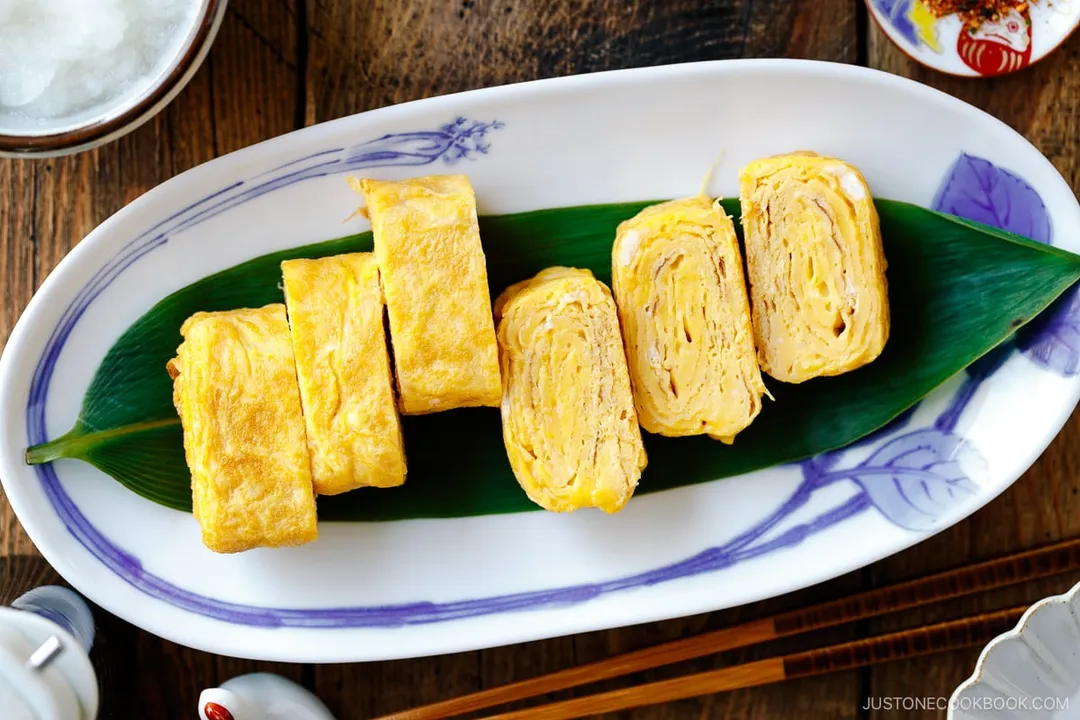
Visually intricate preparations, such as the cherry blossom tamagoyaki, rely on maintaining sharp, distinct layers to achieve their aesthetic appeal. When the omelet is piping hot, the structure is at its most fragile and soft, increasing the risk that the carefully crafted pattern will smear or blur when pressure is applied during slicing. A brief cooling period allows the structure to set just enough so that when the roll is cut into slices, the distinct visual elements remain crisp and defined, serving their role as a visual centerpiece effectively.
Related Questions
What texture characterizes dashimaki tamago when eaten immediately while hot?Why might cooks slightly increase seasoning when preparing tamagoyaki for a bento?What is the benefit of resting finished tamagoyaki on the board for ten minutes before slicing?How does temperature affect the perception of sweetness in sweet tamagoyaki when eaten cold?What is the primary reason tamagoyaki is engineered to taste good when fully cooled for a bento?What textural characteristic is highly valued in a well-made, cold tamagoyaki slice intended for a bento?When is the savory umami depth of dashimaki tamago best perceived?In what setting are sweeter versions, sometimes called atsuyaki tamago, commonly served at room temperature?Why do patterned rolls, such as the cherry blossom tamagoyaki, often require a short cooling period?How do thicker cuts of tamagoyaki compare to thinner cuts regarding temperature retention?