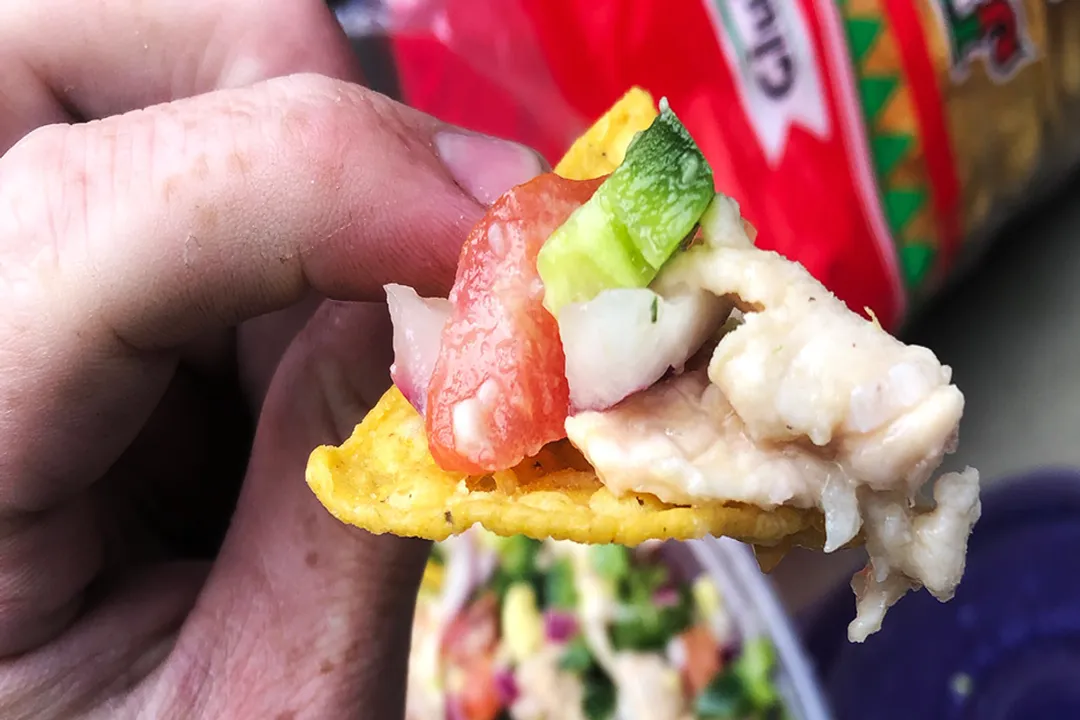
What process converts histidine into histamine in certain saltwater fish like mackerel?
Bacterial activity due to improper refrigeration
Scombroid Poisoning arises when fish that naturally possess high levels of the amino acid histidine—such as mackerel, mahi-mahi, and certain types of tuna—are subjected to inadequate temperature control immediately following harvest. When these fish are not kept sufficiently refrigerated, naturally present bacteria rapidly metabolize the histidine, converting it into histamine. This histamine buildup results in poisoning that clinically mimics a severe allergic reaction, manifesting as rashes, throbbing headaches, tingling sensations, and potentially dangerous drops in blood pressure. While this is a bacterial byproduct, it is distinct from parasitic contamination and requires adherence to an unbroken cold chain for prevention.