What ingredient primarily contributes to Salmorejo's signature density compared to the often thinner Gazpacho?
Answer
Stale bread and extra virgin olive oil
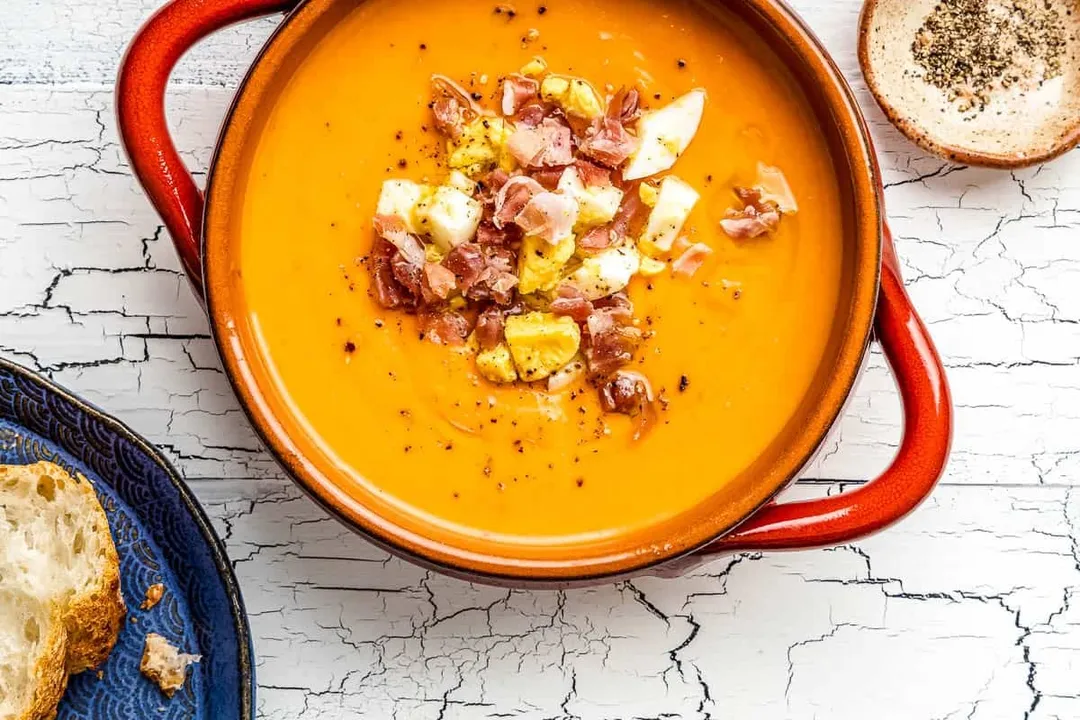
Salmorejo achieves its characteristic velvety, thick, and creamy consistency through the deliberate incorporation of specific core ingredients that distinguish it from its relative, gazpacho. Specifically, the inclusion of stale bread, which hydrates during the blending process, and a generous amount of extra virgin olive oil are crucial for building this density. The olive oil is streamed in slowly during blending to create a stable emulsion that results in a texture described as almost yogurt-like. Gazpacho, by contrast, is generally thinner and relies more heavily on a higher vegetable and water content without the significant thickening contribution of bread and excess oil.
Related Questions
What is the definitively traditional serving temperature for Salmorejo, originating from Andalusia?What ingredient primarily contributes to Salmorejo's signature density compared to the often thinner Gazpacho?Which Spanish city is often cited as the specific birthplace of Salmorejo?How does serving Salmorejo cold affect the pungency provided by the raw garlic ingredient?What physical consequence results if Salmorejo is allowed to sit in a warm environment, compromising its emulsion?What critical step is advised regarding seasoning salt and vinegar when preparing Salmorejo for chilling?What is the suggested minimum time recipes recommend resting Salmorejo in the refrigerator?Besides a first course, how is Salmorejo often presented in its home region of Andalusia?What technique is often used for the hard-boiled egg garnish to ensure it is cool before chopping?When Salmorejo mixture is adapted as a sauce over warm elements like grilled salmon, what modification is sometimes suggested regarding water content?