Which specific dramatic elements defined the American adaptation of Japanese grilling, often marketed as 'hibachi'?
Answer
Flipping shrimp tails into hats and building onion volcanoes
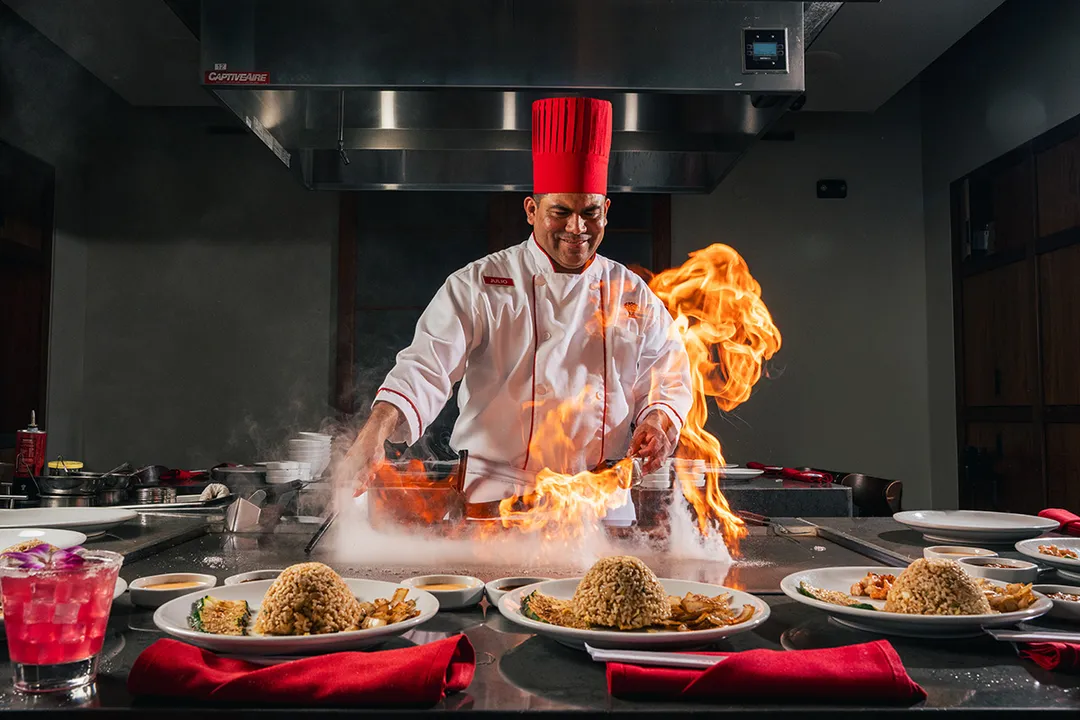
The successful adaptation of Japanese grilling concepts into an American dining format heavily relied on incorporating high-flair entertainment to create dinner theater. This involved chefs developing specific showmanship routines designed to engage the diners directly at the table. Key examples of these memorable performances include the skillful flipping of food items, such as shrimp tails, into the chefs' hats, and the construction of dramatic, flaming onion structures referred to as 'volcanoes.' This emphasis on spectacle was integral to marketing the teppanyaki style under the simpler 'hibachi' moniker.
Related Questions
What are the Japanese root words composing the term hibachi (火鉢)?What type of cooking surface is characteristic of the high-energy dining experience diners in the United States usually call hibachi?The style of dining popularized in the US, featuring acrobatic knife skills, is functionally much closer to which Japanese cooking method?What heat source provides the distinctive smoky element characteristic of authentic Japanese grilling methods like yakitori or sumibiyaki?Which specific dramatic elements defined the American adaptation of Japanese grilling, often marketed as 'hibachi'?What was the primary historical function of the traditional, portable Japanese hibachi device?How does the scale of the traditional Japanese hibachi apparatus compare to the modern American restaurant grill?What do the components 'teppan' and 'yaki' signify in the term teppanyaki?What other communal cooking style, involving fast searing on a large metal surface, often contributes to the confusion regarding the Chinese roots of 'hibachi'?The overall format of the American dining experience recognized as 'hibachi' is fundamentally characterized as what?