What heat source provides the distinctive smoky element characteristic of authentic Japanese grilling methods like yakitori or sumibiyaki?
Answer
Charcoal
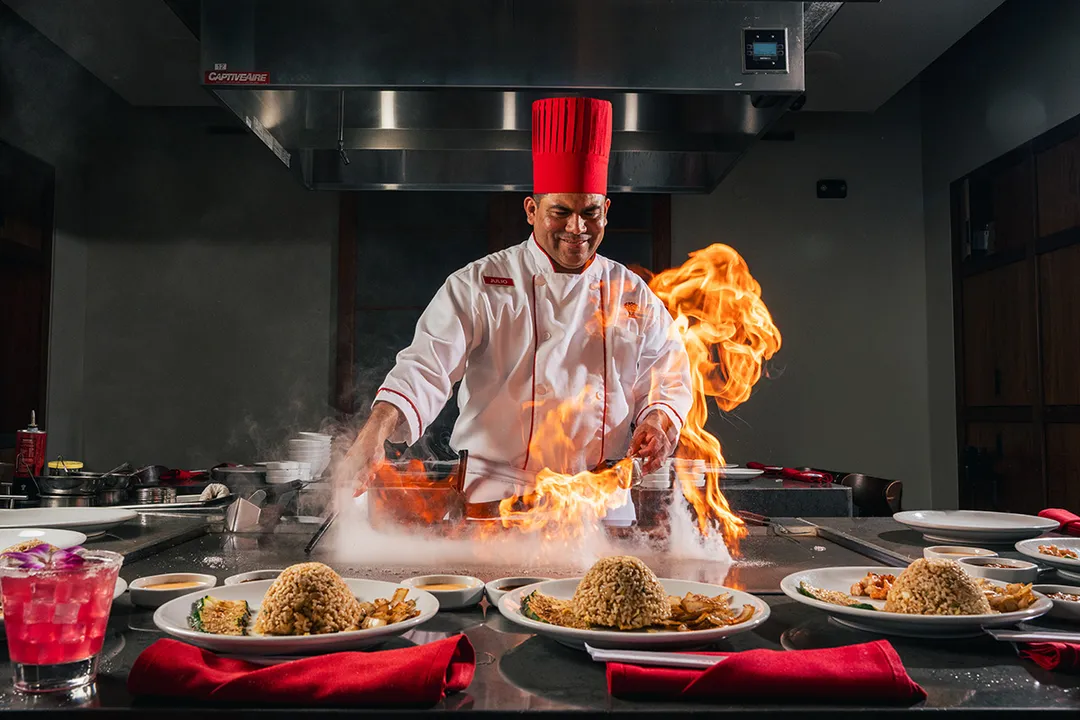
Authentic Japanese grilling traditions, exemplified by dishes like yakitori (grilled skewers) or the general concept of sumibiyaki (charcoal grilling), fundamentally rely on charcoal as the heat source. The combustion of charcoal imparts a distinctive smoky element and a specific charred flavor profile to the food cooked over it. This contrasts with the Americanized version of 'hibachi,' which uses a flat iron surface heated via conduction, resulting in searing rather than smoke infusion.
Related Questions
What are the Japanese root words composing the term hibachi (火鉢)?What type of cooking surface is characteristic of the high-energy dining experience diners in the United States usually call hibachi?The style of dining popularized in the US, featuring acrobatic knife skills, is functionally much closer to which Japanese cooking method?What heat source provides the distinctive smoky element characteristic of authentic Japanese grilling methods like yakitori or sumibiyaki?Which specific dramatic elements defined the American adaptation of Japanese grilling, often marketed as 'hibachi'?What was the primary historical function of the traditional, portable Japanese hibachi device?How does the scale of the traditional Japanese hibachi apparatus compare to the modern American restaurant grill?What do the components 'teppan' and 'yaki' signify in the term teppanyaki?What other communal cooking style, involving fast searing on a large metal surface, often contributes to the confusion regarding the Chinese roots of 'hibachi'?The overall format of the American dining experience recognized as 'hibachi' is fundamentally characterized as what?