How does the heat transfer in *teppanyaki* cooking differ from a traditional *hibachi* charcoal brazier?
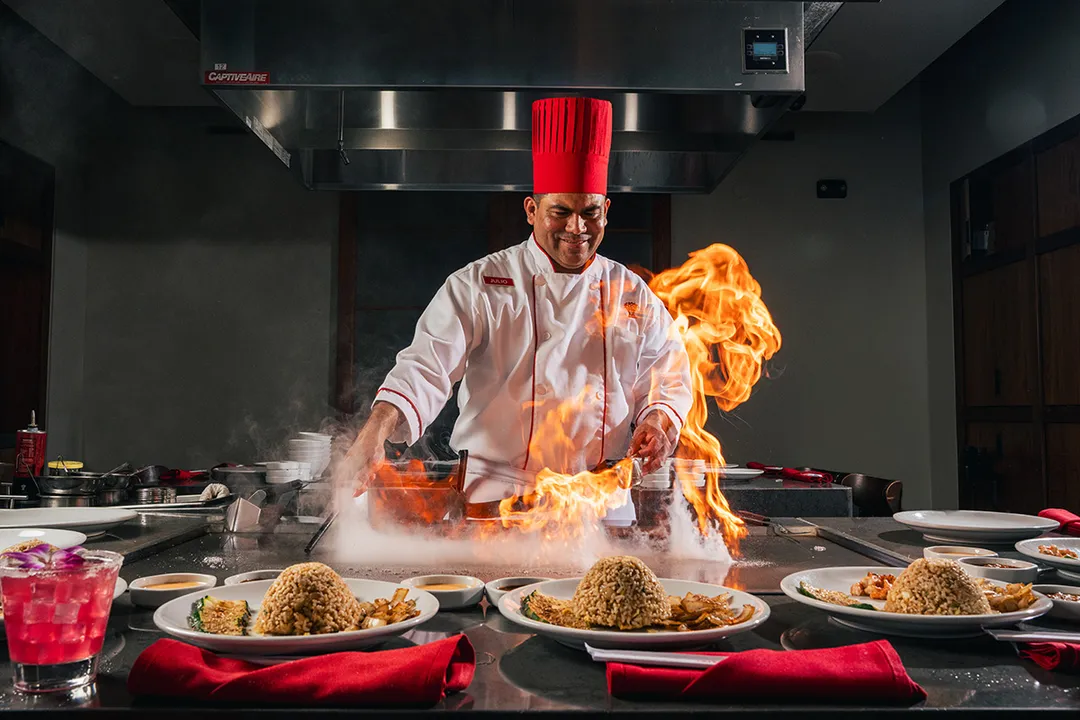
Teppanyaki cooking relies on direct conductive heat from the solid metal plate, requiring oil.
The physical difference in heat transfer mechanisms is crucial to understanding these two styles. Authentic charcoal *hibachi*, if adapted for cooking, utilizes radiant heat emitted by the burning charcoal. This process imparts a distinct char and smokiness to the food cooked over the heat source. In sharp contrast, *teppanyaki*, which uses the large flat iron griddle (*teppan*), cooks food via direct conductive heat transferred from the solid, hot metal surface. Because conductive heat applied directly to metal can cause sticking, this method necessitates the use of a layer of oil or fat to facilitate cooking and achieve the desired sear on the ingredients.