Is hibachi considered Chinese or Japanese?
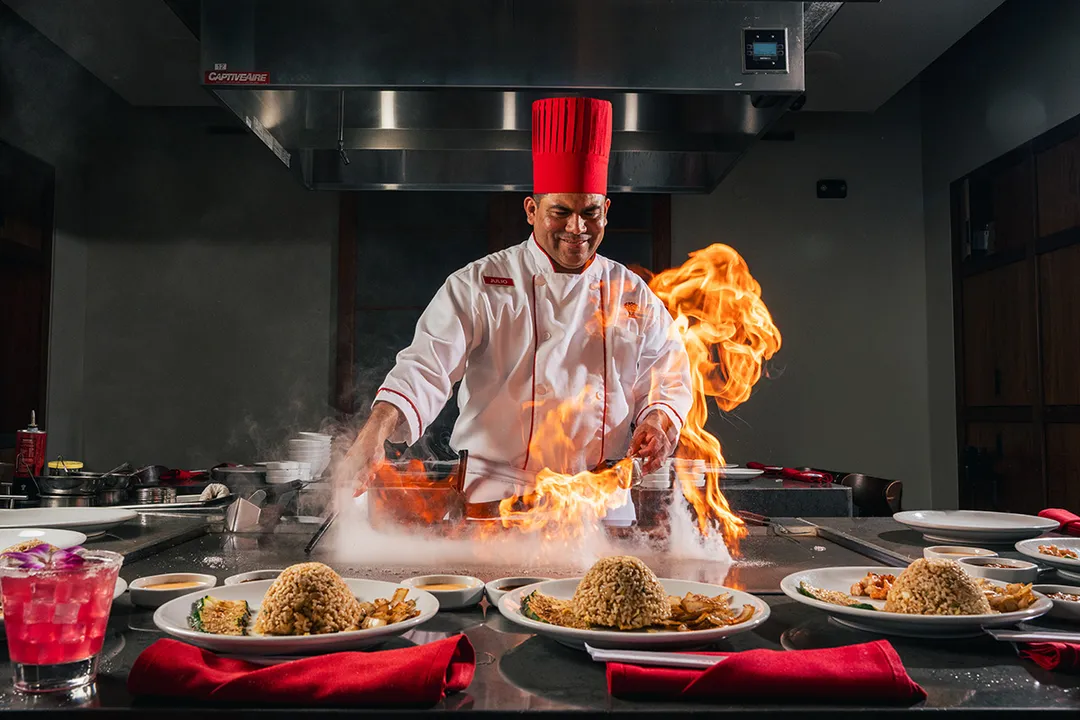
The very name hibachi carries significant baggage, often leading diners down a confusing path when trying to pinpoint its true culinary geography. When people in the United States mention going out for hibachi, they are almost always referring to a specific, high-energy dining experience involving chefs cooking meat, seafood, and vegetables on a large, flat iron surface right at the table. [9] However, to categorize this American phenomenon as strictly "Chinese" or strictly "Japanese" misses a crucial distinction about the evolution of the term itself. [2][5] The reality is that what the West calls hibachi is largely an Americanized interpretation rooted in a Japanese concept, with little to no direct link to Chinese cooking traditions.
# Name Origin
In the Japanese language, the word hibachi (火鉢) is a compound of hi (fire) and bachi (basin or bowl). [6] This literal translation reveals its original purpose: it is a traditional, portable charcoal brazier or fire pit, essentially a small heating vessel. [2][6] Historically, the hibachi was designed primarily for warmth or perhaps the very gentle cooking of small items, much like a personal space heater with a grate on top. [2][6] It is not inherently associated with the elaborate, performative table-side cooking spectacles that now bear its name in the West. [5]
# Traditional Grill

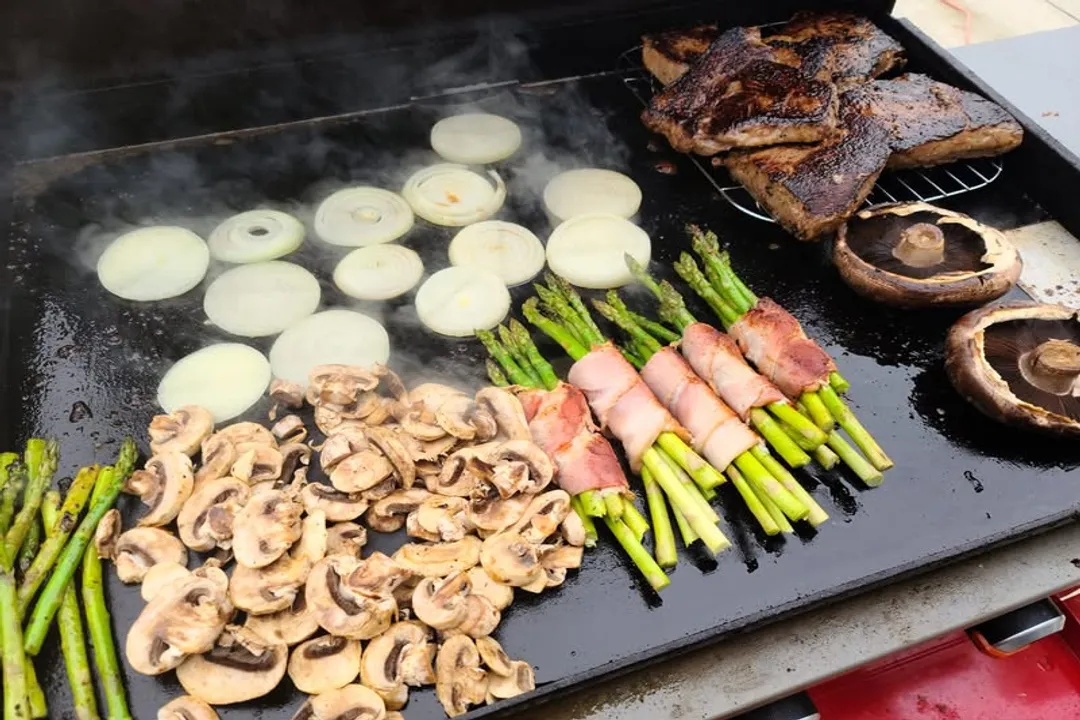
The authentic Japanese hibachi stands in stark contrast to the restaurant setup. It utilizes charcoal as its heat source, providing a distinctive smoky element to whatever is cooked upon it. [2][6] When thinking of true Japanese grilling, one might picture yakitori or sumibiyaki, which rely on this charcoal method. [6] The scale is also vastly different; the traditional apparatus is small, intended for household use or small, intimate grilling sessions, not for preparing a full meal for a table of eight or more people in a commercial setting. [2]
The difference in scale highlights the cultural shift. If we map the difference in size and function, a traditional hibachi might equate to a small indoor fireplace used for ambiance and modest heating, while the modern American restaurant grill is closer in function to a commercial griddle. This transition from a small personal device to a large communal stage marks the true origin shift, rather than merely a change in cooking method [Analysis based on comparing descriptions in Source 2, 6, and 9].
# Teppanyaki Link

The style of dining popularized by chains like Benihana in the United States is much closer to teppanyaki than to the traditional hibachi. [9] Teppanyaki translates to grilling (yaki) on an iron plate (teppan). [9] This method involves cooking food directly on a solid, flat iron surface, which achieves high, even heat transfer through conduction. [9]
When the concept of Japanese grilling was brought to America, particularly following World War II, it was adapted to appeal to American tastes and expectations for dinner theater. [3][5] Chefs began incorporating high-flair, acrobatic knife skills, flipping shrimp tails into their hats, and building onion "volcanoes" that shot flames upward. [3][5] This emphasis on performance and spectacle defined the new genre, which was marketed under the simpler, catchier name hibachi. [5] Therefore, the American "hibachi" experience is fundamentally teppanyaki cooking wrapped in a unique layer of American showmanship. [9]
# American Style
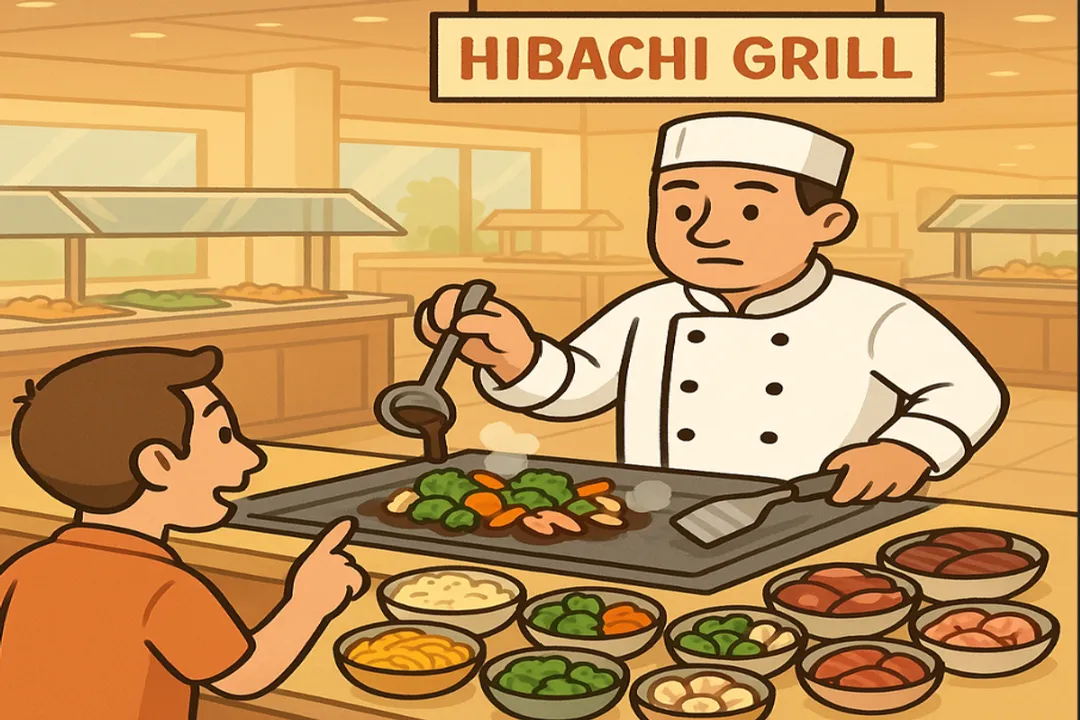
The adoption of the term hibachi for the teppanyaki style solidified its place as an American favorite. [5] It offered a novel dining experience that combined spectacle with familiar flavors, blending Japanese techniques with American preferences for larger portions and dramatic presentation. [3] While the techniques borrow from Japanese cuisine—the use of soy sauce, mirin, and fresh ingredients—the overall format is a distinct American innovation. [5]
If you visit a true Japanese establishment seeking a hibachi experience today, you are likely to find a small charcoal brazier or perhaps be directed to a sumibiyaki (charcoal grill) section, which offers a purer taste of Japanese grilling culture. [2][6] If you are seeking that smoky, slightly charred flavor profile achieved via charcoal conduction, the flat-top teppan used in American "hibachi" restaurants cooks via direct contact, yielding a different crust and taste that favors searing over smoke infusion [Tip based on contrasting the descriptions of charcoal in Source 2/6 with the flat iron description in Source 9].

# Chinese Confusion
The question of whether hibachi has Chinese roots often arises from general confusion regarding East Asian communal cooking styles. [8] Both Chinese and Japanese cuisines feature various forms of grilling and tabletop cooking. For instance, some may confuse the American hibachi with Mongolian BBQ, which also involves cooking ingredients quickly on a large, round metal surface. [8]
However, the historical and etymological evidence firmly roots hibachi in Japan. [6] There is no indication in the primary sources that the American hibachi phenomenon is a direct adaptation of a specific Chinese cooking method; rather, it is a misapplication of a Japanese term to a Japanese-inspired American teppanyaki style. [9] The conflation likely happens because both styles share the broad characteristics of communal cooking and fast, high-heat searing of meat and vegetables, which are common across many Asian culinary spheres. [8]
In summary, the food served at the fiery tables of American "hibachi" restaurants is technically teppanyaki, a Japanese cooking method dramatically amplified for American entertainment. [9][5] The name hibachi itself refers to an entirely different, traditional Japanese heating vessel. [2][6] While the roots are Japanese, the experience most people recognize is a unique, flavorful product of cultural fusion that took shape on American soil. [3]
Related Questions
#Citations
Is Hibachi authentic Japanese or an Americanized thing? - Quora
Is Hibachi As We Know It Authentically Japanese? - Bokksu
Where does American "hibachi" culture come from? : r/AskHistorians
Chinese Hibachi vs Japanese Hibachi (Teppanyaki)
How Hibachi Became an American Favorite
What Is Hibachi? A Guide to Japanese Grills and BBQ Culture
What is the difference between Stir-fry & Hibachi? Please be kind.
What is the difference between "Mongolian Grill" and "Hibachi"?
Hibachi vs Teppanyaki: What's the Difference? - Benihana