What is considered dairy?

When discussing nutrition, dietary choices, or allergies, the term "dairy" comes up frequently, but its precise meaning can sometimes be muddied by marketing or confusion with similar food groups. Fundamentally, dairy refers to foods produced from the milk of mammals. [7] This category primarily centers on the milk derived from animals like cows, goats, sheep, and buffalo. [7] When we talk about dairy, we are talking about products whose primary ingredient or heritage traces directly back to that mammary secretion.
# Milk Origin
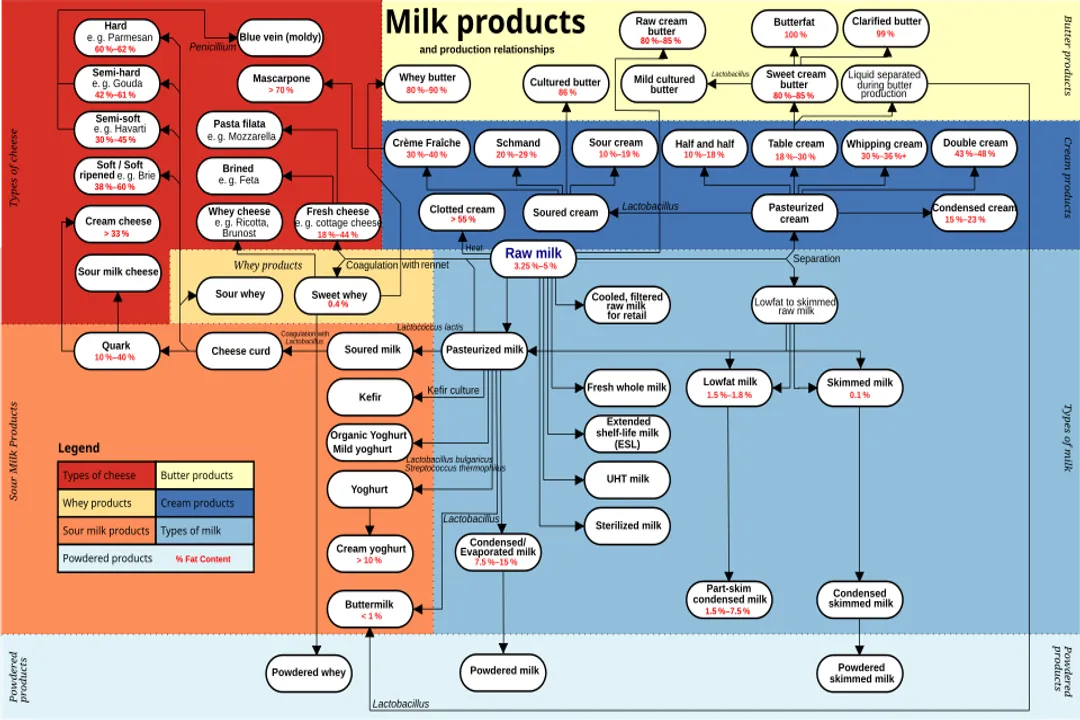
The origin story of dairy is tied directly to the lactation process of mammals. [7] While the world uses milk from various animals, cow's milk forms the basis for the vast majority of commercial dairy products consumed in many Western countries. [7] However, products made from goat's milk or sheep's milk are also definitively dairy, even if they are less common in standard supermarkets. [7] Understanding this mammalian link is the first step in categorizing what belongs and what doesn't. For instance, the primary concern regarding milk allergies focuses specifically on the proteins found in mammalian milk. [4]
# Common Items

The family of dairy foods is quite broad, extending well beyond the carton of milk in your refrigerator. The most basic forms include fluid milk itself, often categorized by its fat content (whole, reduced-fat, skim). [5] Beyond fluid milk, fermented products are staples; yogurt, for example, is a very common dairy item made by bacterial fermentation of milk. [7]
Cheese represents another massive segment of the dairy world. There are countless varieties, all originating from curdled milk that has then been aged, pressed, or otherwise processed. [7] Other recognizable dairy ingredients include:
- Butter: Made by churning milk or cream to separate the butterfat from the buttermilk. [7]
- Cream: The high-fat layer skimmed from the top of milk. [7]
- Ice Cream: Traditionally made by freezing a mix of milk, cream, sweeteners, and flavorings. [3]
It is worth noting that governmental dietary guidelines, such as those provided by the United States Department of Agriculture (USDA) MyPlate recommendations, often include fortified soy beverages within the "Dairy Group" for nutritional equivalence, specifically due to their high calcium and Vitamin D content, though soy is not biologically dairy. [1] This grouping serves a public health purpose but can sometimes blur the strict biological definition. [1]

# Nutrients Provided

The reason dairy products feature so prominently in dietary recommendations is due to their natural nutritional profile. Dairy is well-regarded for providing high-quality protein and is an excellent source of calcium, which is essential for bone health. [5] Many milks are also fortified with Vitamin D to aid in calcium absorption. [5] Depending on the fat content selected, dairy can also contribute fats and other essential vitamins. [5] For individuals seeking to meet their daily requirements for these nutrients, dairy often serves as a highly bioavailable source. [5]
# Egg Confusion

One of the most frequent mix-ups in the food world involves eggs. Despite often being shelved next to milk and cheese in grocery stores, eggs are not considered dairy products. [8] This distinction is crucial for people managing allergies or following specific diets. Dairy products are derived from milk, whereas eggs come from poultry. [8] They belong to entirely separate biological food groups. [8] If you are avoiding all animal products except for eggs (an ovo-vegetarian diet), you are avoiding dairy; conversely, if you are vegan but eat eggs, you are still avoiding dairy. [8] This placement in stores is purely logistical rather than biological. [8]

# Milk Alternatives
The rise of plant-based eating has brought many non-dairy beverages into the mainstream, which further complicates the definition of "dairy." Products like almond milk, rice milk, coconut milk, and oat milk are explicitly not derived from animal milk and therefore do not fall under the biological definition of dairy. [6]
While these alternatives are excellent choices for those avoiding lactose or animal products, it's important to recognize the nutritional trade-offs. While a standard glass of dairy milk naturally contains protein and calcium, plant-based options must often be fortified to match these levels. [6] For example, unfortified almond milk, while a beverage, would not be nutritionally equivalent to dairy milk in terms of calcium or protein content unless processing specifically added those nutrients in. [6] When choosing substitutes, checking the nutrition label for added calcium and Vitamin D becomes a key step to maintain similar dietary intake associated with the Dairy Group. [1][6]
# Ingredient Check
Beyond the obvious items like a block of cheddar or a gallon of milk, dairy often appears as an ingredient in processed foods, sometimes subtly. [3] This is where vigilance is necessary, especially for those with a true milk allergy, where even trace amounts can cause a reaction. [4]
You might find milk derivatives listed as whey, casein, lactose, or even clarified butter (ghee) in seemingly dairy-free items. [3] I've noticed that in many baked goods, such as bread crusts or tortilla chips, milk solids are sometimes included not just for flavor but also as dough conditioners or browning agents. [3] For example, while a plain potato chip is just potato, oil, and salt, an "enhanced flavor" chip might use whey powder to boost the savory notes, meaning it contains dairy components even if it isn't overtly a cheese or cream product. [3] For an individual with a severe allergy, recognizing these hidden components is paramount for safety, making the ingredient list a more authoritative guide than the product name itself. [4]
To offer a clearer picture of the nutritional landscape we are discussing, here is a quick look at how calcium content might compare across common choices (note that values can vary widely based on brand, fortification, and processing method):
| Product Type | Typical Serving Size | Approximate Calcium (mg) | Dairy Status |
|---|---|---|---|
| Fluid Cow's Milk (2%) | 1 cup (8 oz) | 300 | Dairy |
| Plain Yogurt | 6 oz container | 250–300 | Dairy |
| Cheddar Cheese | 1.5 oz serving | 300 | Dairy |
| Fortified Soy Beverage | 1 cup (8 oz) | 300 (if fortified) | Non-Dairy Alternative |
| Unfortified Almond Milk | 1 cup (8 oz) | ~40 | Non-Dairy Alternative |
When looking at this comparison, the value proposition of fortified alternatives becomes clear: they mimic the mineral delivery system of traditional dairy. [1][6] However, it is a deliberate act of fortification, not a natural state of the almond or soy base. [6]

# Dietary Grouping
When official guidelines organize food into groups, like the USDA's structure, the intent is usually to ensure balanced macronutrient and micronutrient intake across a population. [1] In this context, the Dairy Group typically encompasses milk and many milk-derived products. [9] The USDA explicitly recognizes products like cheese, yogurt, and cottage cheese as members of this group. [9] Furthermore, as mentioned before, certain calcium-fortified soy beverages are substitutes within this grouping to ensure those avoiding traditional milk can still hit their calcium targets. [1]
However, one must always distinguish between the dietary group and the biological definition. While cream cheese might fit neatly into the dairy food group for dietary planning, its higher fat content compared to low-fat milk or yogurt means that choices within the category still require attention to saturated fat intake. [5] The definition remains consistent—mammalian milk origin—but the nutritional implications of the final product vary significantly. [5][7] For anyone navigating dietary restrictions, whether for allergies, lactose intolerance, or ethical choices, holding onto that core definition—is it made from animal milk?—is the most straightforward path to correct categorization. [4][7]
Related Questions
#Citations
MyPlate.gov | Dairy Group – One of the Five Food Groups
What Is Considered Dairy & What Are the Dairy Alternatives?
13 Foods That You Didn't Know Contain Dairy
Milk - FoodAllergy.org
Dairy and alternatives in your diet - NHS
Dairy milk, soy milk, almond milk — Which is the healthiest choice ...
Dairy product - Wikipedia
Are Eggs Dairy? - EatingWell
[PDF] What foods are included in the Dairy Group?