How does the scale of the traditional Japanese hibachi apparatus compare to the modern American restaurant grill?
Answer
The traditional apparatus is small, intended for household use, unlike the large commercial setting
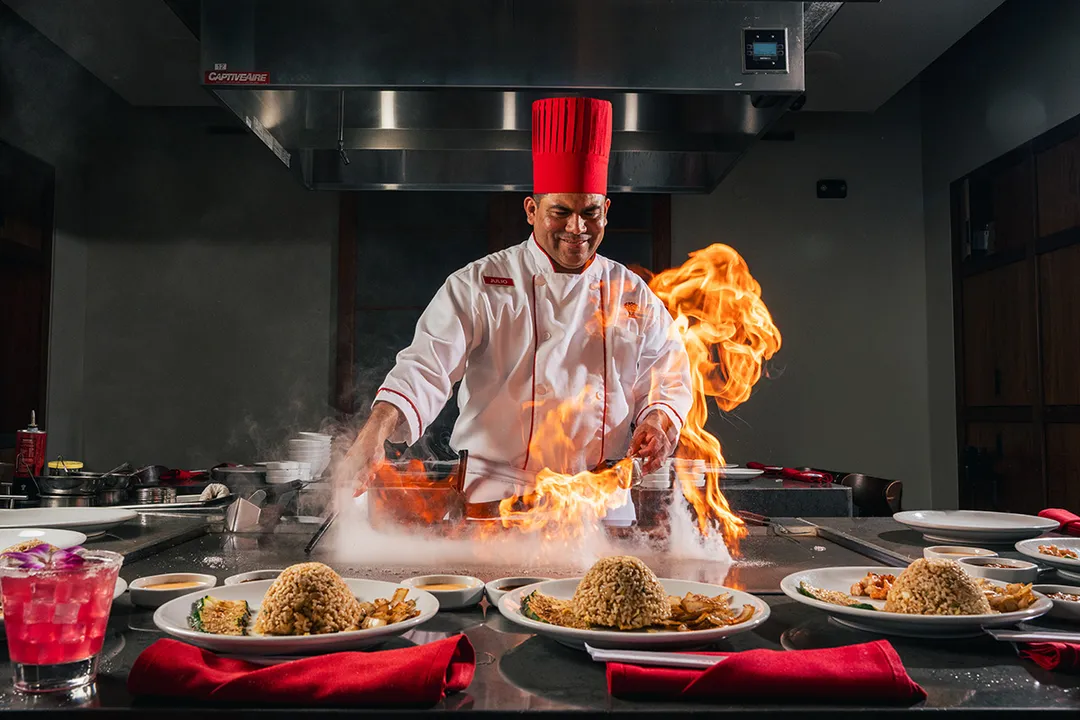
A significant distinction between the original item and its American namesake lies in scale and intended usage. The authentic Japanese hibachi is inherently small, designed for household settings or intimate, small-scale grilling sessions. In sharp contrast, the modern American interpretation requires a massive apparatus—a large, communal stage—necessary for preparing full meals for tables of eight or more people within a commercial restaurant environment. This difference in size reflects a fundamental shift from a modest personal heating device to a large communal cooking station.
Related Questions
What are the Japanese root words composing the term hibachi (火鉢)?What type of cooking surface is characteristic of the high-energy dining experience diners in the United States usually call hibachi?The style of dining popularized in the US, featuring acrobatic knife skills, is functionally much closer to which Japanese cooking method?What heat source provides the distinctive smoky element characteristic of authentic Japanese grilling methods like yakitori or sumibiyaki?Which specific dramatic elements defined the American adaptation of Japanese grilling, often marketed as 'hibachi'?What was the primary historical function of the traditional, portable Japanese hibachi device?How does the scale of the traditional Japanese hibachi apparatus compare to the modern American restaurant grill?What do the components 'teppan' and 'yaki' signify in the term teppanyaki?What other communal cooking style, involving fast searing on a large metal surface, often contributes to the confusion regarding the Chinese roots of 'hibachi'?The overall format of the American dining experience recognized as 'hibachi' is fundamentally characterized as what?