The overall format of the American dining experience recognized as 'hibachi' is fundamentally characterized as what?
Answer
A distinct American innovation blending Japanese techniques with showmanship
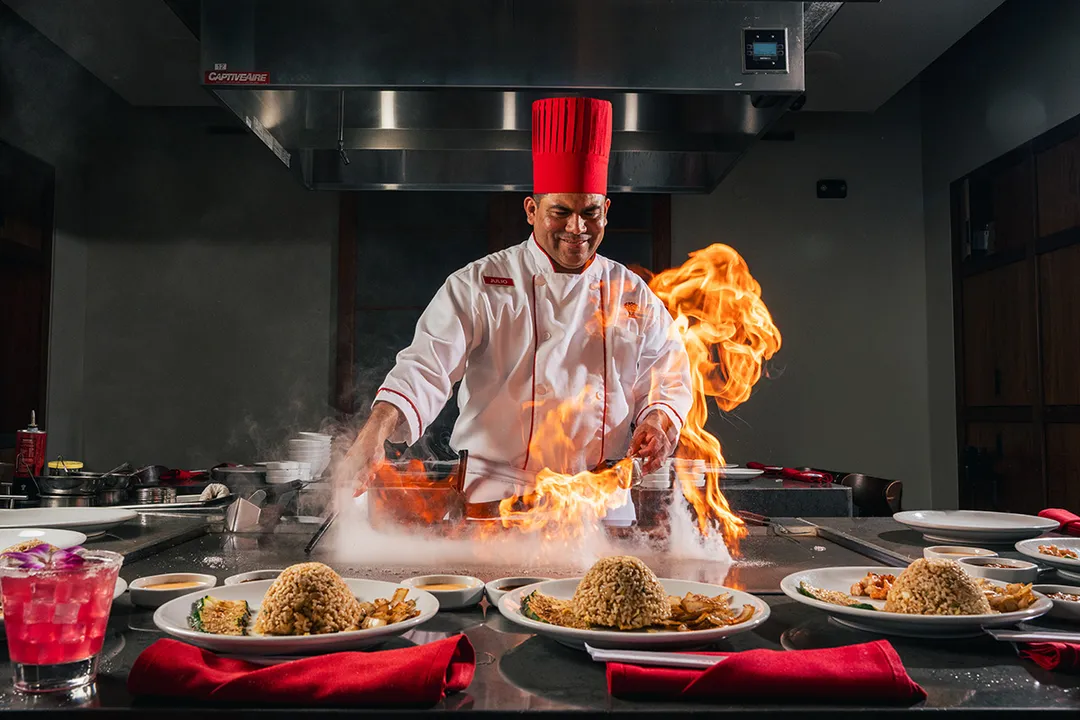
While the American 'hibachi' experience borrows foundational techniques and ingredients from Japanese cuisine—such as the use of mirin, soy sauce, and fresh ingredients—the overall format is not a direct cultural import but rather a unique product of cultural fusion that solidified primarily on American soil. It represents a distinct American innovation that dramatically amplified the foundational Japanese teppanyaki style by layering on elements of dinner theater, performance, and a preference for larger portions, making the resulting experience fundamentally different from its Japanese counterparts.
Related Questions
What are the Japanese root words composing the term hibachi (火鉢)?What type of cooking surface is characteristic of the high-energy dining experience diners in the United States usually call hibachi?The style of dining popularized in the US, featuring acrobatic knife skills, is functionally much closer to which Japanese cooking method?What heat source provides the distinctive smoky element characteristic of authentic Japanese grilling methods like yakitori or sumibiyaki?Which specific dramatic elements defined the American adaptation of Japanese grilling, often marketed as 'hibachi'?What was the primary historical function of the traditional, portable Japanese hibachi device?How does the scale of the traditional Japanese hibachi apparatus compare to the modern American restaurant grill?What do the components 'teppan' and 'yaki' signify in the term teppanyaki?What other communal cooking style, involving fast searing on a large metal surface, often contributes to the confusion regarding the Chinese roots of 'hibachi'?The overall format of the American dining experience recognized as 'hibachi' is fundamentally characterized as what?