What two chemical compounds increase significantly in leaves due to pre-harvest shading, enhancing umami and color?
Answer
L-theanine and chlorophyll
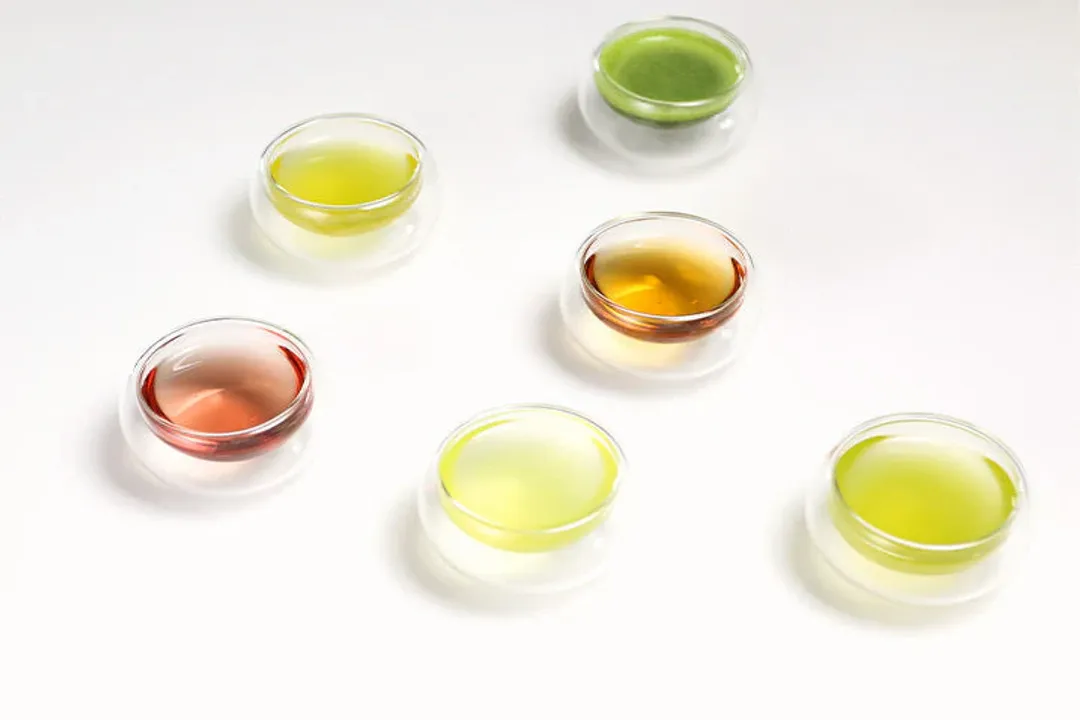
The process of shading tea plants directly manipulates the leaf chemistry to achieve prized flavor characteristics. When photosynthesis is slowed by blocking sunlight, the plant conserves energy by retaining and increasing levels of specific amino acids, most notably L-theanine. L-theanine is directly responsible for the savory, rich umami flavor that tea enthusiasts seek. Simultaneously, the production of chlorophyll is boosted, which gives the resulting tea its characteristic deep green color, both in the dried leaf and the final infusion, distinguishing it clearly from sun-grown varieties.
Related Questions
Which tea frequently stands as the highest commercially available grade of steamed green tea?What cultivation technique signals a tea's ascension to the highest echelons of Japanese tea production?What two chemical compounds increase significantly in leaves due to pre-harvest shading, enhancing umami and color?What key physical markers define a batch labeled as 'Superior Grade Gyokuro'?How does the standard growing condition for Sencha contrast with that required for Gyokuro production?What term describes the specialized processing method of Kabusecha, positioning it between Sencha and Gyokuro?What factor often becomes a more significant determinant of peak L-theanine concentration than the tea type name alone?What concept, beyond standardized grades, is often considered the true measure of a tea's ultimate grade by connoisseurs?Which tea variety is explicitly noted as an extremely high quality product requiring intensive shading, primarily as the precursor leaf for Matcha?What might cause a consumer seeking peak expression to choose a high-quality Fukamushi Sencha over an entry-level Gyokuro?