Which feature is explicitly cited as a hallmark of the American adaptation regarding rice portions?
Answer
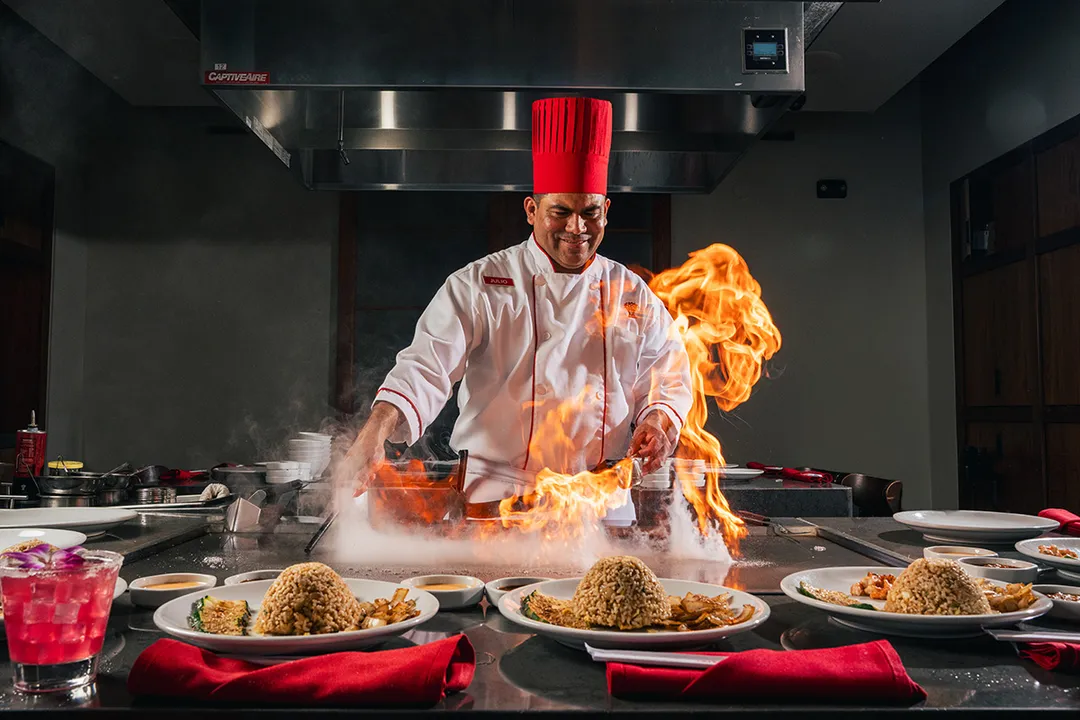
The sheer volume of rice, often fried with soy sauce and egg.
The contrast in portion philosophy between American steakhouse culture and traditional Japanese meals is evident in the rice preparation. The American 'hibachi' experience features heaping servings of fried rice as a main accompaniment, which is heavily flavored with soy sauce and cooked with egg directly on the large griddle. This emphasis on large volume and rich flavor stands in direct opposition to the traditional Japanese approach, where meals emphasize smaller, varied plates where the overall balance of textures and flavors across the entire meal takes precedence over the sheer quantity of any single component.
Related Questions
What is the original Japanese meaning of the term *hibachi*?What culinary term describes cooking directly on a thick, flat iron griddle like in American 'hibachi' restaurants?How does the heat transfer in *teppanyaki* cooking differ from a traditional *hibachi* charcoal brazier?Which restaurateur is credited with popularizing the *teppanyaki* performance style in the US, marketing it as 'hibachi'?What characterizes the preparation of food at an American 'hibachi' steakhouse compared to authentic Japanese *teppanyaki*?What element of the American 'hibachi' experience primarily appealed to US diners in the 1960s?If a diner seeks a genuine charcoal grilling experience, what traditional Japanese styles should they look for?How can a diner requesting minimal oil subtly shift their American 'hibachi' meal closer to traditional restraint?What historical context explains why 'hibachi' became the marketing term for *teppanyaki* style in the US?Which feature is explicitly cited as a hallmark of the American adaptation regarding rice portions?