What historical context explains why 'hibachi' became the marketing term for *teppanyaki* style in the US?
Answer
The term 'hibachi' was adopted because it was simpler and potentially more exotic-sounding to the American public.
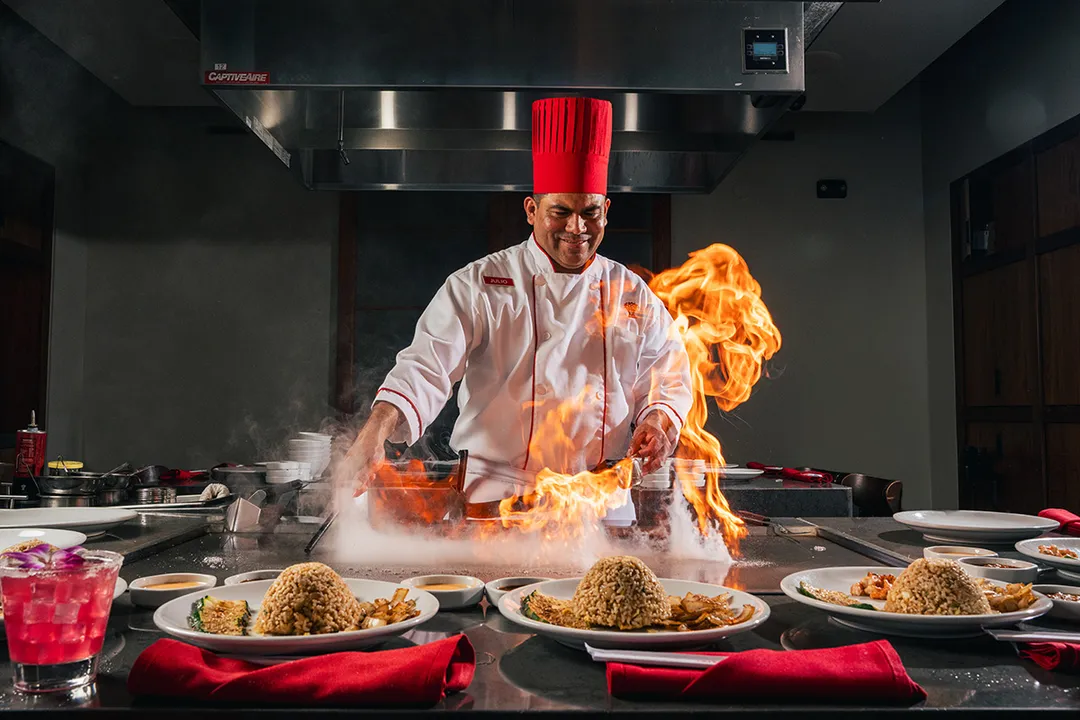
The adoption of 'hibachi' for the *teppanyaki* style cooking apparatus represents a clear case of cultural marketing and linguistic adaptation. The term *hibachi* itself, meaning 'fire bowl,' was likely chosen by the early restaurateurs, such as those in the 1960s mainland US scene, because it was a more readily accessible or exotic-sounding word for the American audience compared to *teppanyaki*. This linguistic shift created a lasting misnomer where the entertainment-focused, flat-top grilling experience became inextricably linked in the public consciousness with the name of the small, portable charcoal burner.
Related Questions
What is the original Japanese meaning of the term *hibachi*?What culinary term describes cooking directly on a thick, flat iron griddle like in American 'hibachi' restaurants?How does the heat transfer in *teppanyaki* cooking differ from a traditional *hibachi* charcoal brazier?Which restaurateur is credited with popularizing the *teppanyaki* performance style in the US, marketing it as 'hibachi'?What characterizes the preparation of food at an American 'hibachi' steakhouse compared to authentic Japanese *teppanyaki*?What element of the American 'hibachi' experience primarily appealed to US diners in the 1960s?If a diner seeks a genuine charcoal grilling experience, what traditional Japanese styles should they look for?How can a diner requesting minimal oil subtly shift their American 'hibachi' meal closer to traditional restraint?What historical context explains why 'hibachi' became the marketing term for *teppanyaki* style in the US?Which feature is explicitly cited as a hallmark of the American adaptation regarding rice portions?