If a diner seeks a genuine charcoal grilling experience, what traditional Japanese styles should they look for?
Answer
*Robatayaki* or *Yakitori*.
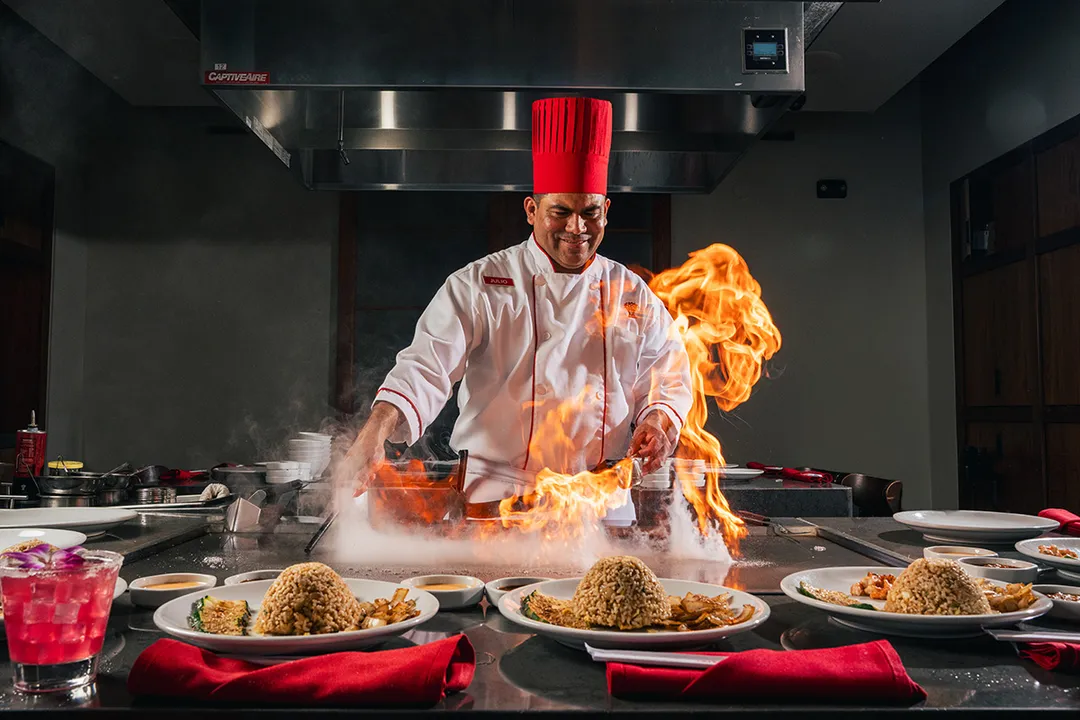
For diners desiring an experience closer to traditional Japanese grilling that utilizes the actual *hibachi* concept—cooking over charcoal using radiant heat—they should seek out restaurants specializing in *robatayaki* (fireside cooking) or *yakitori* (skewered chicken). These methods inherently utilize charcoal braziers, allowing the intense heat and smoke to impart the natural flavor profile to simply seasoned ingredients. In contrast, if the cooking is on a large, flat, solid steel surface with a chef performing tricks, that is the Americanized *teppanyaki* style, even though it uses a genuine Japanese flat-top apparatus.
Related Questions
What is the original Japanese meaning of the term *hibachi*?What culinary term describes cooking directly on a thick, flat iron griddle like in American 'hibachi' restaurants?How does the heat transfer in *teppanyaki* cooking differ from a traditional *hibachi* charcoal brazier?Which restaurateur is credited with popularizing the *teppanyaki* performance style in the US, marketing it as 'hibachi'?What characterizes the preparation of food at an American 'hibachi' steakhouse compared to authentic Japanese *teppanyaki*?What element of the American 'hibachi' experience primarily appealed to US diners in the 1960s?If a diner seeks a genuine charcoal grilling experience, what traditional Japanese styles should they look for?How can a diner requesting minimal oil subtly shift their American 'hibachi' meal closer to traditional restraint?What historical context explains why 'hibachi' became the marketing term for *teppanyaki* style in the US?Which feature is explicitly cited as a hallmark of the American adaptation regarding rice portions?