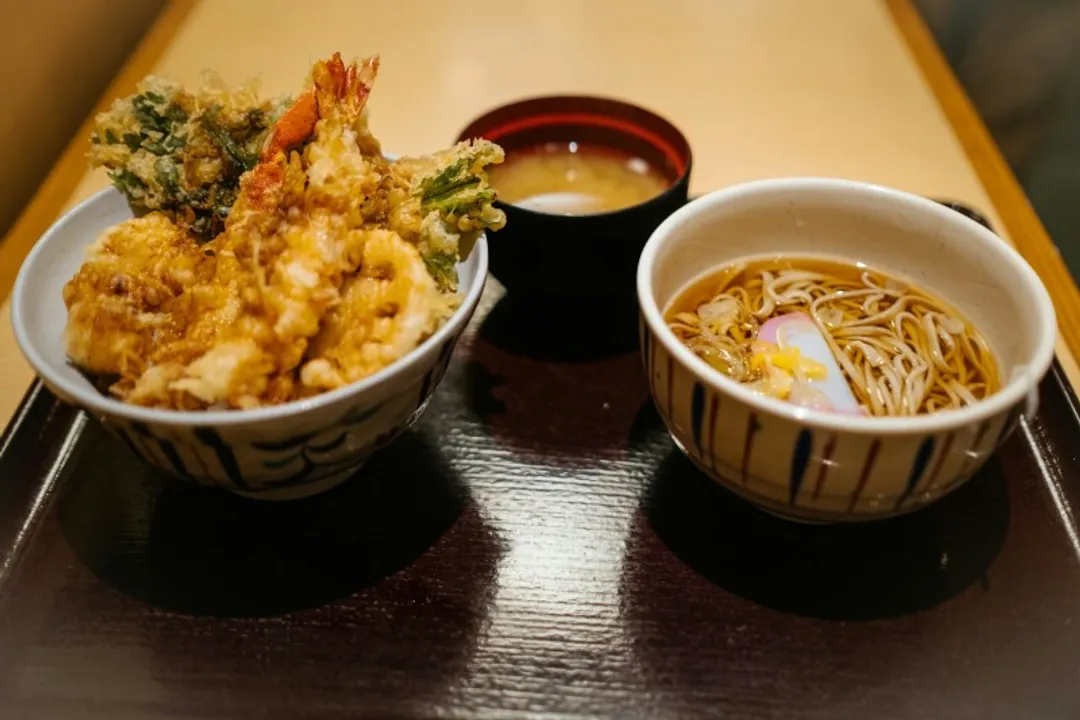
Which specific structure, centering around staple food, soup, and side dishes, defines a traditional Japanese meal presentation?
Ichiju sansai, meaning one soup and three sides served with rice.
The standard structural logic for presenting a traditional Japanese meal, whether formal or simple, revolves around the principle of ichiju sansai, which translates directly to 'one soup and three sides.' This setup is served alongside the foundational staple, gohan (rice). The arrangement is designed to ensure nutritional completeness and prevent palate fatigue by offering a variety of tastes, textures, and preparation methods in a single seating. The three side dishes, or okazu, should ideally cover diverse styles, such as one grilled item (yakimono), one simmered item (nimono), and one vinegared or pickled item (sunomono or tsukemono). This careful balancing act prevents the diner from focusing too heavily on one flavor profile, allowing for successive appreciation of each distinct component.