Which specific method caramelizes the natural sugars in cubed butternut squash for a sweet, nutty flavor?
Answer
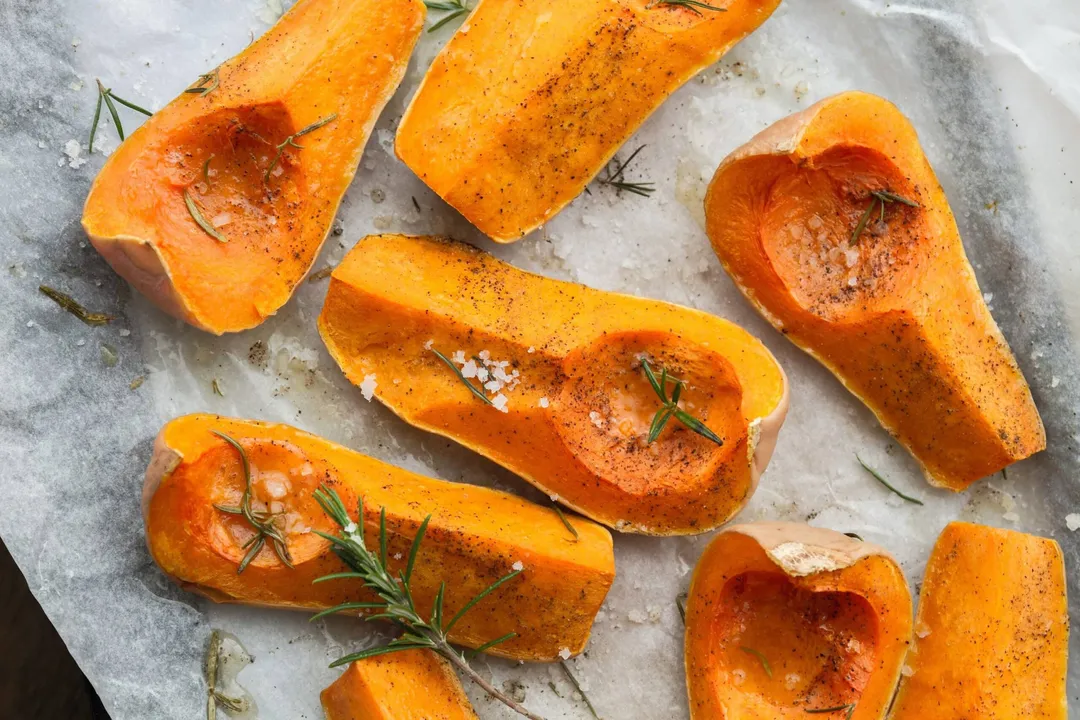
Roasting with olive oil and herbs
To maximize the inherent sweetness of butternut squash while preparing it, roasting is the recommended technique. When cubed squash is roasted alongside a minimal amount of fat, such as olive oil, and aromatic additions like sage or rosemary, the application of dry heat causes the natural sugars within the vegetable to undergo caramelization. This chemical process concentrates and enhances the sweetness, resulting in a final product characterized by a desirable sweet and slightly nutty flavor profile.
Related Questions
What is the primary compound that gives butternut squash its orange color and converts to Vitamin A?Which preparation method marginally decreases Vitamin C more than quick steaming or light roasting?Where do the carotenoids lutein and zeaxanthin accumulate in the eye to offer protection?How does the potassium content in butternut squash support healthier blood pressure levels?What primary benefit does the high fiber content of butternut squash offer for weight management?Compared to a white potato, how does a 1-cup portion of butternut squash usually compare in calories?What essential bodily functions involve the mineral magnesium found in butternut squash?What characteristic allows butternut squash to cause a slower, more gradual rise in blood sugar?Which specific method caramelizes the natural sugars in cubed butternut squash for a sweet, nutty flavor?How much Vitamin A, relative to the daily recommendation, can a single serving of butternut squash potentially provide?What is a key nutritional advantage of butternut squash compared to sweet potatoes?