What fresh components are typically combined with cooked *gui* meat inside a *ssam* wrap?
Answer
Lettuce, perilla (*kkaetnip*), or cabbage leaf, topped with *ssamjang*.
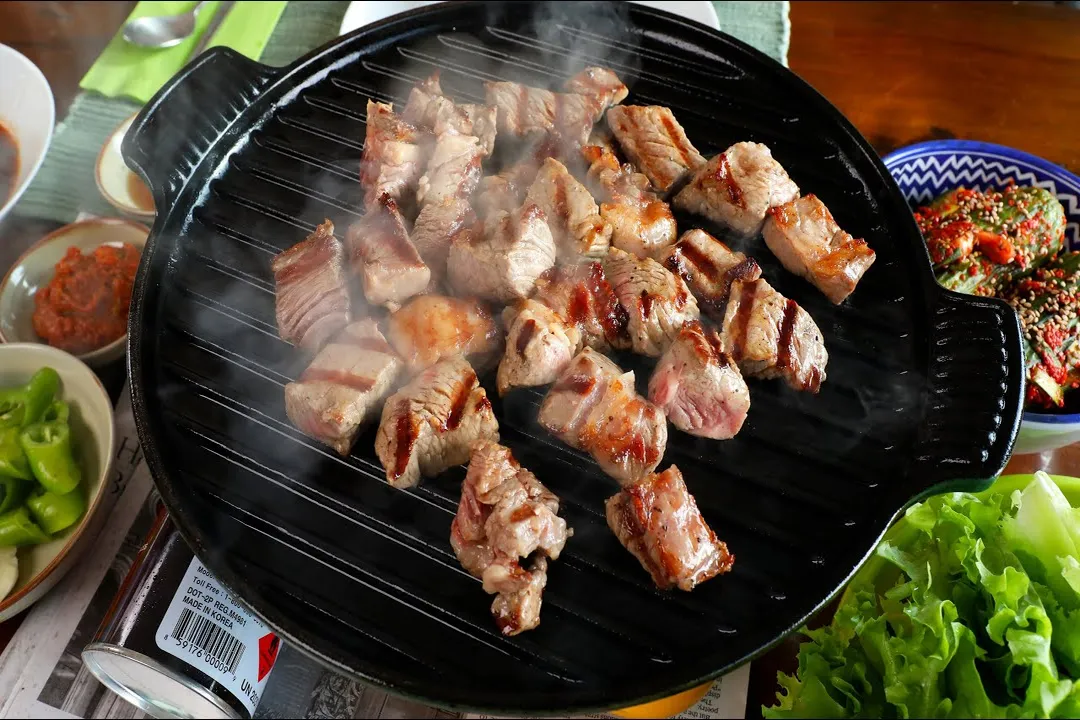
The enjoyment of cooked *gui* is rarely done by eating the meat plain; it is almost always incorporated into a wrap known as *ssam*. This method involves selecting a fresh, crisp leaf—commonly lettuce, perilla leaves denoted by the term *kkaetnip*, or cabbage—as the base wrapper. A piece of the grilled item is placed inside, and it is traditionally crowned with a dab of dipping sauce, most notably *ssamjang*, which is a spicy soybean paste. The entire layered creation is then wrapped tightly to be consumed in a single bite, creating a dynamic combination of smoky, cool, crisp, and savory elements.
#Videos
Korean BBQ (Soegogi-gui: 쇠고기구이) - YouTube
Related Questions
What cooking methods are broadly encompassed by the Korean term *gui*?How does the *gui* style emphasize flavor compared to *jjigae* or *kimchi* preparation?What distinct aroma is imparted by traditional *gui* preparation using charcoal or wood embers?What cut of beef and resulting texture is characteristic of **Bulgogi**?How does the typical cut of meat for **Galbi** differ from that used for **Bulgogi**?How is **Samgyeopsal** typically seasoned compared to **Bulgogi**?What is the primary goal when skillfully preparing **Gopchang gui**?Beyond offering textural contrast, what essential role do vegetables like mushrooms and onions serve on the *gui* grill?What fresh components are typically combined with cooked *gui* meat inside a *ssam* wrap?Why is it common practice to consume unseasoned meats like **Samgyeopsal** before heavily marinated items like **Yangnyeom Galbi**?