What foods are called produce?

The term "produce" immediately brings to mind the vibrant, colorful section of any grocery store dedicated to fresh fruits and vegetables, but the name itself has a history rooted deeply in language, separate from the items it describes. Essentially, produce refers to fresh fruits and vegetables that are grown, harvested, and sold for human consumption. [4] However, to fully grasp what constitutes "produce," one must look beyond the refrigerator case and examine both linguistics and regulatory definitions.
# Word Roots
The English word "produce" is a fascinating example of how pronunciation dictates meaning, shifting from an action to an object. As a verb, to produce, meaning to make, create, or bring forth, is stressed on the second syllable. [6] This verb form relates directly to the process of growing crops. [6]
In contrast, when used as a noun to refer to edible goods, the stress shifts to the first syllable: produce. [6][7] This noun form is used to group together the harvested items—the things that have been produced. [7] Linguistically, this transition where a noun evolves from a verb by altering the stress pattern is not unique in English, but it can be confusing for learners. [6] The resulting noun, "produce," became the standard colloquial shorthand for fresh fruits and vegetables in commercial settings. [1]
# Scope of Goods
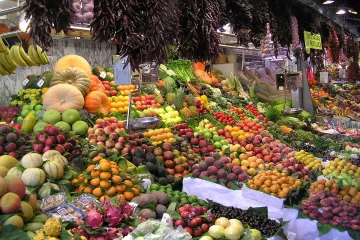
While the common understanding is simple—fruits and vegetables—the practical scope of what retailers and consumers group under the "produce" banner can sometimes blur the lines between botanical classification and commercial grouping. [5] A typical commercial inventory of produce includes a wide array of plant matter. For instance, a wholesale catalog might list categories like leafy greens, root vegetables, fruiting vegetables (like tomatoes or peppers), berries, citrus fruits, and melons. [2]
Botanically, a fruit develops from the flower of a plant and contains seeds (like an apple or a cucumber), whereas vegetables are other edible parts of the plant, such as roots, stems, and leaves. [5] However, in the context of the produce section, culinary usage often overrides strict botanical definitions. For example, botanically, avocados and tomatoes are fruits, yet they are typically merchandised and treated as vegetables within the produce department. [5]
There is also the matter of items that are routinely sold alongside conventional fruits and vegetables that aren't strictly produced by flowering or fruiting plants. Think of mushrooms. Fungi are biologically distinct from plants, yet they are almost universally found in the produce section of grocery stores because they are similarly perishable, require refrigeration, and are typically sold raw and unprocessed. [2] This grouping suggests that the definition leans heavily on how the item is sold and its physical characteristics—fresh, minimally processed, and typically raw—rather than strict taxonomic classification. Considering local supply chains, what an individual considers "produce" might shift seasonally; in regions with extensive local farming, the term might readily encompass specialty squash or heritage grains sold directly from the farm stand, goods that might be pre-packaged or processed differently in a large national supermarket. [2]

# Safety Rules
The meaning of "produce" also takes on a more technical and legal significance when viewed through the lens of food safety regulation. In the United States, the Food Safety Modernization Act (FSMA) introduced the Produce Safety Rule, which sets specific standards for the safe growing, harvesting, packing, and holding of produce. [3]
Under this rule, "produce" is generally defined as raw agricultural commodities, specifically those consisting of fruits and vegetables. [3] This definition is crucial because it dictates which farms must comply with the rigorous new safety standards regarding worker hygiene, water quality, and soil amendments. [3] While the rule targets raw commodities, it often excludes certain items that might be found in the general produce section, such as certain highly processed foods or items that are typically consumed raw with no further processing (like certain nuts or sprouts, depending on the specific regulatory interpretation). [3] The regulatory definition is narrower and more focused on minimizing contamination risk during initial handling than the general consumer term. [3]
# Sticker Codes
One of the most universally present, yet often misunderstood, elements of the produce world involves the small adhesive labels stuck to individual items like apples, avocados, or oranges. These are PLU codes—Price Look-Up codes—which are standardized identifiers for bulk items. [9]
These codes are essential tools for both inventory management and consumer information. A standard four-digit code, often beginning with a '3' or '4', signifies a conventionally grown item. [9] For instance, a standard yellow banana is often 4011. [9] If you see a five-digit code that begins with an '8', it traditionally indicates a genetically modified (GMO) product, though the use of this prefix has become less common or standardized in recent years. [9]
The truly informative prefix is the '9'. A five-digit code beginning with '9' signifies that the item is organic. [9] This code is vital for consumers looking to make purchasing decisions based on growing methods. If an item—say, a bell pepper—has the code 4062, it is a conventional green bell pepper. If the same pepper has the code 9062, it confirms it was grown according to organic standards. [9]
An Actionable Insight for Shoppers:
When you are checking out, especially in a self-checkout lane, understanding this code can speed up the process or confirm a price. If you forget the code for your specific organic item, you can often look up the item by scanning the PLU barcode sticker into a store app or even searching online for "PLU [the four-digit number]". If the store system displays the item name along with the word organic, you know you have the correct identification for a premium item, saving time compared to manually searching through a printed list or waiting for assistance. [9]
# Freshness Markers
Beyond the PLU sticker, the entire concept of produce relies on the premise of freshness—a state that is inherently fleeting. While the PLU code tells you what it is, other markings can indicate how it was handled or how long it has been available.
In larger wholesale or retail operations, dates might appear on outer packaging or bulk containers, often referred to as "pack dates" or "best-by" dates. [2] While fruits and vegetables rarely carry the same strict expiration dates as dairy or meat, these markers help managers rotate stock based on the commodity’s expected shelf life. For consumers, this often translates to looking for firmness, vibrant color, and the absence of soft spots or mold, which are universal indicators that the item has passed its peak state of produce. [4]
Ultimately, what foods are called produce is a label that unites items grown from the earth into a single commercial and culinary category. It’s a term that successfully bridges the scientific world of botany, the legal sphere of safety regulation, and the everyday experience of selecting ingredients for dinner, all resting on the simple foundation of something brought forth from the soil. [6][3]
#Videos
Produce: fruits and vegetables - YouTube
Related Questions
#Citations
Why are fruits and vegetables called produce? : r/NoStupidQuestions
Produce - Hardie's Fresh Foods
How Is Produce Classified Under the Produce Safety Rule?
Produce Facts for Kids
[PDF] Fruits and Vegetables
"Produce" (pruh-DOOSE), is similar to "make" or "create". But did you ...
How did the meaning 'produce', used as a noun, emerge from the ...
Produce: fruits and vegetables - YouTube
What Produce Stickers Say About Fruits and Veggies - Scripps Health