What food is Slovenia famous for?
Slovenian cuisine presents a fascinating culinary landscape, shaped by its unique crossroads location where Alpine ruggedness meets the gentle influence of the Adriatic Sea and the vastness of the Pannonian Plain. It is a country where the aroma of hearty stews can mingle with the delicate scent of fresh seafood, depending on whether you are high in the Julian Alps or near the Istrian coast. Unlike some of its neighbors whose cuisines are globally recognized monoliths, Slovenian food is characterized by distinct regional identities, making a simple answer to "what is famous" quite complex. However, certain staples rise to national prominence, becoming essential tasting experiences for any visitor.
# National Staples
When pinning down the most iconic foods, a few names consistently surface in conversations with locals and travel resources. These dishes often represent the historical heartland and have achieved widespread popularity across the relatively small nation.
# Carniolan Sausage
Perhaps one of the most internationally recognized Slovenian products is the Kranjska klobasa, or Carniolan sausage. This cured sausage, originating from the historical region of Carniola, is protected under European Union law, ensuring its traditional preparation method is maintained. It is typically made from high-quality pork, seasoned simply with pepper, salt, and often a touch of garlic and marjoram. It is traditionally boiled or simmered and served with staples like horseradish, mustard, and sauerkraut, making for a distinctly Central European meal. Its fame rests on its simple, yet perfectly balanced flavor profile, representing comfort food rooted deeply in local agricultural history.
# Layered Wonders
Another cornerstone of Slovenian baking tradition, often hailed as the national cake, is Potica. This is not a single recipe but a broad category of rolled yeast bread or pastry filled with various ingredients. The most classic filling is ground walnuts, though variations include poppy seed, tarragon, cottage cheese, or even savory fillings. The preparation is labor-intensive, involving rolling the dough thinly and spreading the filling before carefully rolling it up to create striking spirals when sliced. In the eastern region of Prekmurje, a specific, exceptionally rich version exists: the Prekmurska gibanica. This is a layered pastry that features four distinct fillings—poppy seeds, walnuts, apples, and cottage cheese—separated by thin layers of dough, often resulting in a substantial, magnificent dessert. The contrast between the relatively simple, spiraled potica and the structurally complex, multi-layered gibanica illustrates the range of Slovenian baking expertise.
# Dumpling Diversity
Dumplings feature heavily in the Slovenian diet, acting as carriers for rich fillings, whether they accompany a main dish or serve as the main event themselves.
- Idrijski žlikrofi: Hailing from the western town of Idrija, these small, hat-shaped dumplings are frequently cited as the most famous single dish in the country. Traditionally filled with potatoes, onion, and herbs, they are often served with a rich, slow-cooked meat sauce known as bakalca. Their distinctive shape and connection to a specific historical region give them a high profile among food enthusiasts.
- Štruklji: These are perhaps the most versatile of Slovenian dough creations. Štruklji are essentially rolled dough (often cottage cheese-based) that can be boiled or baked. They appear everywhere on the menu, served as a sweet dessert (like apple or walnut štruklji) or as a savory accompaniment to meat dishes, sometimes appearing almost like a dumpling-strudel hybrid. They can be served simply with melted butter and breadcrumbs, or simmered in broth as a soup component.
# Regional Palates Defined
Understanding Slovenian food truly requires looking at its geography, as the mountains, the coastal plain, and the eastern lowlands each impart specific characteristics to the local fare.
# Alpine Influence
The northern and central regions, dominated by the Julian and Kamnik-Savinja Alps, naturally gravitate towards heartier, more filling cuisine better suited for colder climates and physical labor. This area sees a prevalence of wheat-based dishes, potato dishes, and rich dairy.
Beyond the aforementioned žlikrofi, the Alpine diet features dishes designed for sustenance. Ajdovi žganci, or buckwheat spoonbread, is a prime example. This staple is made from buckwheat flour cooked with water or milk, resulting in a thick, spoonable porridge that pairs excellently with sour milk or fatty meat dishes like pork cracklings. It offers a wonderfully earthy counterpoint to richer, heavier meals.
Another significant Alpine and inland dish is Jota. This robust soup or stew is thick with sauerkraut, beans, and potatoes, often flavored with smoked meat or bacon. It exemplifies the resourceful, warming nature of mountain cooking, using preserved ingredients to see through the winter months.
| Staple Starch Dish | Primary Region | Key Ingredient/Flavor | Serving Suggestion |
|---|---|---|---|
| Idrijski žlikrofi | West/Central | Potato/Onion | With bakalca meat sauce |
| Ajdovi žganci | Alpine | Buckwheat | With sour milk or meat |
| Štruklji (Savory) | Widespread | Cottage Cheese/Dough | Boiled/baked, served alongside roasts |
| Ričet | Inland/Alpine | Barley, Beans | Thick, hearty soup/stew |
When touring the inland regions, especially the areas known for traditional farming, notice how many main courses seem designed to be eaten with just a spoon or a hearty piece of bread; the food speaks of self-sufficiency and long winters. This focus on texture and slow cooking contrasts sharply with the lighter fare found closer to the sea.
# Mediterranean Tastes
Moving toward the southwest, the influence of Italy and the Adriatic Sea becomes undeniable. Here, the cuisine shifts toward lighter preparations, olive oil, and pasta dishes. While Italian influence is strong, Slovenian coastal towns maintain their unique touch. Seafood dominates the menus, often grilled simply to let the freshness shine.
In this littoral zone, you are more likely to find rižota (risotto) variations, where Arborio rice is cooked with local seafood or vegetables, similar to neighboring Venetian cuisine, but often retaining a distinct local seasoning profile. Dishes here rely less on heavy roux or lard and more on fresh herbs, white wine, and quality olive oil sourced from the Slovenian Istria.
# Pannonian Sweetness
The easternmost part of Slovenia, known as Prekmurje, shares culinary traditions with Hungary and Austria, emphasizing rich pastries and sometimes slightly spicier flavors. This is the birthplace of the Prekmurska gibanica mentioned earlier, but the region is known for its general love of finely crafted sweets and baked goods. The Pannonian influence is often characterized by a generous use of seeds, fruits, and occasionally richer spices in baking, setting it apart from the simpler walnut-based potica of the central regions.

# Iconic Sweets
Slovenia has an impressive repertoire of desserts, ranging from rustic homemade treats to highly refined, famous cakes.
# Bled’s Cream Cake
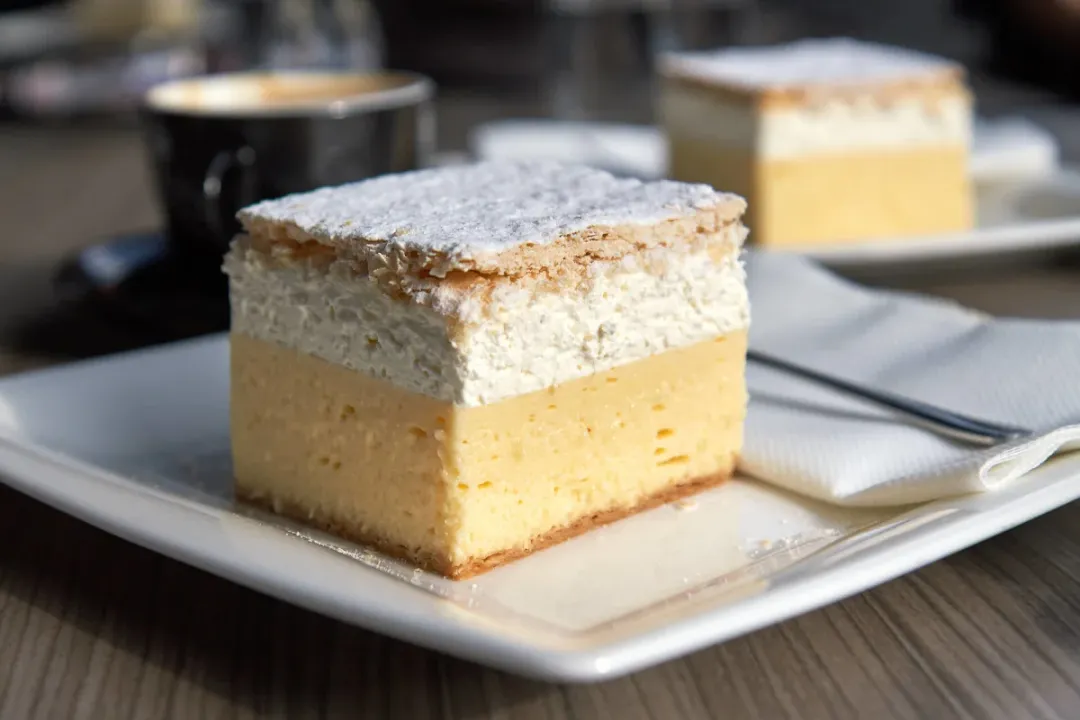
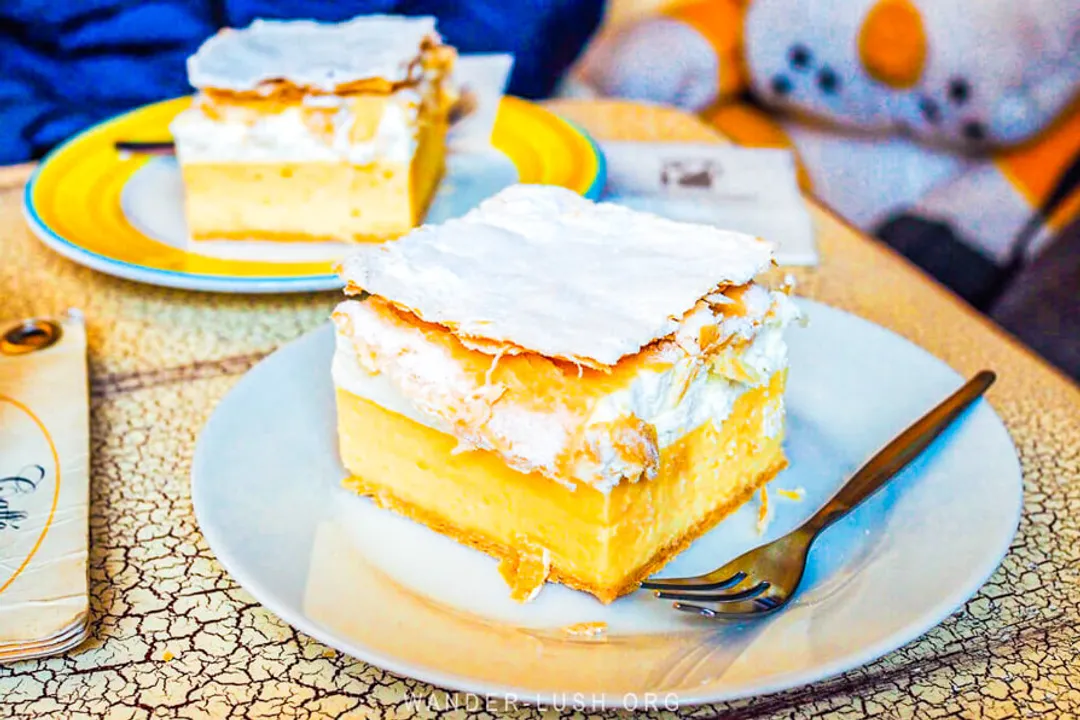
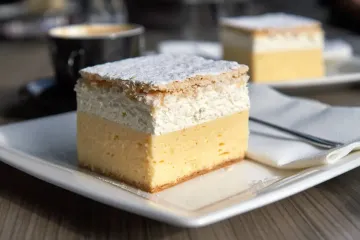
No discussion of Slovenian food is complete without mentioning the Bled Cream Cake, or kremšnita. This dessert achieved global fame due to its presentation at the luxurious Hotel Park in Bled, overlooking the iconic island and castle. The kremšnita is an architecturally pleasing dessert: a base of flaky puff pastry, topped with a thick layer of vanilla custard, another layer of whipped cream, and finally, a dusting of powdered sugar. It’s a deceptively simple combination of textures—crunchy, creamy, and airy—that has captivated visitors for decades. While other regions have their own cream cakes, the Bledska kremna rezina remains the definitive version.
# Other Treats
Beyond the cake, the love for sweet pastry is evident in dishes like Gibanica. While the Prekmurje version is grand, simpler versions of gibanica—a layered cheese pastry—are found across the country, often served warm. Similarly, many sweet štruklji (filled with tarragon, walnuts, or apples) serve as a substantial, comforting dessert. If you are dining in a traditional gostilna (inn), finishing a heavy meat course with a slice of potica is often seen as the most authentically Slovenian conclusion to the meal.
# The Drink Menu
A great meal deserves the right accompaniment, and Slovenia offers distinct choices in its beverages, heavily influenced by its varying climates.
# Wine Culture
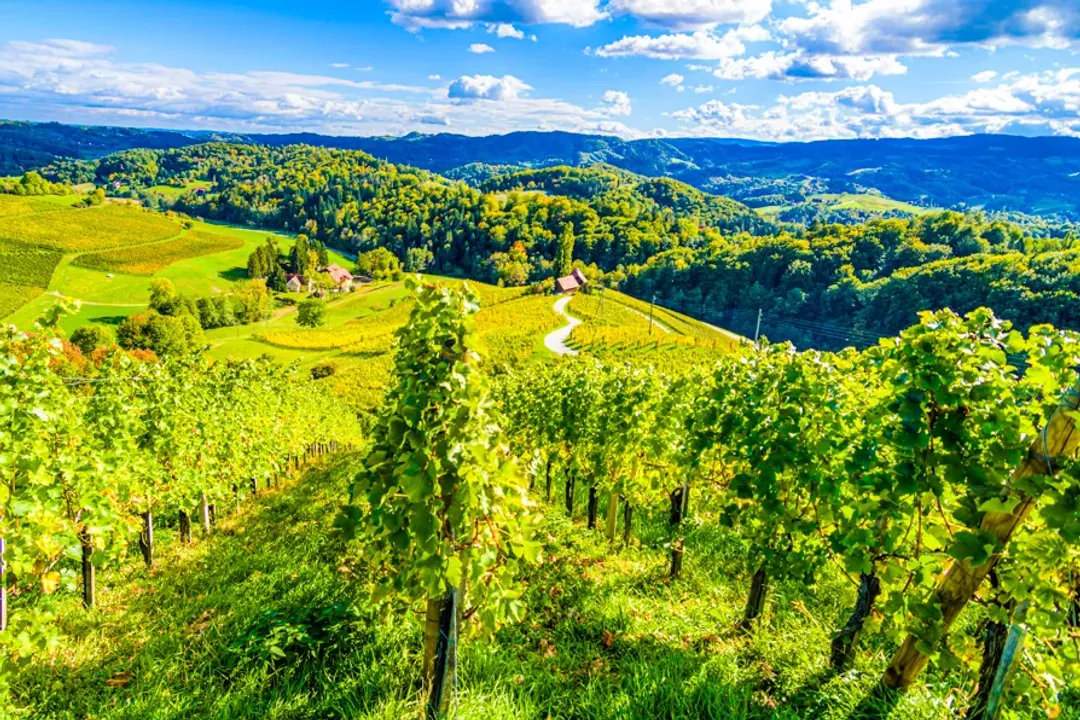
Slovenia is home to three primary wine-growing regions—Podravje, Posavje, and Primorska—the last of which is particularly renowned due to its Mediterranean climate. Wine is deeply embedded in the culture, especially in the western and coastal areas where families often maintain small vineyards. The country produces excellent whites like Rebula and Pinot Grigio, alongside notable reds such as Teran (a highly acidic, iron-rich red from the Karst region). A traveler moving through the Vipava Valley or Goriška Brda will find world-class producers focusing on indigenous varieties.
# Beer and Spirits
While wine holds a prominent place, beer brewing has a long history, particularly in the Laško and Žalec regions. Slovenian beer is generally clean and refreshing, fitting well with hearty meals like Jota or Kranjska klobasa. For a stronger digestif, sampling Schnapps or Rakija, often homemade fruit brandies, is a common local tradition, especially after large holiday meals.
# Culinary Insight
A key takeaway when approaching Slovenian food is to realize that consistency is regional, not national, which is a direct consequence of the country’s relatively recent independence and its varied geography. Unlike countries where a central government long dictated a unified culinary standard, Slovenia’s traditional foodways developed in relative isolation within their microclimates. Therefore, one might sample three different types of dumplings across three different parts of the country—the small, precise žlikrofi near Idrija, the larger, often baked štruklji, and perhaps even influences from Austrian knedle—each relying on locally available starches and fats. This diversity means that a traveler who only samples food in Ljubljana will have a fundamentally different impression of Slovenian cuisine than one who spends time exclusively on the Adriatic coast or deep in the Pohorje mountains. Appreciating the local specialty where it originates provides the fullest context for its ingredients and historical significance.
Furthermore, while Kranjska klobasa and Potica are nationally recognized symbols, their preparation often varies subtly based on the local butcher or home baker’s preference for spices or curing time. This offers a wonderful opportunity for the curious eater: when you see potica offered in two different towns, order both. You might find one batch uses an anise-heavy walnut mix, while the other leans heavily on citrus zest and honey, demonstrating that while the form is famous, the flavor is still passionately local. This willingness to embrace both the celebrated national icons and the hyperlocal specialties is the best way to truly experience the celebrated flavors of Slovenia.
#Videos
What Do SLOVENIA People Eat? Traditional Slovenia Food - YouTube
Related Questions
#Citations
Best Slovenian Food: 12 Must Try Local Dishes - Enriching Pursuits
10 Slovenian dishes you must try | Altitude-Activities.com
what's the most famous dish of slovenia? - Reddit
What Do SLOVENIA People Eat? Traditional Slovenia Food - YouTube
15 Traditional Slovenian Foods to Delight Your Tastebuds
The Best Slovenian Food and Drink | Guide to Food from Slovenia
Slovenian cuisine - Wikipedia
Traditional Slovenian Food & Drink Guide - Inghams
Authentic Slovenian food to try - Slovenia Forum - Tripadvisor
The flavours of Slovenia – highlights of Slovenian national cuisine