What food is Toledo famous for?
The flavors of Toledo are as storied and layered as its ancient stone streets, a culinary landscape that speaks volumes about its history as a crossroad of cultures. Whether one is considering the imperial city in Spain or the Glass City of Ohio, a fascinating array of local specialties awaits the curious traveler, often revealing more about the locale's identity than any museum exhibit. This exploration separates the distinct, yet equally proud, gastronomic traditions of these two globally recognized places.
# Toledo Spain Staples

In the heart of Castilla-La Mancha, the food of Spanish Toledo is celebrated for its depth, having earned the city the title of Spanish Gastronomy Capital for 2016. Dining here means sampling dishes perfected over generations, drawing from the deep culinary interplay between the city's former Jewish, Christian, and Arab communities. While it is not characterized as an overly expensive or typically over-touristed food scene, the focus remains firmly on traditional recipes and high-quality local ingredients like game meats, legumes, and exceptional olive oils.
# Hearty Stews
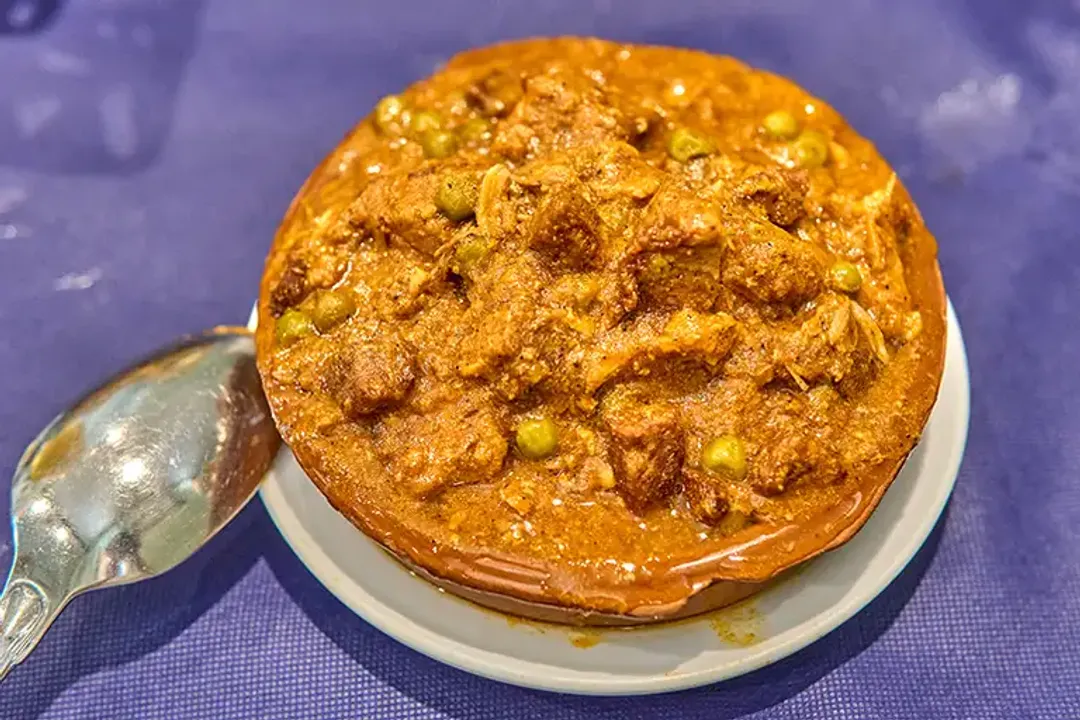
The conversation about Toledo's essential cuisine almost always begins with Carcamusas. This is arguably the city’s most characteristic dish—a rich, hearty stew featuring pork loin slow-cooked with peas and a robust tomato sauce. Traditionally enjoyed as a tapa, it is frequently served hot in small clay dishes and demands crusty bread for soaking up every drop of the flavorful sauce. Bar Ludeña is specifically noted as an establishment that has been serving this classic for years, even offering a unique Spanish tortilla enhanced with the carcamusa sauce.
A contrasting, yet equally traditional, meat dish is Perdiz Estofada or Perdiz a la Toledana, the stewed partridge. This dish embodies the culinary heritage derived from the Jewish community's tradition of slow-cooking meats. The partridge is simmered gently with a complex sauce involving onions, garlic, vinegar, cloves, and white wine, resulting in exceptionally tender meat infused with earthy tones. For those interested in bold, regional game flavors, Venado en Salsa (venison in sauce) is another centuries-old staple, often prepared by marinating the venison in wine and herbs before a long, slow cook. These heavy, slow-cooked stews—the pork-based Carcamusas, the gamey Perdiz, and the robust Venado—form a foundational triptych of Castilian country cooking, each telling a subtle story of the region's history and proximity to hunting grounds like the Montes de Toledo.
# Rustic and Riverine Flavors
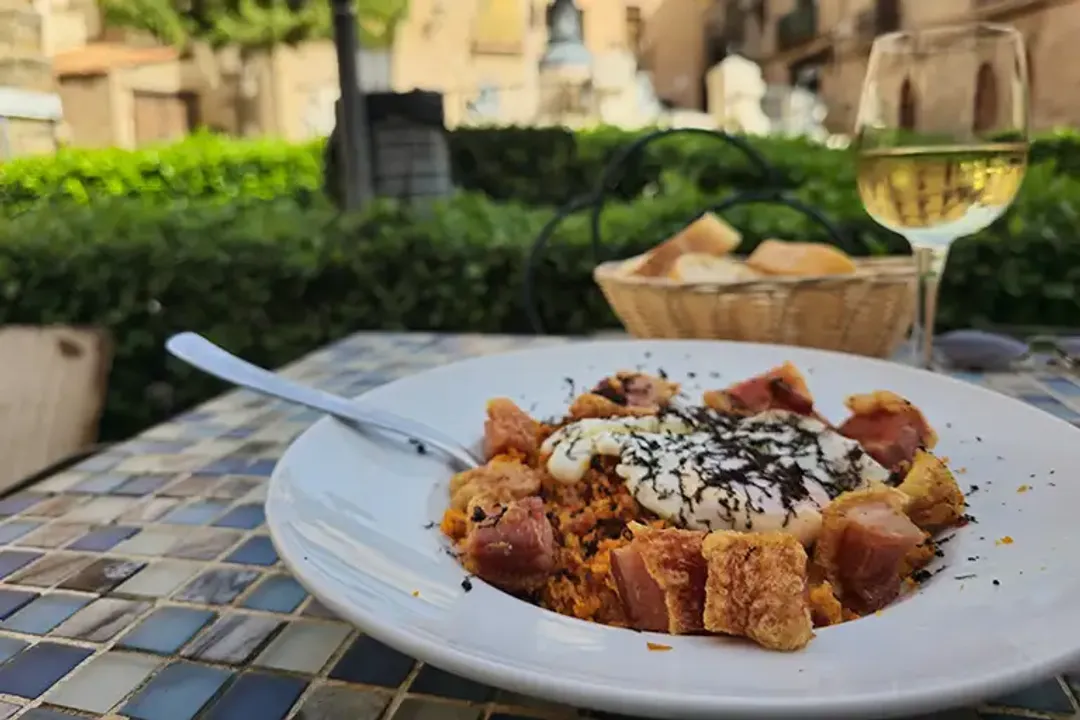
Another dish that speaks to simpler, perhaps pastoral, origins is Migas, which translates to "crumbs". This rustic meal brings fried pieces of aged bread back to life with olive oil, garlic, paprika, and often includes slices of chorizo or bacon. Once a humble shepherd’s staple, it is now widely available as a tapa.
Reflecting the city's geographical position near the Tagus River, Truchas a la Toledana (Toledo-style trout) offers a lighter contrast. This fresh river trout is typically grilled or baked, seasoned simply but effectively with garlic, parsley, and a splash of white wine or vinegar. For a comforting starter, travelers frequently seek out Sopa Castellana, a savory garlic soup built around stale bread, smoky paprika, ham, and crowned with a poached egg. Another preparation rooted in the region's bounty is Pisto Manchego, the local take on ratatouille, featuring stewed zucchini, tomatoes, onions, and bell peppers, sometimes finished with a fried egg on top.
# Cheese and Confections
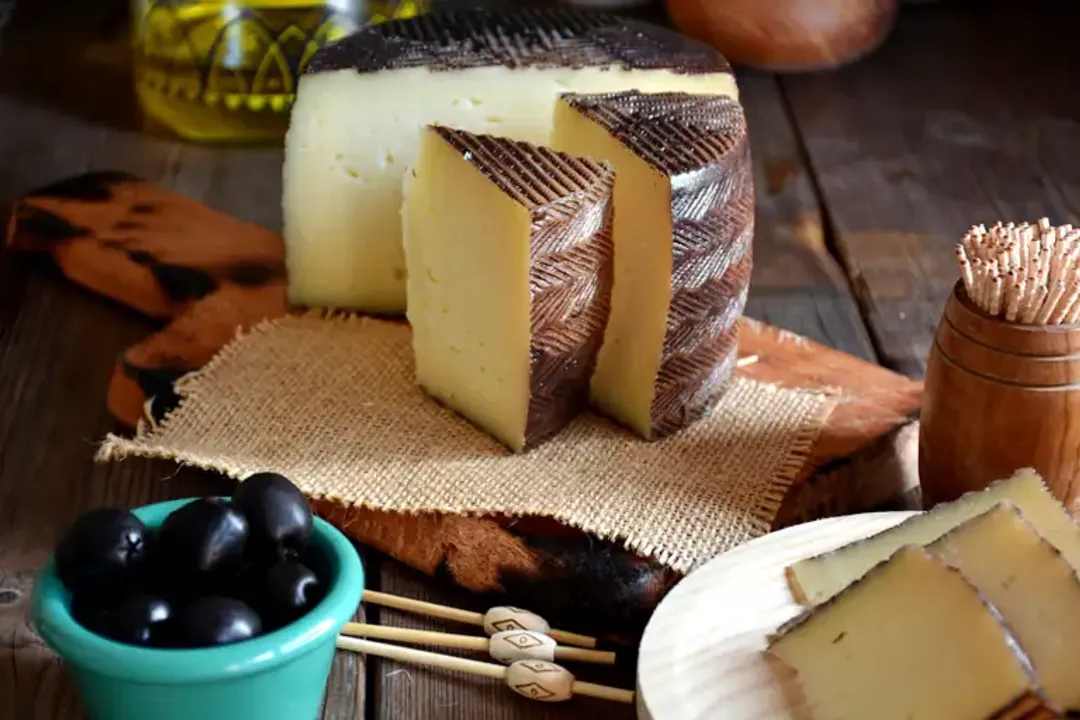
No discussion of Toledo's gastronomy is complete without mentioning Queso Manchego. As Toledo is the capital of the La Mancha region, this cheese, made from the milk of Manchega sheep, is omnipresent. Its flavor profile shifts from mild and creamy when young to distinctly nutty and firm when aged. Visitors can deepen their appreciation by visiting the MQM Museo Del Queso Manchego near the Cathedral.
For those with a sweet tooth, the undisputed monarch of Toledo's desserts is Marzipan (Mazapán). This confection, a smooth paste of finely ground almonds and sugar, is often molded into intricate figures or used as a rich filling for other sweets. The tradition is deeply medieval, often attributed to the cloistered nuns of the San Clemente Convent, who supposedly created the original recipe using local almonds and sugar introduced by the Arabs. For an authentic experience, purchasing directly from the convent via their rotating wooden shelf is possible, though historic shops like Confitería Santo Tomé offer vast varieties. Another regional sweet worth seeking out is Alajú, a chewy confection made from honey, almonds, breadcrumbs, and spices, pressed between delicate wafers.
# Toledo Ohio Icons

The culinary scene of Toledo, Ohio, presents a different, but equally passionate, story—one heavily influenced by waves of immigration and the rise of unique, highly localized institutions. While the city boasts a diverse array of ethnic options, from excellent Lebanese cuisine to authentic Mexican and Chinese establishments, it is defined by a few fiercely protected local favorites. The city’s designation as the "Glass City" might point toward its industrial past, but its food scene points toward its Hungarian roots and its love for the local lake and river ecosystems.
# Hungarian Dogs and Salads
If there is one food item that instantly identifies Toledo, Ohio, it is the Tony Packo's Hungarian Hot Dog. These are not standard hot dogs; they are described as Hungarian-style sausages, often split lengthwise, served on a standard bun, and invariably topped with mustard, onions, and their famous chili sauce (or hot dog sauce). The original restaurant, located in East Toledo, is an essential stop, partly because of its walls lined with signed hot dog buns from celebrities who visited, a tradition supposedly started by actor Burt Reynolds in 1972. While some locals note that Packo's might be touristy, its status as a cultural landmark remains unchallenged. A secondary, but equally iconic, dish at Packo's is the Chili Mac, a dense combination of chili, cheese, and dumpling-like macaroni.
Beyond the hot dog, another uniquely Toledo creation is the Garbage Salad from Grumpy's. This is more than a mere side dish; it is framed as an entire, intoxicating meal known for its "carnival of flavors". For those seeking a true local experience, ordering this salad is a rite of passage, providing an immediate connection to the city’s casual dining landscape.
# Seasonal Catch and Comfort
A distinct culinary window opens each spring in the area surrounding the Maumee River, tying the local food culture directly to its natural surroundings. This is the time of the Walleye fishing run, a brief period in mid-to-late March when local fishermen, and those from across the country, flock to the riverbanks. The freshest bounty is often served as a Walleye Sandwich—a piece of fish on a toasted bun, dressed with tomato, lettuce, onion, and a touch of mayo or mustard. This seasonal specialty offers a taste of the local lake environment that contrasts sharply with the city's meat-heavy staples.
The city also possesses a deep affection for traditional diners, with institutions like Schmucker's, Executive Diner, Greg's Grill, and Rick's City Diner being local favorites for breakfast fare and comfort food. Toledoans also embrace baked goods, with Wixey’s Bakery on the south end frequently cited as producing the "Platonic Ideal of doughnuts," especially their cream-filled variety.
# Institutional Dining and Diversity
For upscale dining or a celebratory meal, Mancy's Steakhouse stands as a Toledo institution, operating since 1921. Known for its perfectly aged steaks and a classic, old-school atmosphere reminiscent of the 1970s, the Mancy family is sometimes called the "godfathers of Toledo restaurateurs". On the modern fine-dining front, Registry Bistro, under Chef Erika Rapp, is mentioned for its fresh, seasonal menus.
The city's reputation is significantly bolstered by its ethnic cuisine, a testament to its large immigrant populations. The Lebanese community has resulted in deeply authentic Middle Eastern dining options featuring items like lamb kafta and lamb kibbe. Furthermore, reviewers claim that Toledo harbors some of the most authentic Mexican food in the entire Midwest, with several local, family-run establishments highlighted. Even Polish traditions persist through the ubiquity of Paczkis (jelly doughnuts) around Fat Tuesday. This blending of immigrant cuisine with local innovations like the Hungarian Dog and the unique Garbage Salad suggests that Toledo’s culinary identity isn't strictly defined by one immigrant group, but rather by a unique local alchemy that adopts, adapts, and elevates diverse influences [To be integrated naturally].
# Dining Out Advice
Whether you find yourself wandering the historic alleys of Spain or navigating the streets of Ohio's Glass City, seeking out local expertise can transform a simple meal into a memorable cultural encounter.
For the traveler in Toledo, Spain, if seeking out the oldest methods, look for historic restaurants near the Jewish Quarter, as some still prepare dishes like perdiz estofada using medieval recipes and clay pots. Conversely, to experience cutting-edge Toledo cuisine, trendy spots offer inventive plating and contemporary combinations, though this often comes with smaller portions and higher costs. A wise approach for maximizing sampling without over-ordering at tapas bars, like Taberna Skala, is to order half portions when available, allowing you to sample several distinct flavor profiles, from carcamusa to revueltos duelos y quebrantos.
In Toledo, Ohio, the dining landscape is vast, but the independent spots require a bit more intentional searching beyond the visible chains. For instance, while Mancy's offers a famous steak experience, those seeking farm-to-table concepts need to look for specific, dedicated spots like Fowl and Fodder or Evans Street Station. Furthermore, many Ohio establishments, like the breweries 4KD Crick Brewery or 60cc Brewing, operate on a small-batch philosophy, meaning that what is on tap or on the menu one week may be experimental or gone the next, encouraging repeat visits to see what the local brewers are tinkering with.
| Toledo (Spain) Staple | Key Ingredient / Style | Toledo (Ohio) Staple | Key Ingredient / Style |
|---|---|---|---|
| Carcamusas | Pork loin stew with tomato/peas | Hungarian Dog | Sausage with chili sauce/mustard |
| Queso Manchego | Sheep's milk cheese | Garbage Salad | Multi-ingredient "entire meal" salad |
| Perdiz Estofada | Slow-cooked stewed partridge | Walleye Sandwich | Seasonal river fish on a bun |
| Mazapán | Almond and sugar confection | Steak | Aged beef at Mancy's Steakhouse |
The culinary geography of both Toledos demonstrates that a city’s fame is rarely tied to a single dish, but rather to a tradition—whether that tradition is the preservation of Moorish-influenced recipes in Spain or the celebration of immigrant heritage coupled with local ingenuity in Ohio. A truly satisfying taste of either city requires appreciating the context behind the plate.
Related Questions
#Citations
What to Eat in Toledo, Spain: Local Delicacies Uncovered
The Tastiest Food in Toledo: 10 Must-Try Local Dishes - GetYourGuide
Restaurants - Destination Toledo
25 Things People From Toledo Have To Explain To Out-Of-Towners
What is the weirdest food in Toledo, US? - Quora
7 things you mustn't miss if you visit Toledo
Toledo, OH | Where & What to Eat - Road Food