Which specific pathogens are commonly harbored by raw alfalfa sprouts due to warm, moist sprouting conditions?
Answer
*Salmonella* and *E. coli*.
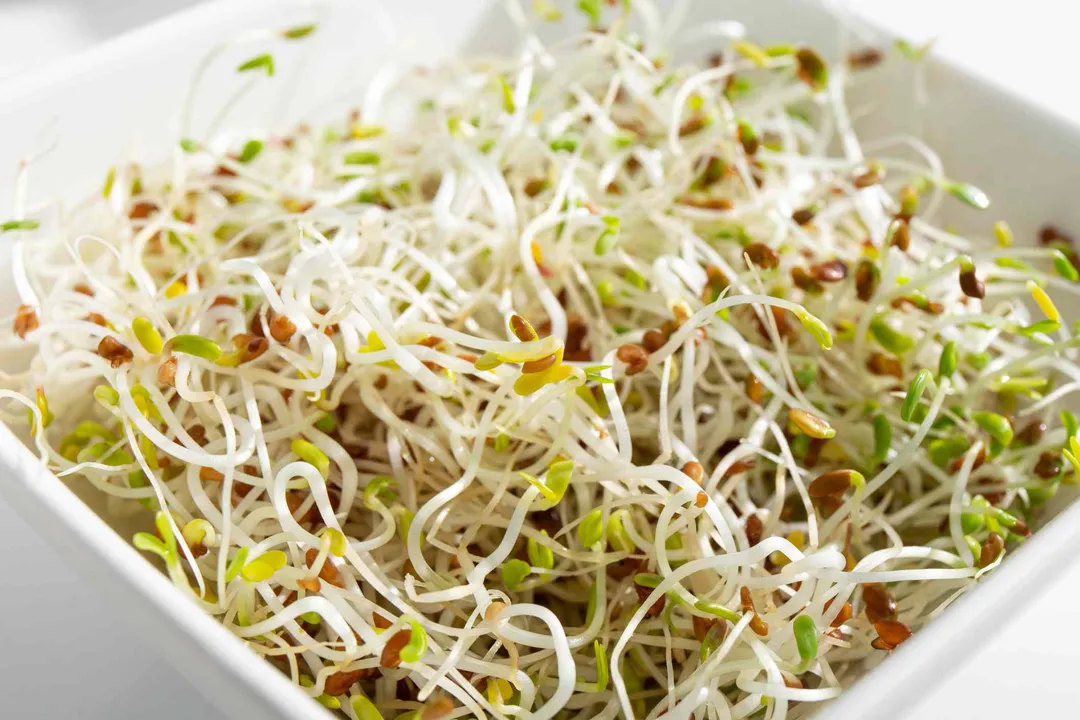
A major safety concern associated with consuming alfalfa sprouts stems from the inherent conditions required for their successful growth—namely, warm and moist environments. These same optimal conditions that promote the germination of the seed are regrettably also ideal breeding grounds for several types of harmful bacteria that can contaminate the seed source. Among the most frequently cited risks in food safety literature concerning raw sprouts are serious foodborne pathogens such as *Salmonella* and specific strains of *E. coli*. Because this contamination risk is tied directly to the sprouting process itself, it necessitates careful handling or preparation methods, even if the seeds appear clean initially.
Related Questions
What essential function is concentrated Vitamin K in alfalfa sprouts vital for?How do saponins in alfalfa sprouts potentially aid cardiovascular wellness?What specific phytoestrogens found in alfalfa sprouts might mitigate menopause symptoms?Which specific pathogens are commonly harbored by raw alfalfa sprouts due to warm, moist sprouting conditions?What is the recommended strategy for healthy individuals consuming alfalfa sprouts to reduce microbial load?What historical property of alfalfa contributes to supporting kidney health through increased urine production?What metabolic change occurs during germination that concentrates nutrients in the alfalfa sprout?How does the dietary fiber in alfalfa sprouts benefit the gut microbiome?Which specific group is strongly advised to avoid consuming raw alfalfa sprouts due to heightened risk?Why is the fresh alfalfa sprout often prioritized over dried mature alfalfa leaf meal in human nutrition discussions?