Which anadromous, oily fish is revered but rarely used in a standard, light Macher Jhol?
Answer
Ilish (Hilsa), because its extremely strong flavor overpowers subtle ginger and turmeric notes.
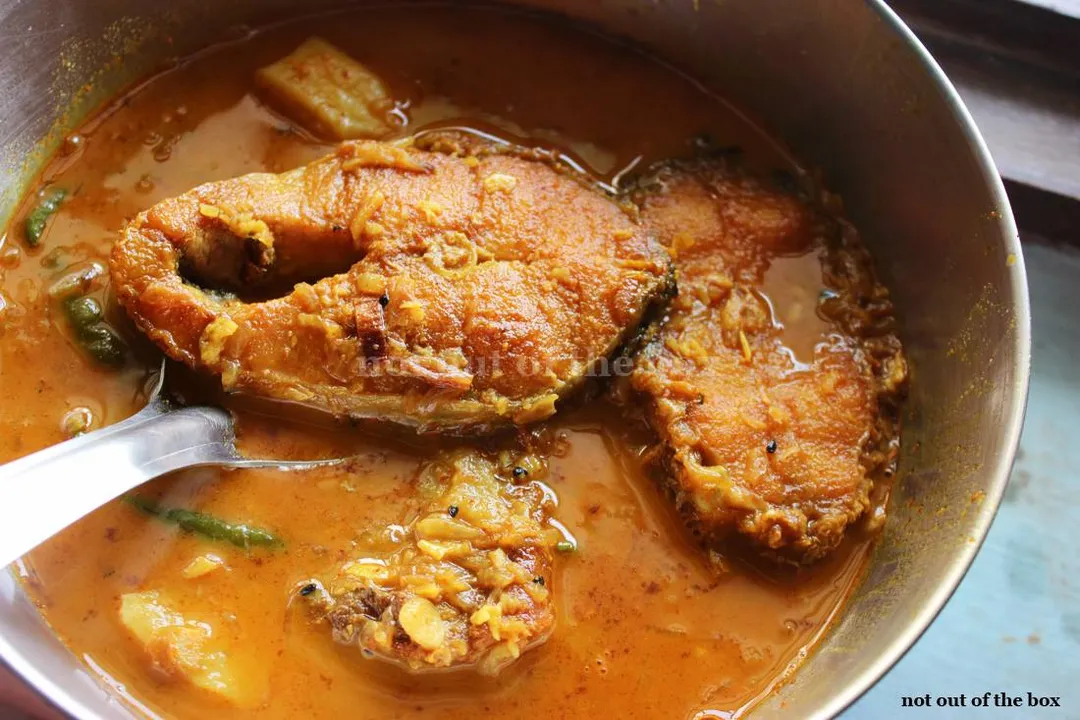
Ilish, also known as Hilsa, is perhaps the most revered fish in Bengali culture, but its profile is generally unsuitable for a standard, light Macher Jhol. Ilish is characterized by being anadromous and having a very high oil content coupled with an extremely strong, distinct flavor. This powerful profile tends to overwhelm the delicate and subtle aromatic base—defined by ginger and turmeric—that characterizes a classic Jhol. Consequently, Ilish is typically reserved for preparations specifically designed to complement its richness, such as Sorshe Ilish (mustard-based curry) or Bhapa Ilish (steamed).
Related Questions
Why are freshwater carps preferred over sea fish for Macher Jhol?What textural characteristic defines Rui fish (Rohu) when prepared in a simple Jhol?How does the texture and flavor contribution of Katla (Catla) often differ from Rui in a Macher Jhol?Which anadromous, oily fish is revered but rarely used in a standard, light Macher Jhol?What characteristic makes dense freshwater carp flesh practical for busy households when preparing Macher Jhol?What role does Tilapia sometimes play in modern Bengali fish curry recipes?Which specialized, seasonal fish is known for having a soft, almost melt-in-your-mouth texture, requiring a light cooking hand?What fundamental trade-off must a fish flesh manage when cooked in the classic Macher Jhol method?Which element, besides the fish, is usually included in the characteristic light base of Macher Jhol?What distinct flavor characteristic do Tangra (Mystus tangara) catfish possess even when cooked in a simple Jhol?