What textural characteristic defines Rui fish (Rohu) when prepared in a simple Jhol?
Answer
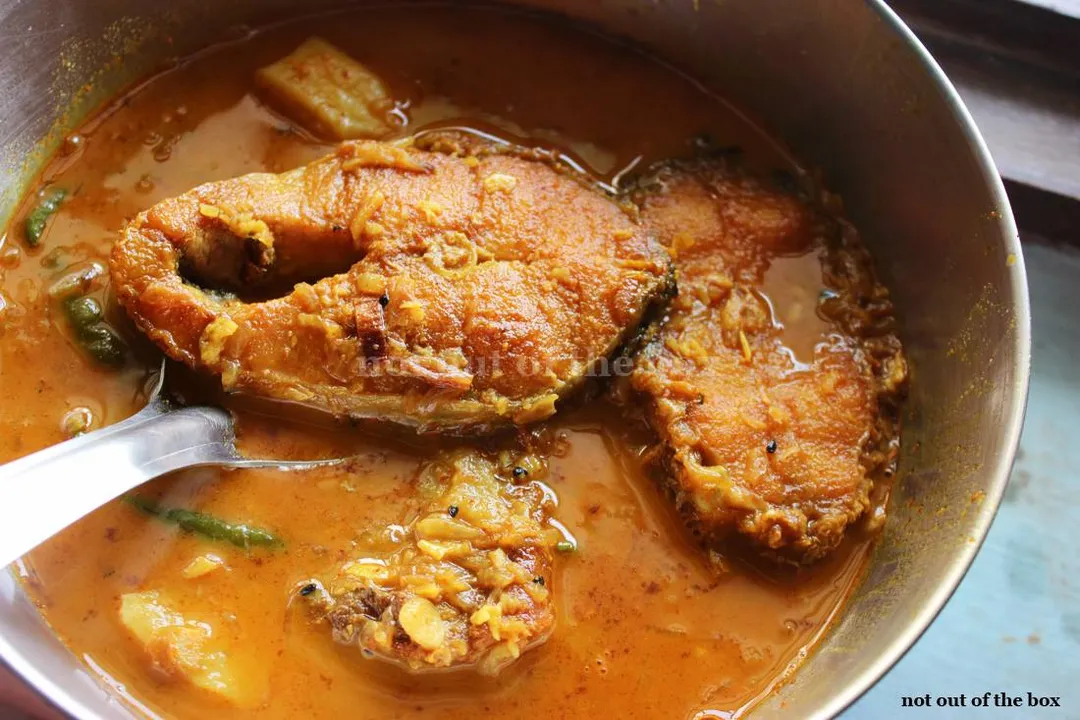
Its flesh possesses a satisfying firmness and density, allowing the pieces to hold their shape well.
Rui fish, or Rohu (*Labeo rohita*), is often described as the workhorse of the Bengali kitchen due to its physical properties when cooked. The key attribute is its satisfying firmness and density. When simmered in the thin, flavorful broth alongside vegetables like potatoes, the pieces maintain their structural integrity. This characteristic makes it highly desirable because it ensures a sturdy bite, meaning the fish chunk remains a distinct centerpiece rather than dissolving into the gravy, which is especially practical if the curry is prepared ahead of time and reheated later.
Related Questions
Why are freshwater carps preferred over sea fish for Macher Jhol?What textural characteristic defines Rui fish (Rohu) when prepared in a simple Jhol?How does the texture and flavor contribution of Katla (Catla) often differ from Rui in a Macher Jhol?Which anadromous, oily fish is revered but rarely used in a standard, light Macher Jhol?What characteristic makes dense freshwater carp flesh practical for busy households when preparing Macher Jhol?What role does Tilapia sometimes play in modern Bengali fish curry recipes?Which specialized, seasonal fish is known for having a soft, almost melt-in-your-mouth texture, requiring a light cooking hand?What fundamental trade-off must a fish flesh manage when cooked in the classic Macher Jhol method?Which element, besides the fish, is usually included in the characteristic light base of Macher Jhol?What distinct flavor characteristic do Tangra (Mystus tangara) catfish possess even when cooked in a simple Jhol?