What characteristic makes dense freshwater carp flesh practical for busy households when preparing Macher Jhol?
Answer
It retains structural integrity, remaining largely intact even if the curry is reheated or allowed to sit for hours.
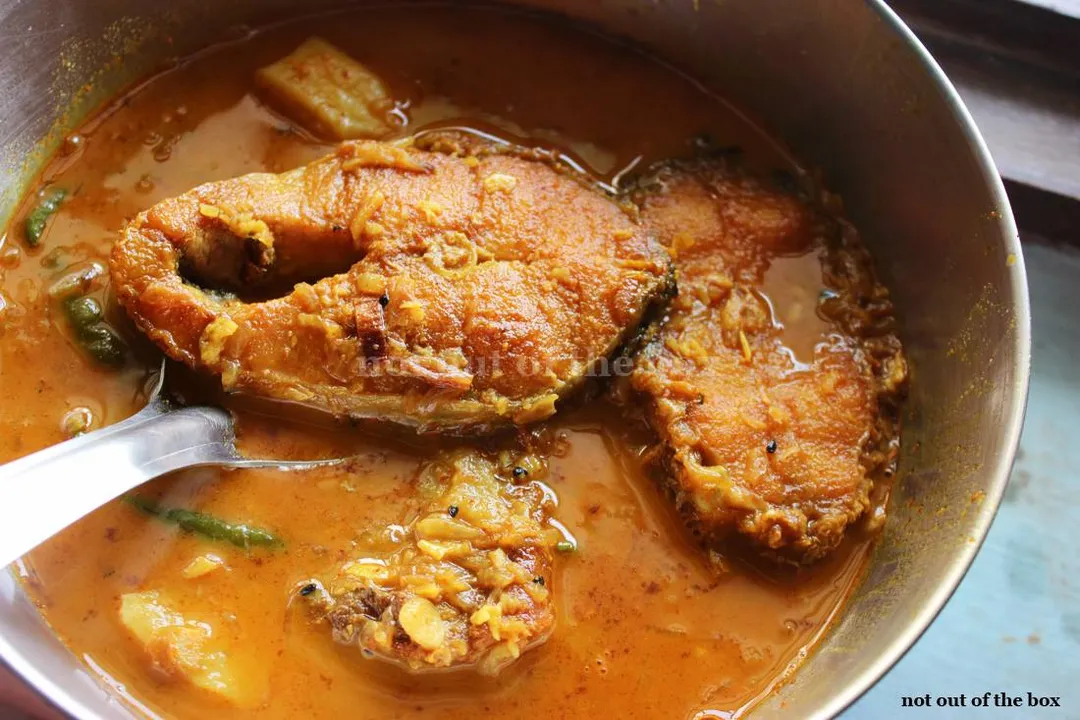
A significant practical consideration in Bengali households is the potential for curry to be prepared in the morning and eaten hours later, perhaps after being reheated. Freshwater carp flesh, especially that of Rohu, offers a density that resists breaking down during this extended period or upon stirring. This resilience contrasts sharply with extremely lean or delicate fish, which might disintegrate into the gravy. For those desiring distinct pieces of fish scooped up with rice, this structural density proves superior for longevity and presentation.
Related Questions
Why are freshwater carps preferred over sea fish for Macher Jhol?What textural characteristic defines Rui fish (Rohu) when prepared in a simple Jhol?How does the texture and flavor contribution of Katla (Catla) often differ from Rui in a Macher Jhol?Which anadromous, oily fish is revered but rarely used in a standard, light Macher Jhol?What characteristic makes dense freshwater carp flesh practical for busy households when preparing Macher Jhol?What role does Tilapia sometimes play in modern Bengali fish curry recipes?Which specialized, seasonal fish is known for having a soft, almost melt-in-your-mouth texture, requiring a light cooking hand?What fundamental trade-off must a fish flesh manage when cooked in the classic Macher Jhol method?Which element, besides the fish, is usually included in the characteristic light base of Macher Jhol?What distinct flavor characteristic do Tangra (Mystus tangara) catfish possess even when cooked in a simple Jhol?