Why is Yellowfin tuna often the preferred choice for searing into steaks or incorporating into grilled dishes?
Answer
Because it is leaner, Yellowfin holds up exceptionally well to cooking.
Yellowfin tuna's leaner composition dictates its suitability for heat-based preparations. Unlike the very high-fat Bigeye, which might struggle with overly intense heat applications, the structure of Yellowfin resists drying out too easily when cooked, provided it is not overdone. This structural integrity makes it an excellent candidate for firm preparations like grilling or pan-searing steaks, where a clean flavor profile that complements rubs and marinades is desired.
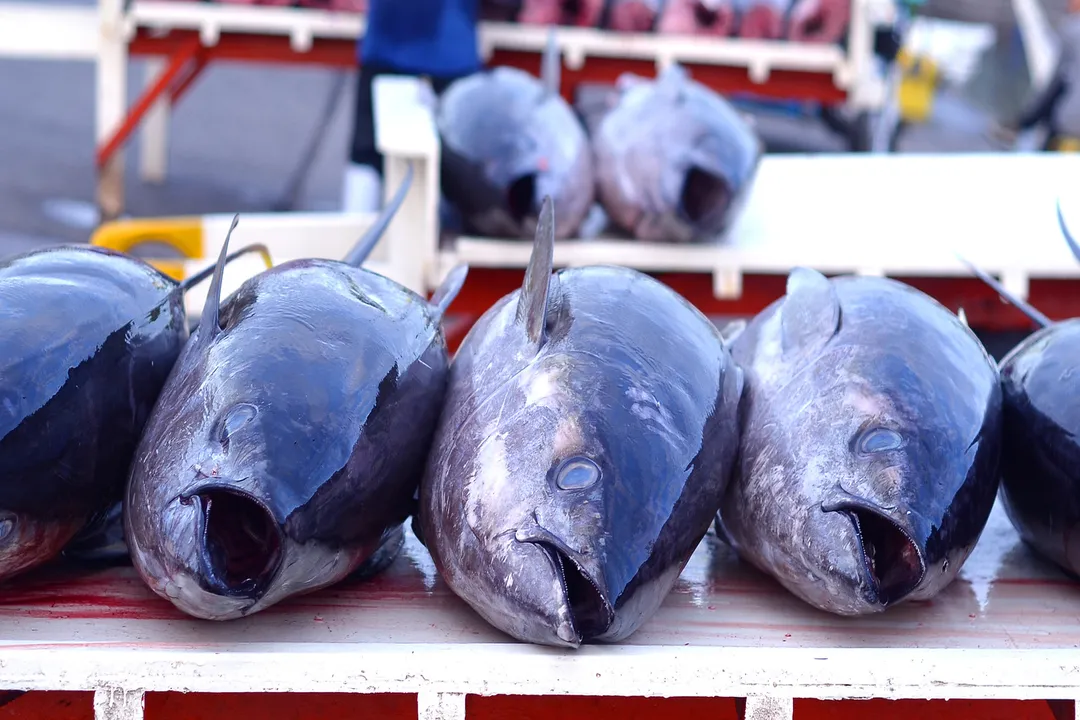
#Videos
Yellowfin vs. Bigeye vs. Bluefin Tuna – What's the Difference?
Related Questions
Which physical characteristic reliably separates Bigeye (Thunnus obesus) from Yellowfin (Thunnus albacares)?What is the characteristic raw flesh color of Bigeye tuna (Thunnus obesus) in the Hawaiian market context?Which tuna species is noted for having a higher oil content, translating to a more luxurious mouthfeel?Which environmental condition do Bigeye tuna generally prefer swimming in, contrasting with Yellowfin?Why is Yellowfin tuna often the preferred choice for searing into steaks or incorporating into grilled dishes?For anyone seeking the purest expression of tuna flavor and texture in raw consumption, which fish is usually the preferred option?How is the raw flesh color of Yellowfin tuna (Thunnus albacares) typically described compared to Bigeye?In Hawaiian contexts, what common term umbrella applies to both Yellowfin (Thunnus albacares) and Bigeye (Thunnus obesus) tuna?Which tuna species is associated with a milder flavor profile when compared directly to the other?How does the typical habitat of Yellowfin tuna contrast with that of Bigeye tuna regarding water temperature and depth?