Which nutrients are often present in higher concentrations in radish leaves compared to the root bulb?
Answer
Protein, calcium, and antioxidants
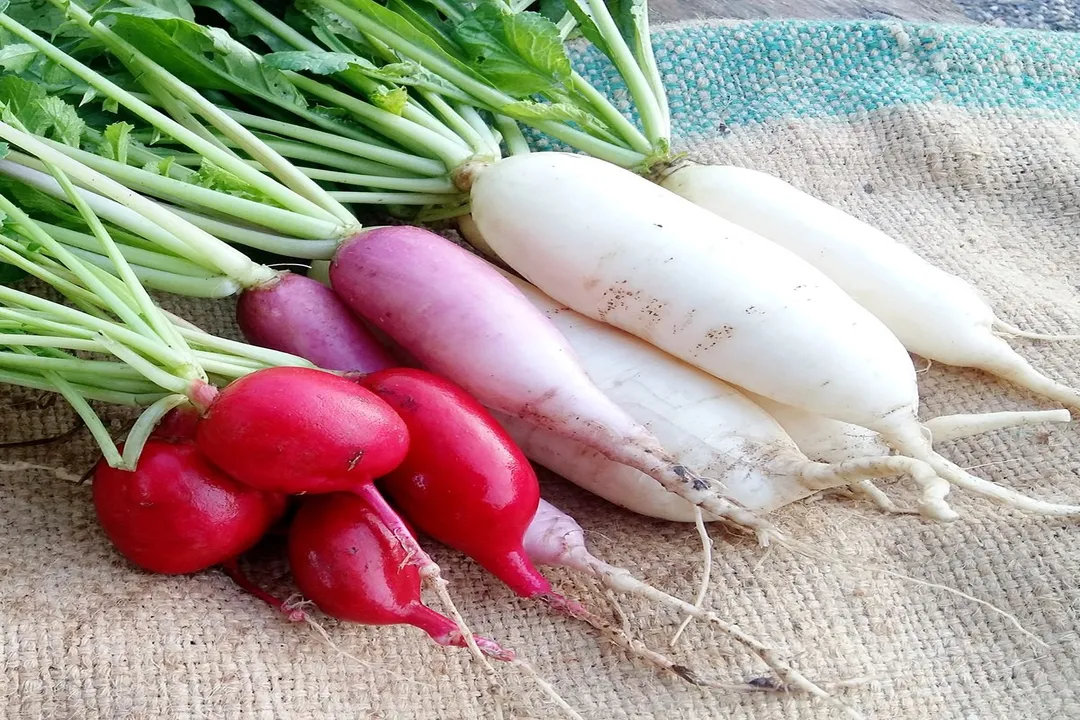
While the radish root provides significant nutrition, the greens—often discarded in Western practices—contain a substantial nutritional payload that can surpass the root in certain areas. When nutrient profiles are compared, the leaves frequently demonstrate higher concentrations of critical elements than the root bulb itself. This superiority applies specifically to macronutrients and key micronutrients, including protein content, calcium levels, and overall antioxidant capacity, in addition to Vitamin C. Furthermore, the iron content found in the radish leaves is particularly beneficial for individuals looking to manage or prevent anemia.
Related Questions
What ailments were radishes historically used to address in Ayurveda and Traditional Chinese Medicine?What is the approximate calorie count for a half-cup serving of raw sliced radish?Which sulfur-containing substances convert into active agents that neutralize cancer-causing substances upon digestion?Which nutrients are often present in higher concentrations in radish leaves compared to the root bulb?What specific alkaloid concentrated in the giant Sakurajima daikon variety shows positive effects on blood vessel health?What beneficial effect do polysaccharides found in radish greens exhibit regarding gut health?Which antifungal protein in radishes induces cell death in *Candida albicans* *in vitro*?How long should the radish greens be used within compared to the roots based on the Two-Part Harvest Strategy?Which population group is generally advised to avoid raw radishes due to the risk of bacterial contamination like *Listeria*?How does cooking (roasting, grilling, or sautéing) radishes typically alter their flavor and texture?