What differentiates fried Kibbeling from raw Haring when sampling Amsterdam seafood?
Answer
Kibbeling involves battered and deep-fried chunks of white fish like cod or pollock.
The fundamental difference lies in preparation: Haring is raw herring that has been cured in salt and is often eaten whole by holding the tail, though it can be topped with onions and pickles. Kibbeling, conversely, is an accessible alternative consisting of chunks of white fish, typically cod or pollock, which are dipped in batter and then deep-fried until they achieve a crispy exterior. While both dishes showcase the Netherlands' deep maritime history, Haring represents the tradition of consuming preserved raw fish, while Kibbeling represents the tradition of consuming fried fish morsels, often served with dipping sauces like garlic or herb varieties.
Related Questions
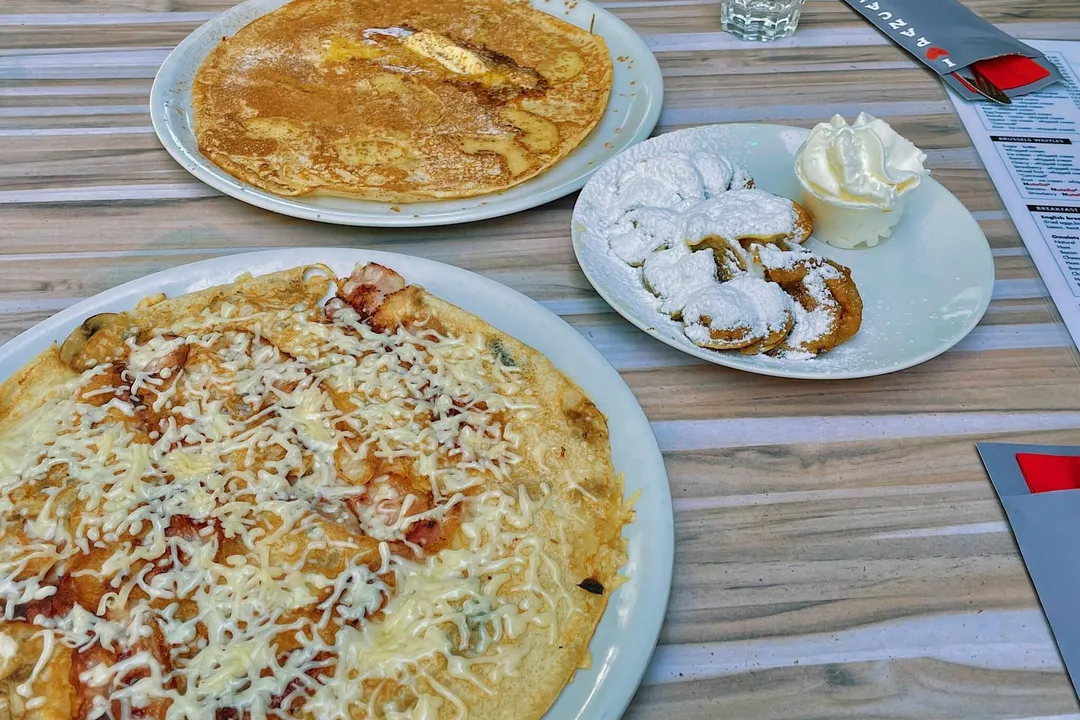
Which specific toppings define the Dutch street snack Oorlog fries?Where should one venture for potentially higher-grade potato frituur shops?What differentiates fried Kibbeling from raw Haring when sampling Amsterdam seafood?What primary physical characteristic distinguishes Bitterballen from Kroketten?What unique Dutch food engineering feature is associated with serving fried snacks like kroketten?What is the recommended technique for maximizing the gooey texture of a fresh stroopwafel?How are small, fluffy poffertjes traditionally served at outdoor markets?How does Dutch appeltaart typically differ structurally from American deep-dish pie?What is the primary vegetable mixture used in the ultimate Dutch comfort food, Stamppot?What characteristic is associated with oud (old) Gouda cheese compared to jong Gouda?What is the customary way to take the first sip when drinking traditional, ice-cold Jenever?