Can you eat pole beans?
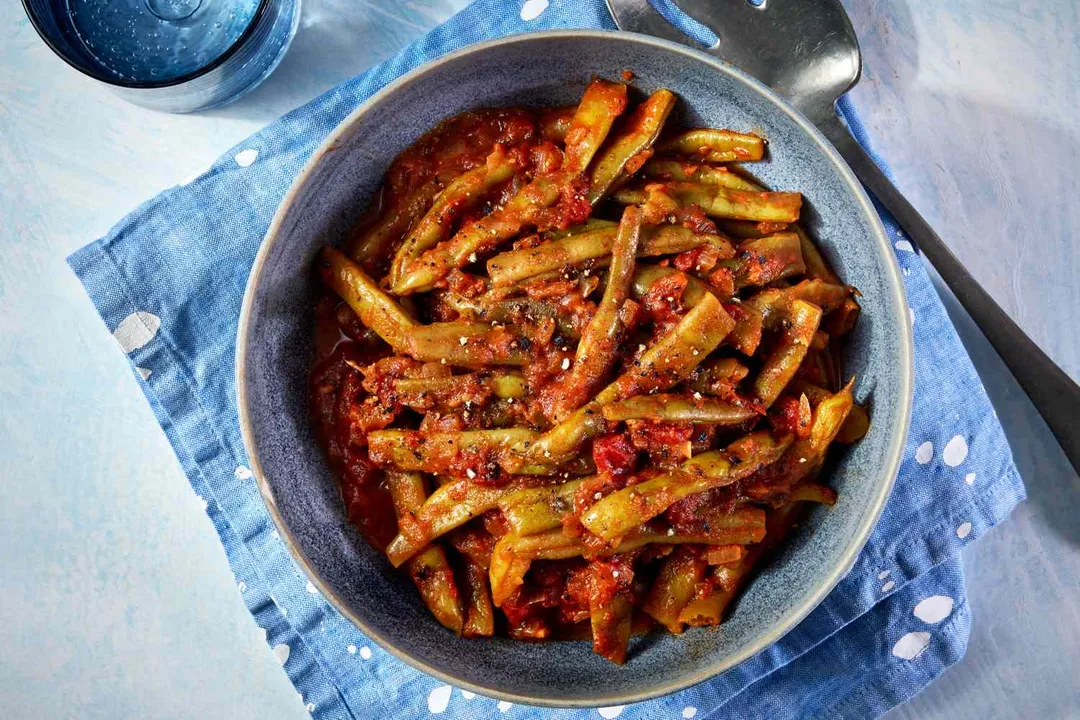
The fundamental answer to whether pole beans are edible is an emphatic yes, but this simple confirmation barely scratches the surface of their culinary and gardening value. Pole beans, like their bush-grown cousins, are essentially Phaseolus vulgaris—the common bean—and are absolutely fit for the plate. The confusion often arises not from toxicity (though cautions exist regarding raw consumption), but from the expectation of a specific texture and the maturity at which these vining types are traditionally harvested. [4][7] Unlike the uniform, early-picked beans found in most supermarkets, pole varieties, especially heirlooms, are often allowed to mature further, leading to distinct preparation methods and vastly different flavor profiles. [3][4]
# Growth Habits
Understanding the difference between pole and bush beans is key to understanding their culinary application. Bush beans grow compactly, topping out around two feet high, and produce the majority of their crop in a relatively short window, making them ideal for large batches meant for freezing or canning. [6] Pole beans, however, are climbers, sending out vines that can readily reach five to nine feet, or even twelve feet, requiring substantial support structures like trellises or poles. [3][6] This difference in growth strategy means pole beans generally yield smaller amounts over a much longer season. [6] This extended production period makes them excellent for small gardens where a steady supply of fresh beans over many weeks is preferable to one massive haul. [6]
There is also a third category, sometimes called half runners, which are shorter, perhaps growing about three feet tall, and might trail on the ground or use a shorter support system, often leaning towards the dry bean category. [6] Regardless of whether they are bush or pole, the term often used interchangeably for the edible green form is snap beans. [4]
# Culinary Maturity
One of the most valuable pieces of information regarding pole beans is that they are edible at various stages of development, meaning a single plant offers a spectrum of eating experiences. [6] The preparation and required cooking time shift dramatically based on which stage you choose to harvest.
# The Green Stage
At their earliest stage, pole beans are eaten pod and all, much like the standard green bean. For a tender experience mimicking what most people expect from a "green bean," one should harvest them before the internal seeds begin to bulge or become apparent. [4][6] Varieties like Blue Lake Pole are well-suited to this stage. [4] However, a note on nomenclature is warranted: even varieties explicitly labeled "stringless," such as the historic Kentucky Wonder, may still present strings. [1] These strings often separate when the pod is snapped from the stem, or they become noticeable when breaking the larger pods into cooking segments. [1] For best results at this tender stage, aim for a consistent shape, perhaps around three to five inches long and about a centimeter thick, though personal preference reigns supreme. [4]
# The Shelling Stage
If the pods are allowed to mature past the tender green stage—perhaps because you missed a harvest or two—they enter the shelling stage. At this point, the pods become bumpy, dense, and heavy as the actual bean inside develops significantly. [1][3] While the pod itself becomes tougher and may require stringing and snapping due to ropy side strings, [3] the interior beans are fresh, tender, and white. [1] These fresh, shelled beans can be cooked briefly, sometimes even sautéed if they are exceptionally fresh. [6] Adding these young, fresh-shelled beans alongside the younger green pods in a pot can provide a nice textural variance. [1]
# The Dry Stage
Should the pods be left on the vine even longer, they will dry out completely. At this point, you harvest the entire dried pod, shell it, and store the mature beans for later use, much like pinto or black beans. [6] Almost all bean types can be used this way, even those varieties that become woody or unpalatable if eaten as over-mature green beans. [6] Once dried, they require soaking before cooking and generally need a longer cooking time to become tender. [6] This allows a small patch of pole beans to yield a substantial crop for winter storage, making them truly multi-talented. [6]
# Cooking Differences and Flavor
The question of interchangeability in recipes—can pole beans be cooked exactly like bush beans—is answered by maturity. Since both pole and bush beans can be used as snap beans when picked young, they are generally interchangeable in recipes calling for standard green beans. [4] However, certain pole varieties, particularly heirloom types, possess flavor characteristics that demand different preparation when mature. [3]
Kentucky Wonders, for example, are described as hearty and dense with an intense flavor that home gardeners claim surpasses other varieties, even when cooked longer. [1] These heavy-podded beans often require a period of long, slow cooking following an initial braise to soften them properly. [1] The goal when cooking these mature beans is to create a pot of tender, flavorful beans that are moist but not swimming in liquid, achieved by coating them in oil and seasoning during the braise, then cooking them covered to prevent scorching. [1]
In contrast, heirloom types famous in Appalachian cuisine, such as Rattlesnake beans, are sometimes intentionally left on the vine until they are bumpy and nearly bursting. [3] This results in a superior, incomparable flavor that justifies the labor of stringing and snapping them by hand. [3]
If you are cooking a batch of older, slightly tougher pole beans, one culinary trick shared by experienced cooks is to process them using a French cut method (slicing them lengthwise), which can help manage the slightly chewier texture without requiring an overly long simmer. [4]
# Raw Consumption Caution
While many home gardeners enjoy "grazing" on the tender, immature pods directly from the vine—and historical accounts suggest this is common practice, even with Kentucky Wonders [7]—it is worth noting the safety discussion surrounding raw beans. Some older advice suggests that raw green beans can contain lectins and Phytohaemagglutinin, making them mildly poisonous. [7] However, others point to tests indicating that common snap beans picked while green and immature, as opposed to broad beans like lima or fava, are generally safe to eat raw without ill effects. [7] If you prefer that raw crunch, often found in dishes like Thai spicy salads, use beans picked young and be aware that the bitterness and crunch are part of the raw experience. [7]
To maximize your harvest and appreciate the diversity of pole beans, consider your end goal before you pick. If your goal is a pantry stocked for winter, resisting the urge to pick every pod green allows you to use the same space for a long-term dry bean harvest. [1] For instance, if you are growing Rattlesnake Pole Beans—a variety praised for being both prolific and very tasty —you can decide early in the season if that particular cluster is destined for a quick pot of braised greens or if it will be left to cure for baking later on. [1] If your primary harvest window is short, like early summer, focusing on bush varieties might serve you better for freezing, but if you value intense, slow-cooked flavor and continuous snacking through fall, the pole habit is indispensable. [6] A small, well-trellised patch of heirloom pole beans can provide that continuous culinary reward that many find deeply satisfying. [3][6]
# Preparing Heirlooms
The tradition surrounding heirloom pole beans often involves communal preparation, a ritual that forces one to slow down and appreciate the vegetable. [3] Preparing a large haul of these mature beans—which involves stringing and snapping them into manageable lengths—can be a task that requires mindfulness but not intense concentration, allowing for conversation or watching television while working. [3] This hands-on preparation is often seen as a fair exchange for their superior taste compared to store-bought alternatives. [3]
When shopping for these beans, look to farmers' markets or seed savers who value biodiversity, as these sources are more likely to carry the superior-flavored heirloom types over the modern, mass-market varieties. [3] If you are trying to introduce non-bean-lovers to the taste, start by selecting the youngest, most slender pole beans you can find, as they will require less cooking and lack the strong textural elements of the older pods. [4] Conversely, if you love that dense texture and deep flavor, commit to the longer cooking time required for the mature, bumpy pods. [1]
# Selecting Your Pole Bean Support
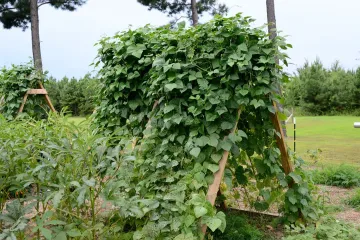
Since pole beans rely entirely on vertical support, planning the trellis size correctly is essential for a successful harvest and ease of picking. Vines can easily exceed ten feet in length. [3] If a gardener underestimates the necessary height, the vines can quickly become unwieldy and overtake surrounding crops. [4] When planning your structure, remember that you will need to be able to reach the top clusters, which are often the last to ripen, so a structure between six and eight feet is a practical minimum, depending on your variety and local growing conditions. [6][3] Failure to provide adequate support means the beans will sprawl on the ground, increasing moisture contact, potential pest issues, and making harvesting the upper pods difficult. [4]
Ultimately, whether you enjoy them raw, snap them young for a quick sauté, or braise them slowly until deeply tender, pole beans offer a depth of flavor and a more varied harvest schedule that many gardeners find well worth the initial investment in vertical support. [3][4]
#Videos
Pole Beans Eat them Right off the Vine! - YouTube
The BEST Green Bean EVER? Rattlesnake Pole Bean Review & Cook
Related Questions
#Citations
Can pole beans be cooked the same as regular green beans? - Reddit
Pole Beans Eat them Right off the Vine! - YouTube
In Praise Of Pole Beans - Southern Living
Beans, the Multi-Talented Vegetable - Community Seed Exchange
Using uncooked or raw green beans - Cooking - eGullet Forums
Kentucky Wonder Pole Beans - Fresh Bites Daily