What culinary benefit of *Satsumaimo* reduces the need for added fats or sugars in preparing dishes?
Answer
Its natural intense sweetness and moist, rich texture.
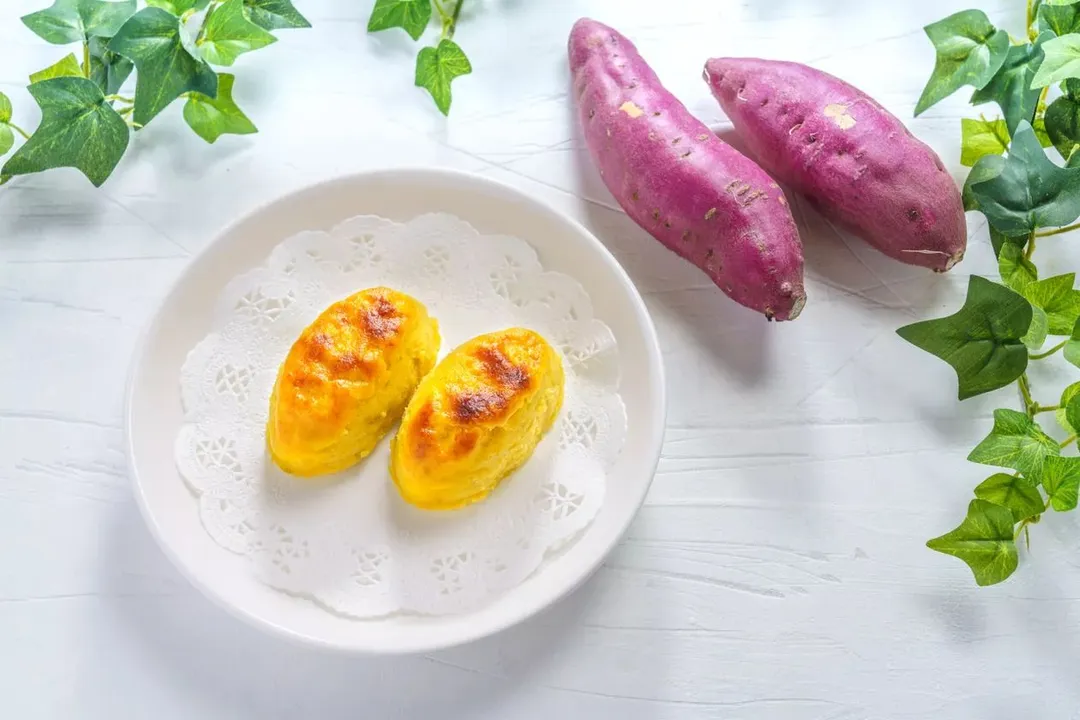
A major appeal of the Japanese sweet potato lies in its inherent culinary quality: intense natural sweetness combined with a moist, smooth texture. This richness means that when steamed or boiled, the tuber is often satisfying enough on its own that added fats, such as butter or oil, or refined sweeteners become unnecessary. This natural flavor profile makes healthier eating choices more enjoyable and sustainable over the long term, as it naturally elevates the eating experience without requiring excess caloric additions.
Related Questions
What is the characteristic cooked texture of the Japanese sweet potato, *Satsumaimo*?Which essential electrolyte, crucial for maintaining healthy blood pressure, is supplied significantly by *Satsumaimo*?What powerful antioxidants are substantially present in the deep purple-fleshed *Ayamurasaki* *Satsumaimo* type?How does resistant starch in *Satsumaimo* benefit the gut microbiome when eaten with the skin on?How does the Glycemic Index (GI) of *Satsumaimo* typically compare when prepared by boiling versus baking?What technique encourages more starch to retrograde into resistant starch in cooked *Satsumaimo* for maximum prebiotic effect?What key difference in health focus exists between pale-fleshed *Satsumaimo* and the purple-fleshed *Ayamurasaki*?What culinary benefit of *Satsumaimo* reduces the need for added fats or sugars in preparing dishes?In terms of caloric content per serving, how does *Satsumaimo* often compare to a standard white potato?Where are many of the pigment-based defensive compounds concentrated in the *Satsumaimo* tuber?