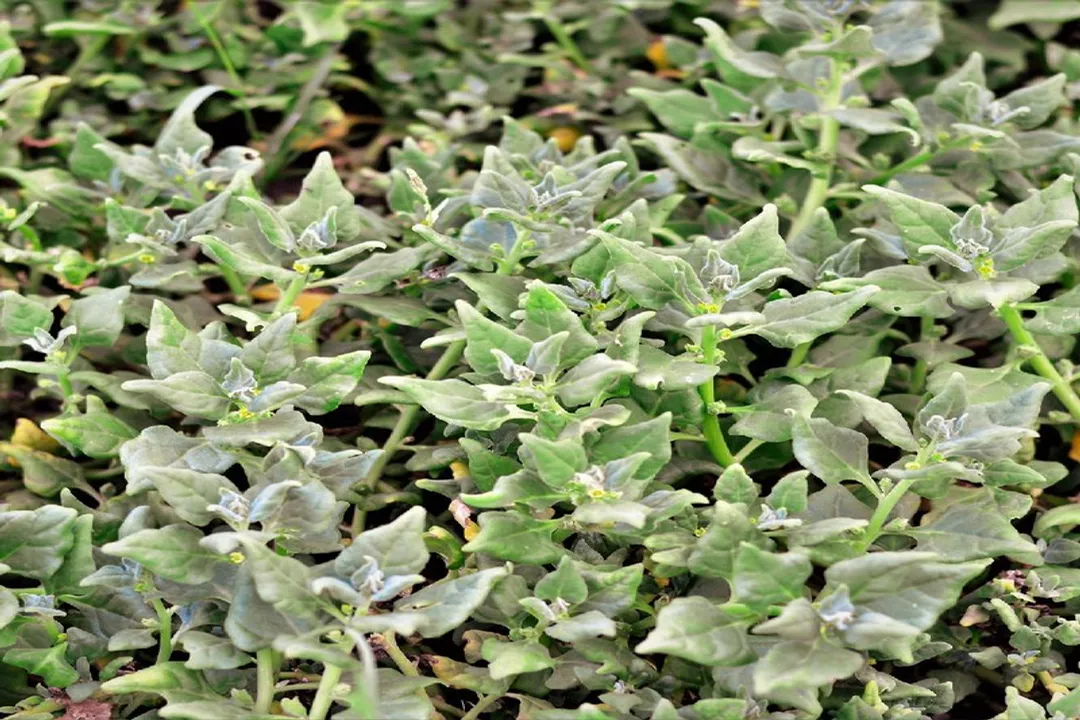
Because of its high water content, how might the concentration of some dry-weight minerals in New Zealand Spinach compare weight-for-weight against common spinach?
The concentration of certain dry-weight minerals might be lower per equal weight unit.
New Zealand Spinach is characterized by having thick, somewhat succulent leaves, which indicates a significant percentage of its total mass is comprised of water. When comparing two vegetables by weight, if one has a substantially higher water content than the other—such as comparing *Tetragonia tetragonoides* to common spinach—the nutrients that are not water-soluble or are bound within solid structures may appear less concentrated in the succulent vegetable on a direct weight-for-weight basis. While it provides meaningful amounts of calcium and iron, the sheer volume of water dilutes the proportion of these dry components relative to a leaf with lower overall moisture.