Which specific part of the ripe ackee fruit, surrounding the seed, is safe for consumption when properly prepared?
Answer
The yellow, fleshy aril
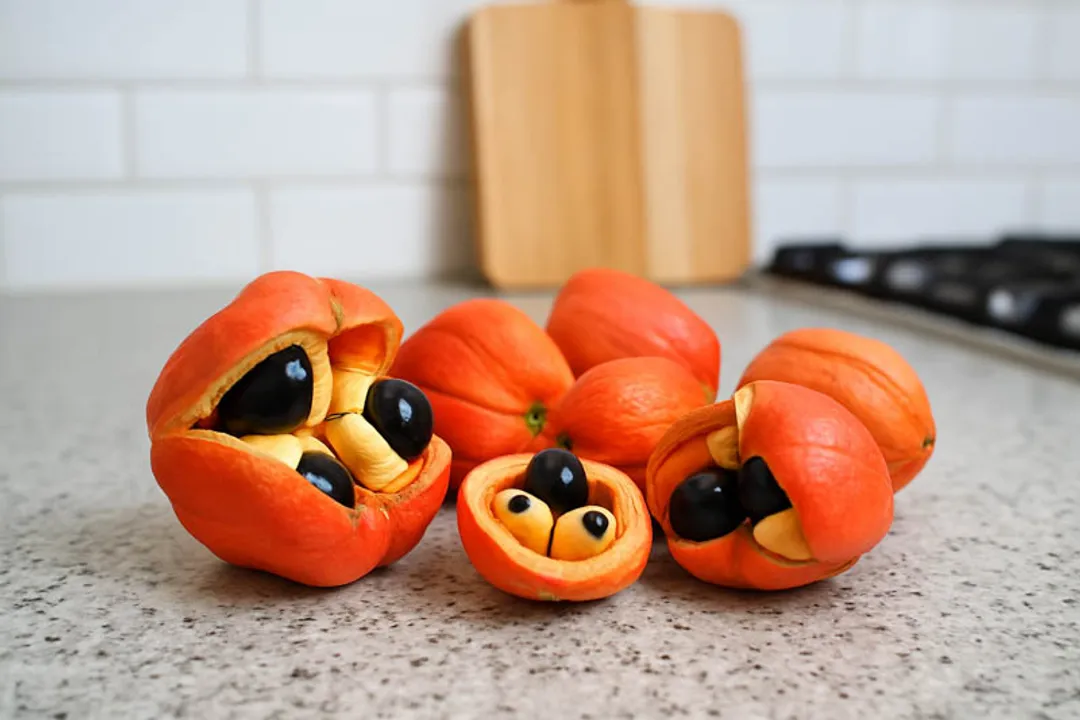
Safety in consuming ackee hinges entirely on consuming only the correct part of the fruit at the correct time. The only component deemed safe for ingestion is the yellow, fleshy aril. This structure surrounds the large black seed within the fruit's interior. Crucially, even the aril is only safe if the fruit has fully ripened and opened naturally. Any part retaining a whitish or greenish tint, or any portion of the seed itself, must be discarded immediately because these parts harbor the toxic compounds responsible for Jamaican Vomiting Sickness. The golden color signifies maturity and separation from the toxins.
Related Questions
What specific toxins found in unripe ackee fruit can cause Jamaican Vomiting Sickness?Which mineral, abundant in ripe ackee, is crucial for counterbalancing excessive sodium intake and maintaining healthy blood pressure levels?The healthy fat profile of ripe ackee is noted for containing which specific fatty acid, also the main component of olive oil?What physical indicator is described as the most reliable field marker for confirming the safety and ripeness of a harvested ackee fruit?Which specific part of the ripe ackee fruit, surrounding the seed, is safe for consumption when properly prepared?Which vitamin present in ackee supports ocular health by being a necessary component for the production of rhodopsin?What primary physiological process is inhibited by hypoglycins, leading directly to the dangerously low blood sugar characteristic of Jamaican Vomiting Sickness?For consumers outside Jamaica wishing to try ackee while minimizing the risk associated with field harvesting judgments, which preparation method is recommended?What nutritional characteristic differentiates ripe ackee from many other common fruit varieties, making it calorie-dense relative to items like apples or berries?What is the botanical name officially assigned to the ackee fruit, the national fruit of Jamaica?