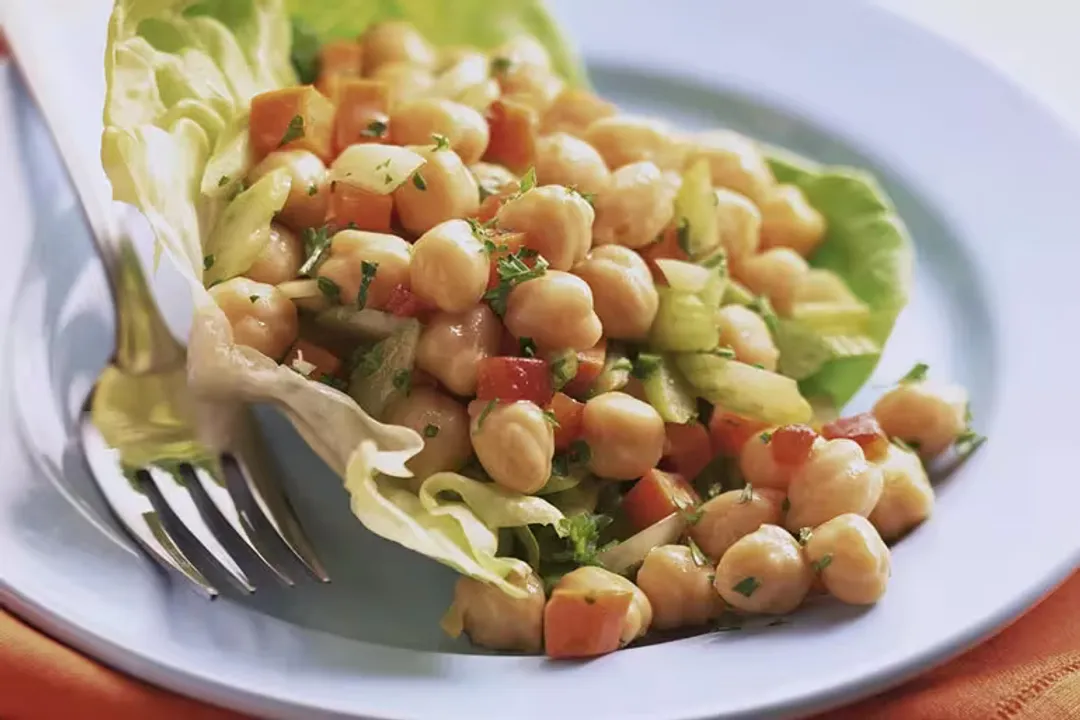
What mechanism, driven by soluble fiber, helps chickpeas reduce low-density lipoprotein (LDL) cholesterol?
Soluble fiber binds with cholesterol particles in the digestive system, preventing absorption.
The positive effect chickpeas have on cardiovascular health, particularly concerning cholesterol management, is largely attributed to their soluble fiber content. When soluble fiber is ingested, it interacts with dietary cholesterol within the gastrointestinal tract. This interaction causes the fiber to bind physically with the cholesterol particles. By binding the particles, the fiber prevents them from being absorbed through the intestinal lining into the bloodstream. Consequently, these cholesterol-bound particles are instead prompted toward excretion from the body, leading to a measurable reduction in circulating levels of low-density lipoprotein (LDL), commonly identified as the 'bad' cholesterol.