Which of the following names is listed as a common name for the American Mayapple (Podophyllum peltatum) that reflects historical perception or appearance?
Answer
wild lemon
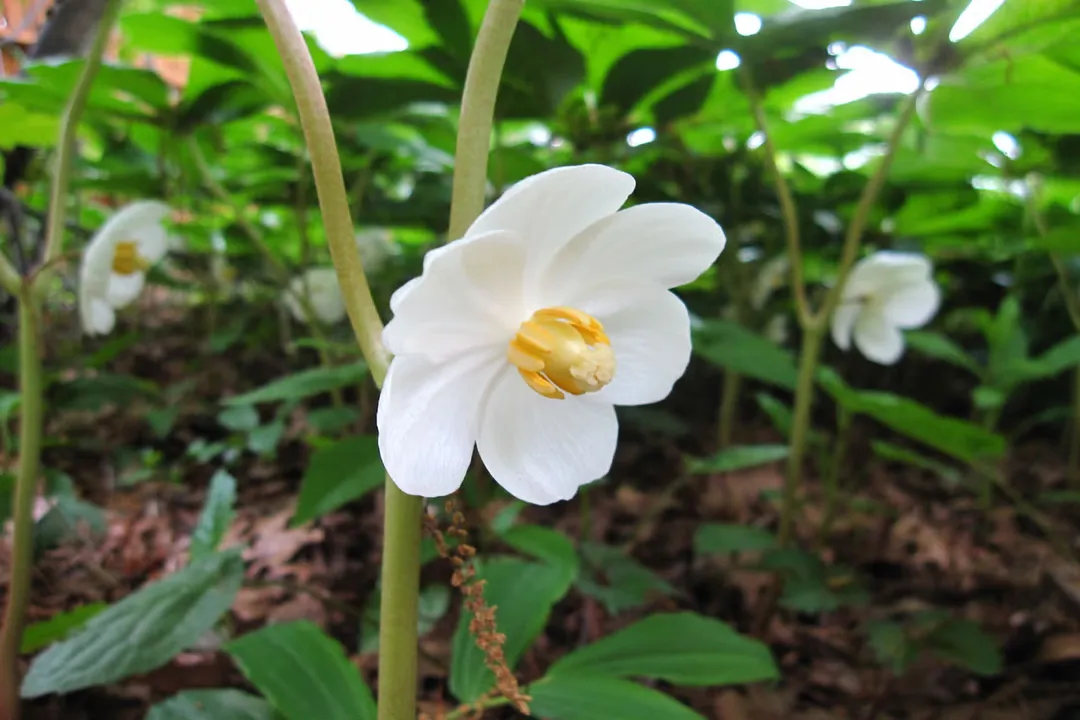
The American Mayapple possesses a wide variety of common names, many of which emerged historically, often stemming from observations about the plant's appearance, the smell or taste of its parts, or historical beliefs surrounding its effects. The text explicitly lists several such names used interchangeably for *Podophyllum peltatum*. These include ground apple, dog's apple, hogapple, drunkards, satan’s apple, and wild lemon. These alternative names reflect the diverse ways people have interacted with or perceived this fascinating woodland perennial over time, contrasting with its standardized scientific nomenclature.
Related Questions
What specific lignan compound found primarily in the rhizomes and roots of Podophyllum peltatum dictates both its therapeutic value and significant toxicity?Which FDA-approved chemotherapy drug is derived as a semi-synthetic medication using podophyllotoxin from the American Mayapple as its foundational precursor?How does the concentration of podophyllotoxin in the American Mayapple (P. peltatum) generally compare to that found in its close relative, the Himalayan Mayapple (P. hexandrum)?What dermatological condition was historically treated using concentrated topical extracts derived from the Mayapple root due to the presence of podophyllotoxin?Despite its fruit sometimes being consumed when fully ripe, which parts of the American Mayapple plant are considered poisonous year-round and hold the highest concentration of the active substance?Historically, due to its strong cathartic nature, for what specific intestinal issues was the American Mayapple traditionally employed by practitioners?What specific conditions must be met regarding the appearance of the American Mayapple fruit before it is considered safe for consumption?What is the characteristic appearance of the leaves of Podophyllum peltatum that emerge in the spring?Before its publication date regarding anti-cancer properties, what scientific organization confirmed that extracts from American Mayapple rhizomes and roots displayed anti-cancer activity in vitro?Which of the following names is listed as a common name for the American Mayapple (Podophyllum peltatum) that reflects historical perception or appearance?