Health Benefits of American Mayapple
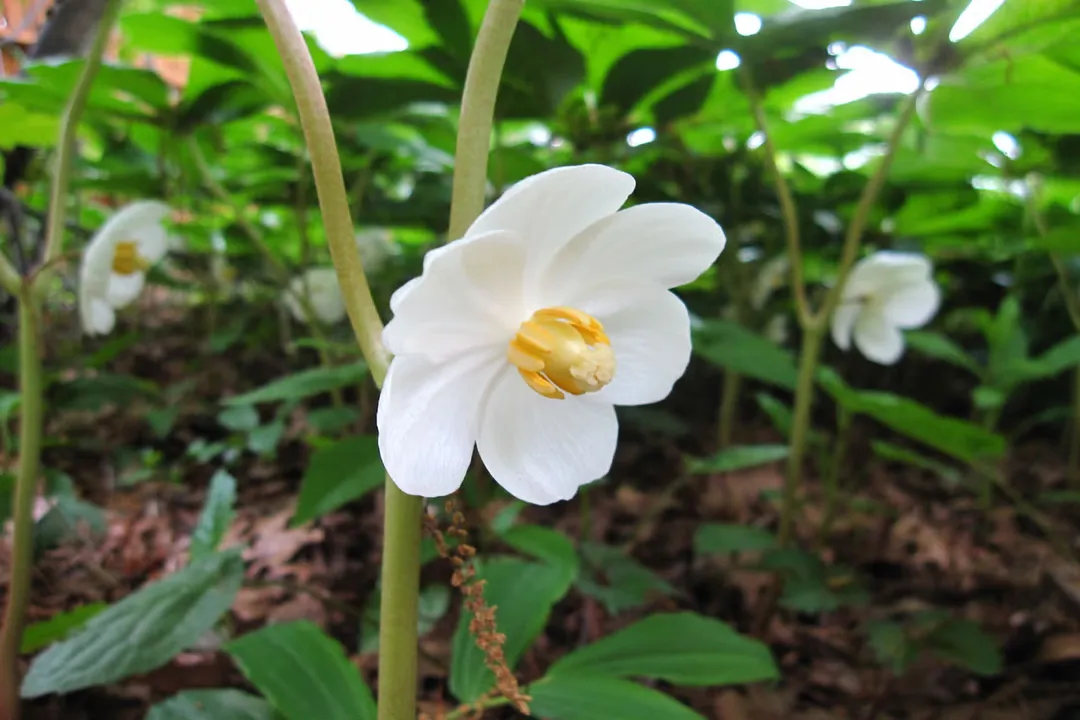
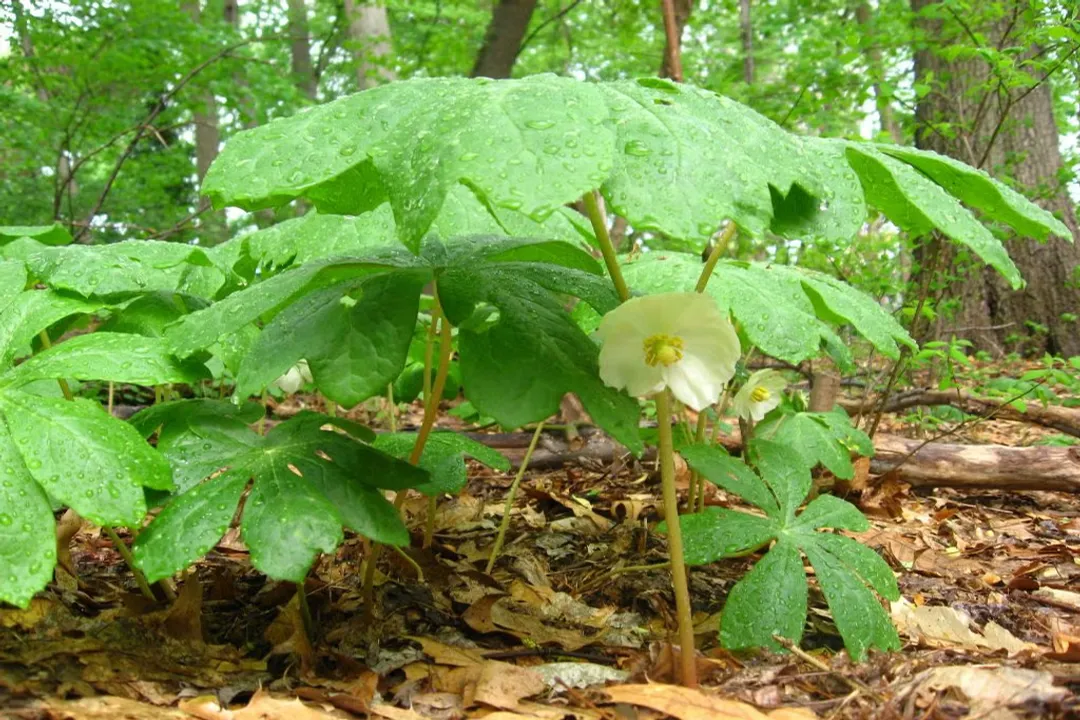
The American Mayapple, scientifically known as Podophyllum peltatum, is a fascinating woodland perennial native to North America. [2][6] Before diving into its notable chemical properties, it is important to recognize its various common names, which often reflect its appearance or historical perception, such as wild lemon, ground apple, dog's apple, hogapple, drunkards, and even satan’s apple. [2] This plant is easily recognized by its umbrella-like leaves, typically two per stalk, which appear in the spring. [2] While the entire plant possesses a distinct presence in the shaded forest understory, for medicinal consideration, the focus is primarily on the rhizomes and roots. [2][6]
# Chemical Core
The significance of the American Mayapple in both traditional and modern contexts stems almost entirely from a specific lignan compound found within the roots and rhizomes: podophyllotoxin (PPT). [1][6] This compound is the main active chemical constituent of the plant material. [6] It’s the presence of this powerful substance that dictates both its potential therapeutic value and its significant toxicity. [6][9] When looking at the extraction and chemical potential, it is worth noting a key difference between P. peltatum and its close relative, the Himalayan Mayapple (P. hexandrum or P. emodi). Research indicates that the Himalayan species yields substantially higher concentrations of this valuable podophyllotoxin compared to the American variety. [3] This variance in yield has practical implications for sourcing materials, particularly when considering large-scale supply or the impact of wild harvesting efforts on native populations. [3]
# Pharmaceutical Application
The identification of podophyllotoxin’s activity marked a turning point in how this plant was viewed by modern science. Research conducted by the USDA confirmed that extracts from the rhizomes and roots of American Mayapple displayed anti-cancer activity when tested in vitro against several lines of cancer cells. [5] This finding cemented the compound's importance long before that research was published in 2000. [5]
This naturally derived compound served as the chemical template for the development of highly important, semi-synthetic drugs used widely today. Specifically, podophyllotoxin is the foundational precursor for the chemotherapy drug etoposide. [1][5] Etoposide is an FDA-approved medication, illustrating a direct link from a simple woodland plant to sophisticated cancer treatment protocols. [1][5]
# Historical Uses
Long before its anti-cancer properties were scientifically characterized, various parts of the Mayapple were employed in traditional medicine, often with a clear understanding of its potent, and sometimes dangerous, effects. [6] The strong cathartic nature of the plant led to its historical use as an emetic or a laxative. [6][9] Traditional practitioners also directed its use toward treating intestinal issues, specifically for expelling gastrointestinal parasites or managing bouts of diarrhea. [9]
The fruit, which ripens later in the season, also played a role. While the entire plant is generally considered poisonous, [9] the mature, fully yellow fruit has a history of being consumed or used specifically for treating diarrhea and worm infestations. [4][9]
# Wart Treatment
Perhaps one of the most consistent historical and clinical applications of the extracted compound relates to dermatological conditions. Concentrated extracts derived from the Mayapple root have been historically applied topically as a treatment for warts. [6][8] This application is directly attributed to the presence of podophyllotoxin. [8] Today, derivatives of PPT continue to be utilized in topical formulations for treating external genital warts, showcasing the enduring therapeutic relevance of this natural chemical agent. [8]
# Toxicity and Safety Profile
It cannot be overstated that the American Mayapple is considered poisonous. [9] This toxicity is a critical counterpoint to its medicinal potential and must govern any interaction with the plant. [6] The active compound, podophyllotoxin, is potent enough to be used therapeutically, but in its raw form or in incorrect concentrations, it presents a significant hazard. [1]
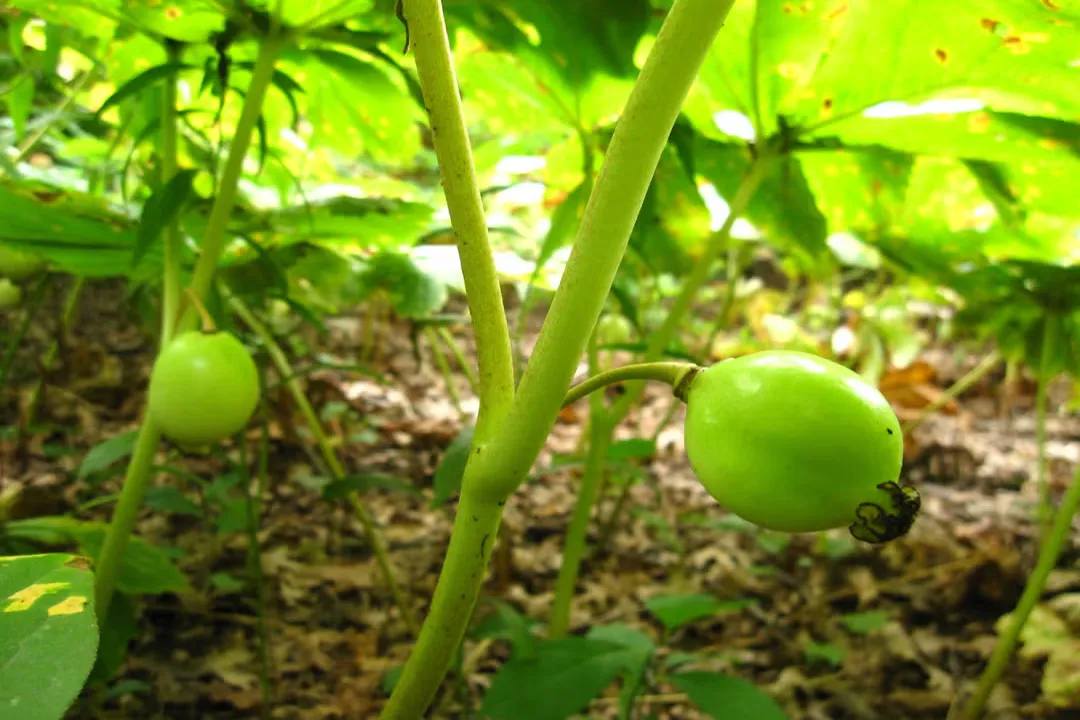
The edible aspect of the plant, the fruit, requires extremely precise timing for consumption. The fruit must reach full ripeness—becoming yellow and slightly soft—before it is considered safe to eat. [4] Unripe fruit is definitively poisonous. [4] Therefore, handling or preparation of any part of the plant, especially the roots which hold the highest concentration of the active substance, demands extreme caution and specialized knowledge, which is why modern use centers on controlled pharmaceutical extraction rather than self-medication. [1][6] If one were to consider a wild gathering scenario for educational or botanical purposes, understanding the specific, narrow window of fruit ripeness versus the year-round toxicity of the roots offers a clear example of risk differentiation in nature. For example, a person observing a patch in mid-June might see perfectly ripe yellow fruit, but the underground rhizomes harvested at that time would still contain the toxic concentration of PPT.
# Sustainability and Wild Sourcing
Because the most medicinally valuable part of the plant—the rhizome and root structure—must be harvested, there are legitimate concerns regarding the sustainability of relying on wild populations. [3] Given that the American species yields less PPT than the Himalayan one, excessive harvesting pressure on P. peltatum could be particularly detrimental if demand increases solely based on its availability in North America, even though the latter is not the primary source for established drugs like etoposide. [3][5]
For those interested in cultivating or studying the plant in a garden setting, knowing its native environment is helpful. It thrives as a perennial in the shaded environments of woodlands. [2] Establishing a small, cultivated patch for educational observation, for instance, helps ensure that wild populations remain undisturbed while still allowing for study of its growth cycle, from its spring emergence to the ripening of its fruit in the summer months. [2][4] This controlled approach helps maintain genetic diversity in the wild while providing local, accessible specimens for safe study of its lifecycle.
Related Questions
#Citations
Mayapple Uses, Benefits & Dosage - Drugs.com
Mayapple – Roots of Medicine
Disjunct Medicine: A History of the (Two) Mayapple(s)
Mayapples: edible fruit with medicinal uses - Facebook
American Mayapple Yields Anti-Cancer Extract - USDA ARS
Mayapple - Sam W. Hitt Medicinal Plant Gardens
A comprehensive review on the pharmacognostic and toxicological ...
Useful plants of dermatology. VI. The mayapple (Podophyllum)
Mayapple - healing herbs - Herbs2000.com