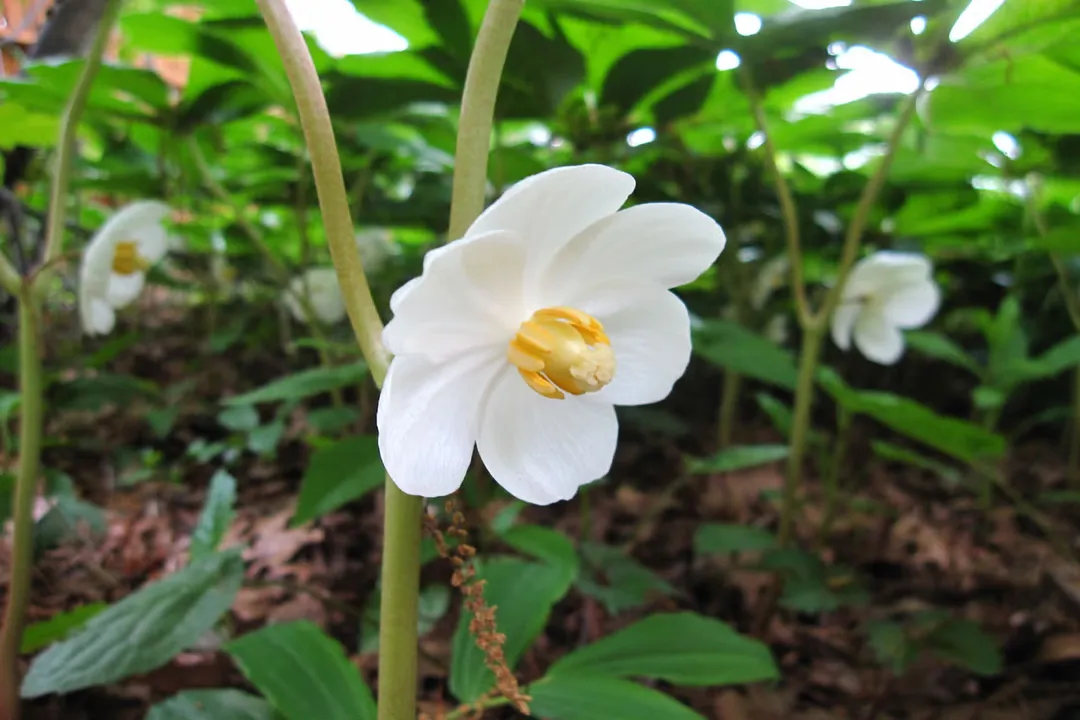
How does the concentration of podophyllotoxin in the American Mayapple (P. peltatum) generally compare to that found in its close relative, the Himalayan Mayapple (P. hexandrum)?
The Himalayan species yields substantially higher concentrations.
While both *Podophyllum peltatum* (American Mayapple) and *P. hexandrum* (Himalayan Mayapple) contain the medicinally valuable podophyllotoxin, research indicates a notable quantitative difference between the two species. The Himalayan variety, also known as *P. emodi*, is chemically richer in this active lignan. Specifically, the Himalayan species produces substantially higher concentrations of podophyllotoxin within its plant material compared to the American variety. This difference in yield has practical implications for the sourcing and sustainability of the compound. If efforts were directed toward sourcing PPT for large-scale pharmaceutical needs, the higher concentration in the Himalayan species would make it a more efficient source, potentially impacting the harvesting pressures placed on native North American *P. peltatum* populations.