How is the texture of a raw sunchoke described, compared to when it is cooked?
Answer
Crisp and slightly sweet, sometimes compared to water chestnuts.
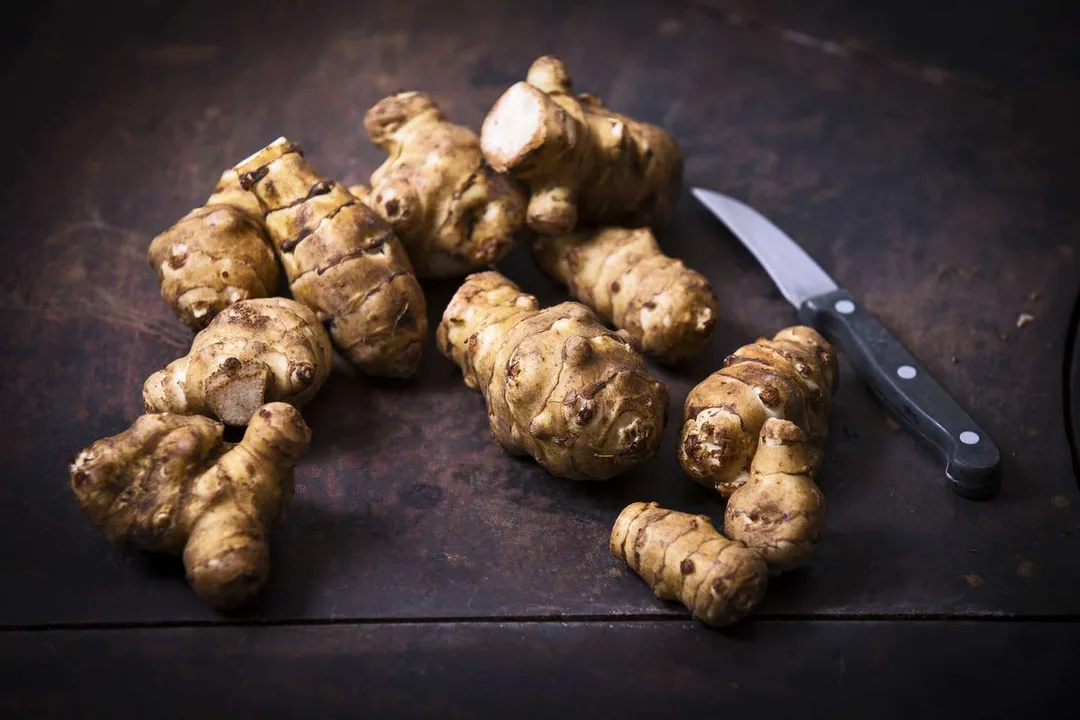
The Jerusalem artichoke exhibits a noticeable textural transformation depending on its preparation method. When consumed raw, the tuber is characterized by a desirable crispness, often exhibiting a slightly sweet flavor profile that leads to comparisons with items such as crisp apple slices or water chestnuts. Conversely, cooking fundamentally alters this structure. Heat softens the texture considerably, resulting in a consistency that is often described as creamy, similar in mouthfeel to a cooked potato, while still retaining a characteristic earthy sweetness mingled with nutty notes.
#Videos
The Amazing Benefits of Jerusalem Artichokes (Sunchokes)
Related Questions
What is the actual origin of the Jerusalem artichoke, often called sunchoke?What is the most famous constituent of the Jerusalem artichoke, sometimes making up 70–80% of dry carbohydrate?Which beneficial bacteria residing in the large intestine are selectively fed by the inulin in sunchokes?Why does consuming Jerusalem artichokes not typically cause sharp spikes in blood glucose levels?What simple acid bath trick effectively halts the enzymatic browning of peeled sunchokes?What process initiated by inulin fermentation causes potential digestive distress like bloating in sunchokes?How does the high inulin content in sunchokes contribute to satiety during weight management efforts?How is the texture of a raw sunchoke described, compared to when it is cooked?What is the actionable advice given for individuals new to incorporating Jerusalem artichokes into their diet due to potential digestive distress?Besides inulin, what two essential minerals are sunchokes noted for containing substantially?