How does using a wide, shallow skillet affect the efficiency of the reduction phase?
Answer
It allows for a much faster evaporation rate.
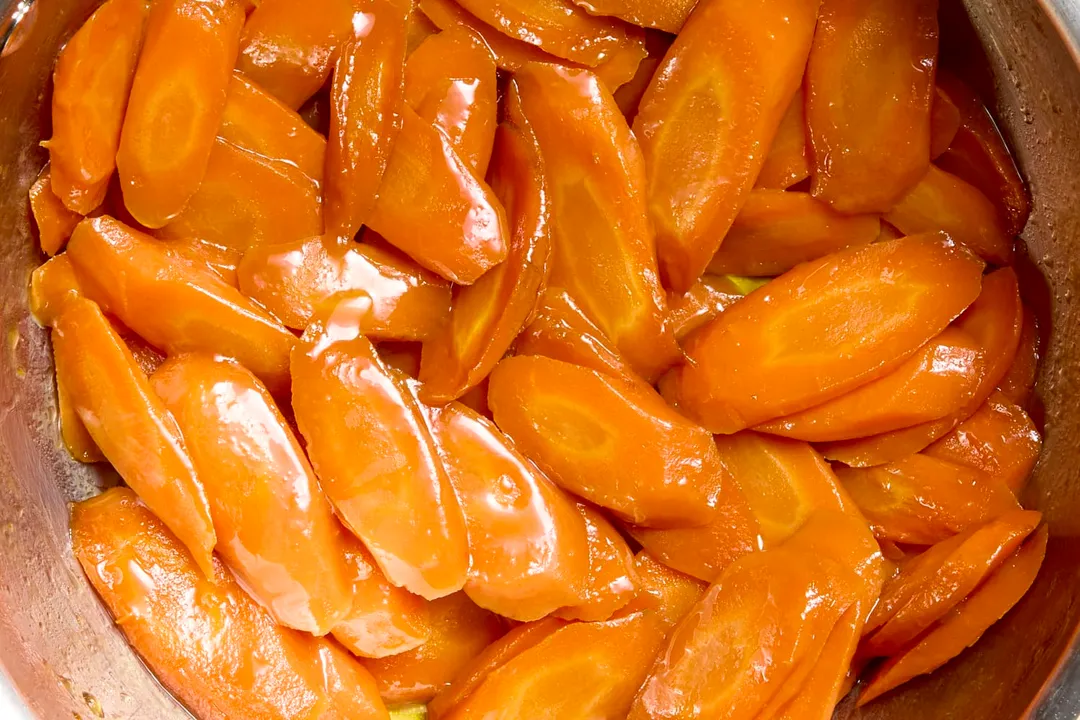
The geometry of the cooking vessel directly impacts the speed of the reduction stage, where liquid water must evaporate to concentrate the sugars into a clinging syrup. A wide, shallow skillet maximizes the surface area exposed to the heat. This increased surface area leads to a significantly faster evaporation rate compared to using a deep, narrow saucepan. Utilizing a wide pan is especially beneficial when the carrots are already tender, as it minimizes the time they need to spend exposed to the hot, thickening sugar mixture, thereby reducing the risk of them breaking down into mush.
#Videos
How to Make Martha Stewart's Brown Sugar Glazed Carrots - YouTube
Related Questions
What is the primary risk associated with the boiling method for pre-cooking carrots?What is the primary function of orange juice in a glazed carrot recipe?What is the common thickness recommendation for carrot sticks before glazing?What intermediate step prevents boiled or steamed carrots from watering down the glaze?Which component is essential for achieving a glossy sheen and adding richness to the glaze?How does using a wide, shallow skillet affect the efficiency of the reduction phase?What must often be added when using granulated sugar in a glaze base?During the final coating stage, what heat level should be reduced to when tossing the carrots?For holiday meals, which pre-cooking method yields superior flavor complexity for glazed carrots?How can a glaze that is shy of perfect (a bit too thin) be quickly fixed off the heat?