What is the most popular Filipino street food?
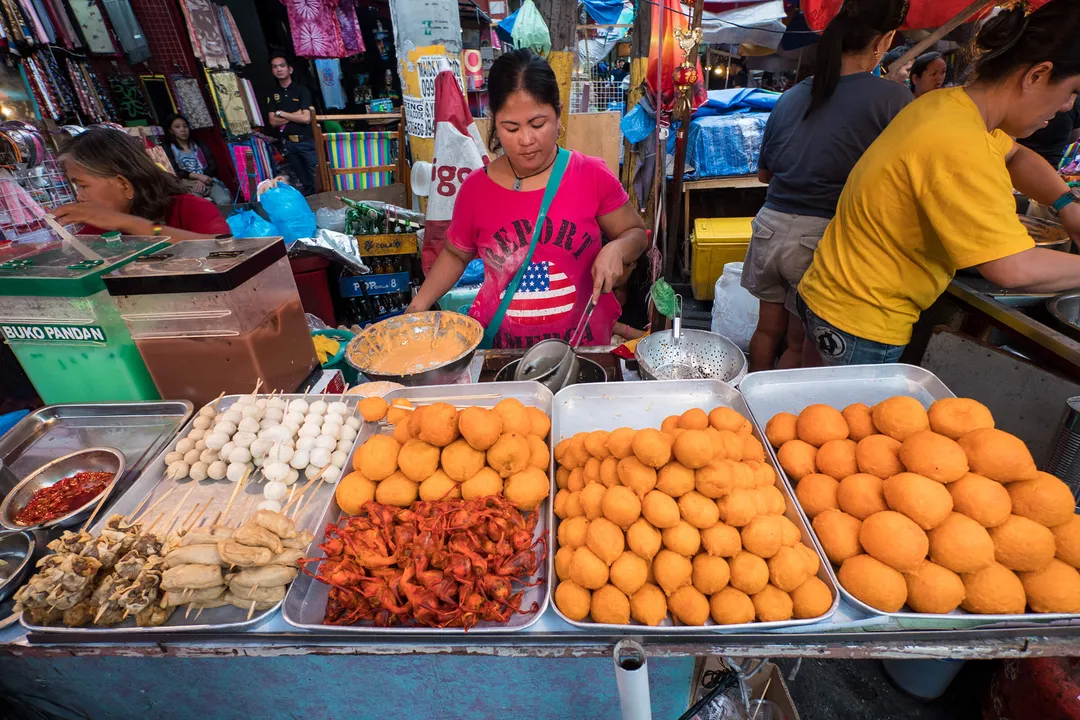
The air in the Philippines, thick with humidity and the faint scent of charcoal smoke, is the unofficial welcome mat to one of the world's most vibrant culinary scenes. Walking the streets here means constantly navigating a sensory overload where plastic bags filled with steaming liquid and skewers sizzling over open flames define the landscape of quick bites. To single out one "most popular" item is nearly impossible, as popularity shifts depending on the city, the time of day, and even what the vendor has fresh on the grill. However, a handful of staples consistently capture the collective craving of locals and the attention of visitors, often defining the very essence of Filipino merienda (snack time) eaten on the go. [1][6]
# Barbecue Staples
If a popularity contest were held, the ubiquitous Pork Barbecue would undoubtedly be a top contender for the crown. These aren't the thick, heavily sauced ribs you might find elsewhere; Filipino BBQ is characteristically thin, sweet, salty, and wonderfully savory, marinated until it achieves a deep mahogany glaze from the grill. [6][8] The marinade often features a complex mix of soy sauce, calamansi (a small citrus fruit), sugar, and sometimes banana ketchup, which contributes to that signature sweet stickiness. [2] They are usually threaded onto bamboo skewers, often interspersed with a piece of fat or a sliver of pineapple for moisture and tang.
Right next to the pork are its equally essential counterparts: chicken barbecue, usually the thigh or leg meat, and sometimes even liver or gizzard cuts. The sheer volume sold daily across metropolitan areas like Manila suggests a deep, ingrained cultural preference for this grilled skewered fare. [4]
# The Organ Intrigue
A crucial extension of the barbecue family is Isaw, which often generates as much curiosity as it does consumption. Isaw refers to grilled chicken or pig intestines that have been meticulously cleaned, boiled, and then marinated before being skewered and grilled over hot coals. [1][6] The process of cleaning is paramount; a poorly cleaned batch is instantly rejected by seasoned eaters. When executed correctly, Isaw offers a chewy, slightly rubbery texture that is completely different from the tenderness of pork or chicken meat. It is almost always dipped in a sharply vinegared, spicy dipping sauce, which cuts through the richness and slight earthiness of the offal. [5]
Many street food stalls operate on a simple economic model: the cheaper the item, the more frequently it is bought. Pork BBQ might be a slightly more considered purchase, perhaps one or two skewers as a substantial snack, but items like Isaw and the next contender are often bought in multiples simply because they are exceptionally affordable, making them the true workhorses of the midday street food economy. This accessibility ensures their widespread, daily popularity across all economic strata. [5]
# The Fried Favorites
The deep fryer is another cornerstone of the Filipino street food scene, responsible for some of the most visually striking and texturally satisfying snacks. These items are usually sold by vendors operating large, often smoking woks of hot oil. [1][6]
# Orange Hue Bites
Perhaps the most visually arresting of the fried snacks is Kwek-Kwek. This dish consists of hard-boiled quail eggs that are dipped in a bright orange batter before being deep-fried until crispy. [1][6] The batter is what defines it, giving the eggs a crunchy exterior that contrasts perfectly with the soft, creamy egg yolk inside. While quail eggs are the classic choice, vendors often expand the repertoire to include other items bathed in the same distinctive orange coating, like tofu or even small chunks of sweet potato.
Closely related, and sometimes sold side-by-side, are Fish Balls and Squid Balls. These are savory, processed seafood or meat products, molded into perfect spheres, dropped into the hot oil, and fried until they puff up slightly. [6] They are almost entirely defined by their dipping sauces, which range from sweet brown sauces to sharp vinegar concoctions, often layered with chili heat. [4] The popularity here lies in the speed of preparation and the satisfying 'bounce' of the texture.
# The Blood Congealment
No discussion of iconic Filipino street food is complete without mentioning Betamax. Named for its resemblance to the old video cassette—square, dark reddish-brown cubes—Betamax is congealed, cooked pig's blood. [1] Like Isaw, it requires careful preparation, being boiled and then sliced before being skewered and grilled. The texture is firm, almost like a very dense, savory jello, and it possesses a unique, intensely savory, metallic flavor that appeals strongly to those accustomed to organ meats. It is a true litmus test for adventurous eaters, often served alongside Isaw for the ultimate offal pairing. [1][6]
# Sweet Street Endings
While the savory grilled and fried items dominate the midday rush, the sweet offerings provide necessary balance, especially as evening approaches or for dessert following a heavy meal.
# Banana Magic
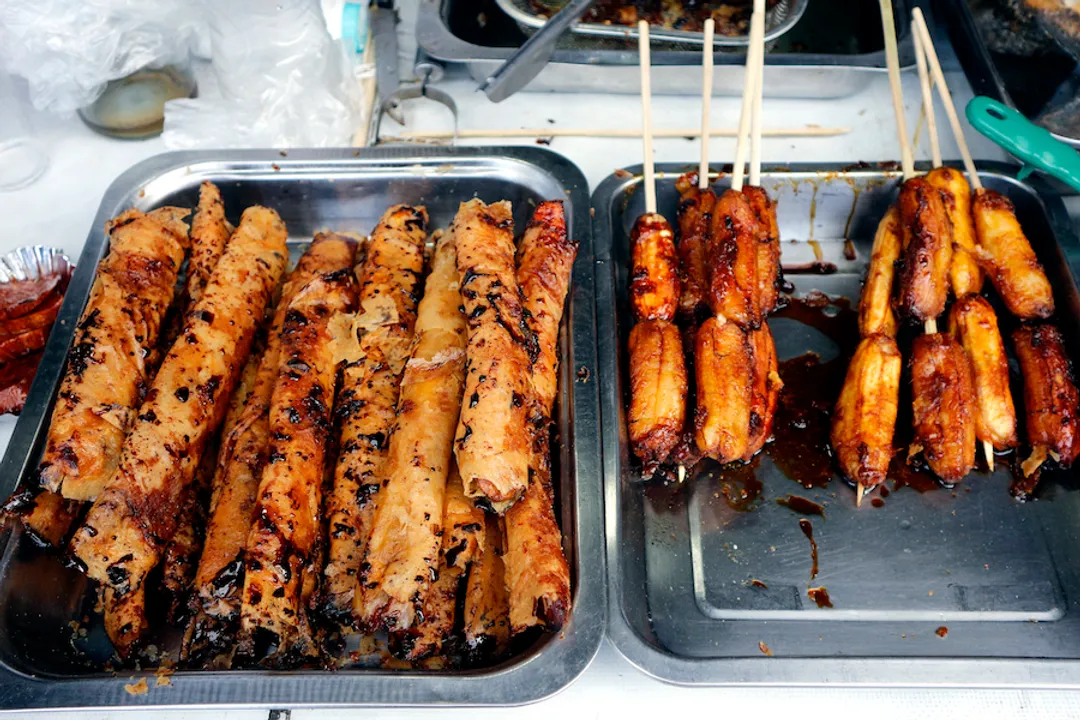
Two enduring sweet staples involve the humble banana, transformed by simple cooking methods. Banana Cue features small bananas (often saba) skewered and deep-fried until caramelized with a coating of brown sugar. [2][6] The sugar melts, browns, and then hardens slightly around the fruit, creating a sticky, sweet crust. A close relative is Turon, which is essentially a banana lumpia—a banana wrapped in a thin spring roll wrapper, often with a sliver of jackfruit (langka), and then fried until golden and crisp. [2][6] The combination of the soft, sweet fruit and the crackling wrapper makes Turon a favorite that travels well.
If you are looking for something warm and comforting, especially on a cooler, rainy day, Maruya—banana fritters—are often available. These are mashed bananas mixed into a simple batter and deep-fried into irregular, flat patties. [2]
# The Egg Conundrum
There is one item that inspires perhaps the strongest reactions—both praise and apprehension—from newcomers: Balut. [1] This fertilized duck embryo, typically incubated for about 14 to 21 days, is boiled and eaten straight from the shell, often seasoned with salt, vinegar, or chili. [6] It is consumed by cracking a small hole in the top, sipping the warm broth or soup inside, and then seasoning and eating the contents, including the yolk and the partly formed embryo. While it might not be sold on every corner like fish balls, its cultural significance and fame abroad often lead people to categorize it as the most famous Filipino street food, even if its daily consumption rate is lower than BBQ. [1] It represents the boundary-pushing, resourceful nature of Filipino cooking.
# The Vendor Experience
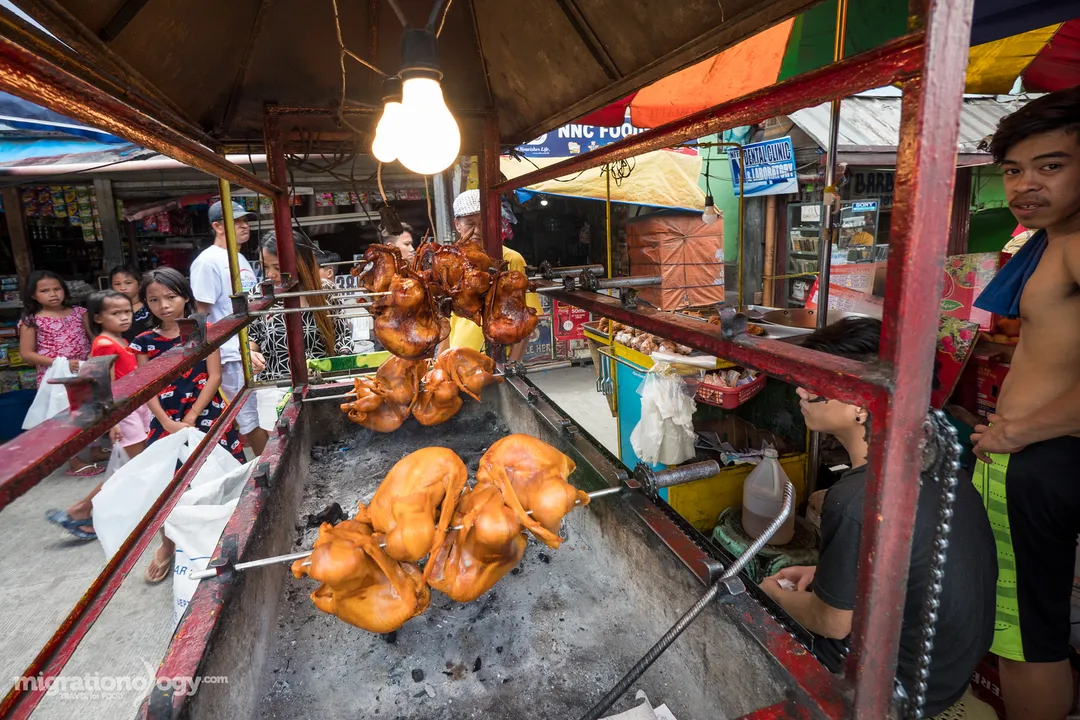
The environment where these foods are purchased is as vital as the food itself. Street food in the Philippines is rarely a quiet affair; it involves noise, smoke, and immediate interaction with the vendor. [4] Many vendors specialize in just one or two items, mastering that particular preparation, whether it's the precise temperature for frying Kwek-Kwek or the perfect amount of char on an Isaw skewer.
The typical transaction involves pointing at what you want, the vendor quickly grabbing the desired skewers or items from the grill or fryer, dipping them in the accompanying sauces, and handing them over, often wrapped in a piece of paper or placed in a plastic bag. [8] Payment is usually quick cash, with prices for individual sticks or portions being remarkably low, often equivalent to just a few cents to a dollar per piece. [5]
When thinking about what truly makes a street food popular, one must consider the concept of "Munchability"—the ease with which one can consume it while standing or walking, requiring minimal utensils and attention. Items like small fish balls or a single stick of BBQ excel here; they are designed to be eaten in three to five satisfying bites while continuing on your way. This contrasts with something like Puto (steamed rice cakes) or Suman (rice cakes wrapped in leaves), which, while popular snacks, are often eaten while sitting down at a small table provided by the vendor or back at home. [2]
I find that the regional differences in dipping sauces create micro-economies of popularity. A vendor in Cebu might use a different vinegar blend than one in Quezon City, and for devoted street food aficionados, the quality of the sauce can elevate an otherwise standard Isaw into a must-visit stall. The local mastery over balancing sour, salty, and spicy is what converts a casual taster into a loyal customer.
# Beyond the Usual Suspects
While the heavy hitters dominate the main thoroughfares, there are other important contenders that deserve mention for their consistent presence:
- Hotdogs: Yes, the humble Filipino hotdog, often bright red or pink, finds its place on a stick, grilled until slightly blistered, and served with plenty of sweet ketchup or mustard. [1][6]
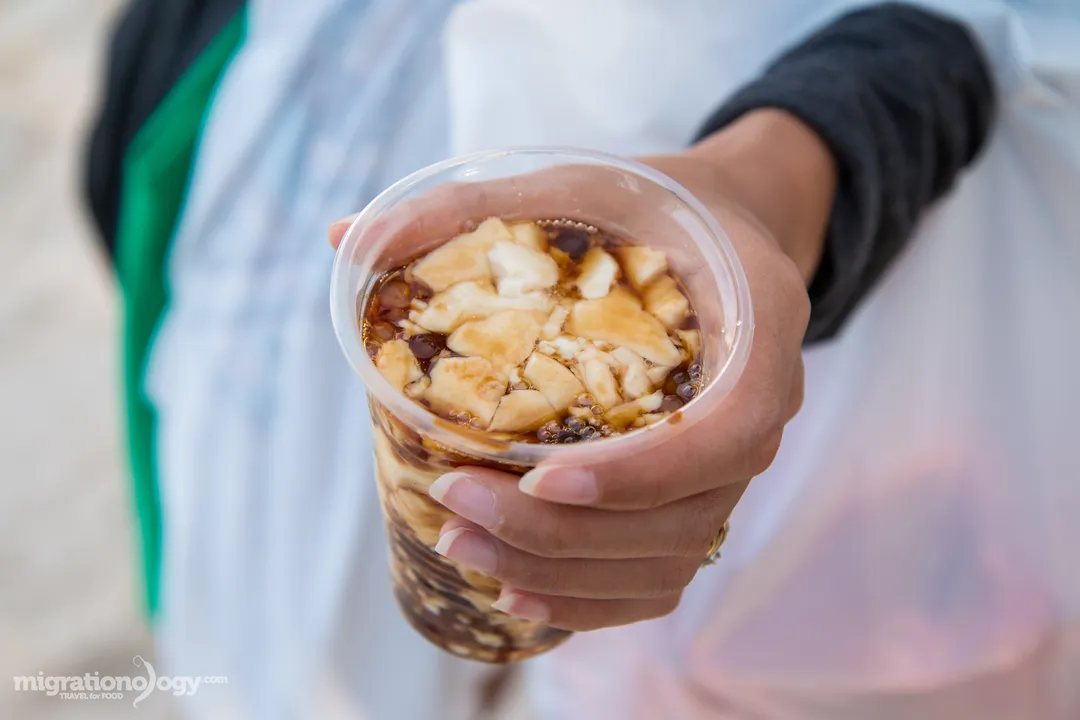
- Taho: An essential morning item, this is soft, silken tofu served warm in a cup, drenched in dark brown sugar syrup (arnibal) and topped with tiny, chewy sago pearls. [6] It’s a breakfast staple often heralded by the vendor’s rhythmic call.
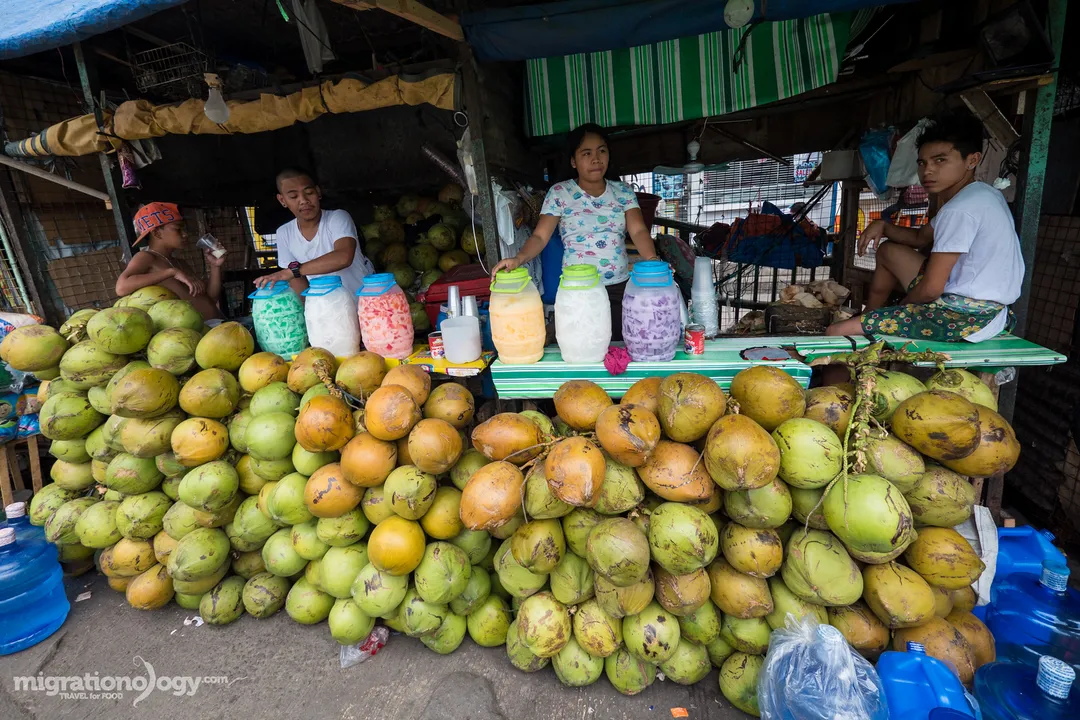
- Buko Juice: Fresh coconut water served chilled or with ice, a simple, hydrating necessity against the tropical heat. [2]
The collective appeal of Filipino street food isn't just in the flavor; it’s in the performance of its creation. The billowing smoke, the rhythmic chopping of skewers, the rapid dipping into vats of sauce—this culinary theater is what draws crowds. The visual drama created by the brightly colored Kwek-Kwek juxtaposed against the dark, smoky Isaw sticks creates an aesthetic of immediate, accessible indulgence. This sensory overload, far more than any single recipe, is perhaps the most popular attribute of the entire street food culture, compelling people to stop and partake in the organized chaos. [4][8]
Ultimately, if forced to select a single "most popular" category based on sheer ubiquity and frequency of purchase throughout the day across major urban centers, the title would likely go to the collective category of Skewered Meats and Offal (Barbecue and Isaw), closely followed by the Fried Spheres (Fish Balls/Kwek-Kwek). These items represent the quickest, most satisfying, and most affordable way to grab a taste of the Philippines while on the move. Their popularity is rooted in tradition, accessibility, and the masterfully simple technique of grilling meat over charcoal until it is both caramelized and perfectly cooked. [1][6]
#Videos
Eating FILIPINO STREET FOOD for 7 Days!! Ultimate Philippines ...
Top 30 STREET FOODS in the Philippines - YouTube
Related Questions
#Citations
Filipino Street Food Guide - 21 Must-Eat Snacks In The Philippines!
Filipino Street Food - Shef
Filipino street food favorites in the Philippines - Facebook
Eating FILIPINO STREET FOOD for 7 Days!! Ultimate Philippines ...
Philippines street food : r/filipinofood - Reddit
Filipino Street Food: 15 Must eats for the Traveling Foodie
Manila Food Frenzy: The Best 29 Filipino Dishes You Need To Try!