What physical defense poses the most immediate threat during Opuntia fruit preparation?
Answer
Intense itching and discomfort from glochids
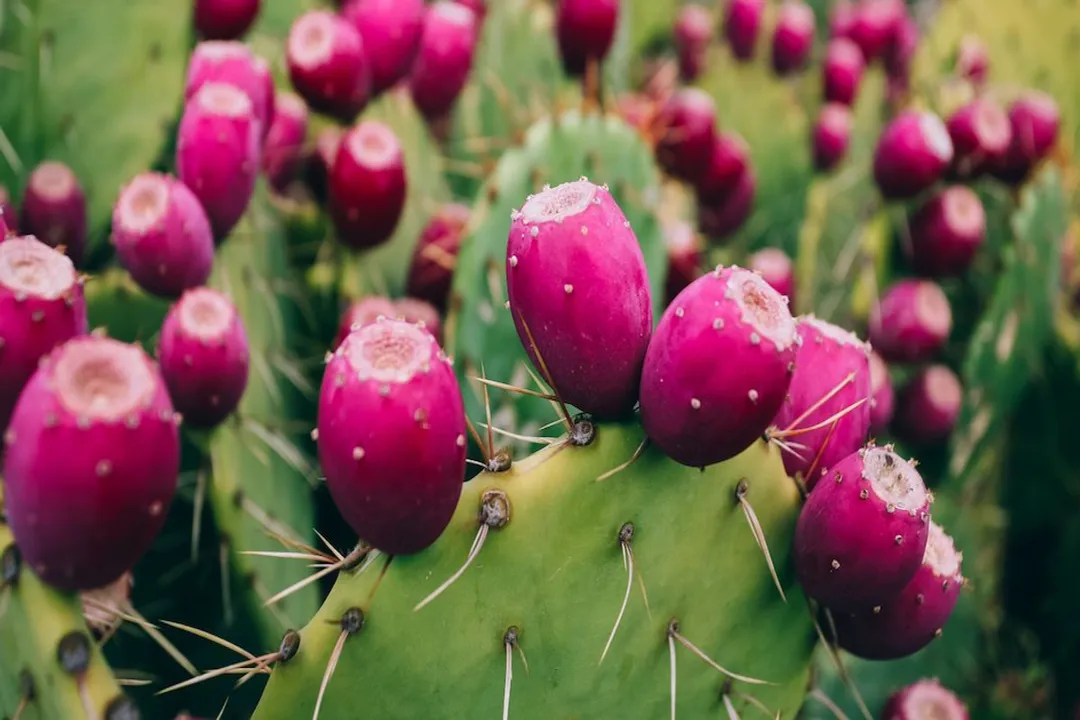
The most immediate hazard associated with handling or consuming Opuntia fruit is not inherent toxicity but the mechanical irritation caused by glochids. Glochids are described as incredibly fine, hair-like spines that possess microscopic barbs. They detach readily upon minimal contact, making them difficult to avoid. Once lodged in the skin, mouth, or throat, these bristles cause significant itching and discomfort, often surprising harvesters who believe they have sufficiently cleaned the fruit after only removing the larger, more obvious spines.
Related Questions
What physical defense poses the most immediate threat during Opuntia fruit preparation?What specialized cleaning technique uses brief exposure to an open flame for Opuntia fruit?What are the microscopic, barbed bristles covering Opuntia fruit and pads called?Besides the fruit, what other Opuntia plant part is often consumed across various cultures?What visual cue signals that mature Opuntia fruit is ready for harvest?What final step is required to access the pulp after cleaning the exterior of an Opuntia fruit?Why is local knowledge highly valued when foraging for Opuntia species outside of commercial crops?What taste profile in a wild Opuntia fruit suggests it should be immediately discarded after cleaning?Which specific Opuntia species is mentioned as being a staple crop and cultivated variety?Why are glochids more problematic for novices than larger Opuntia spines during preparation?