Are lily buds edible?
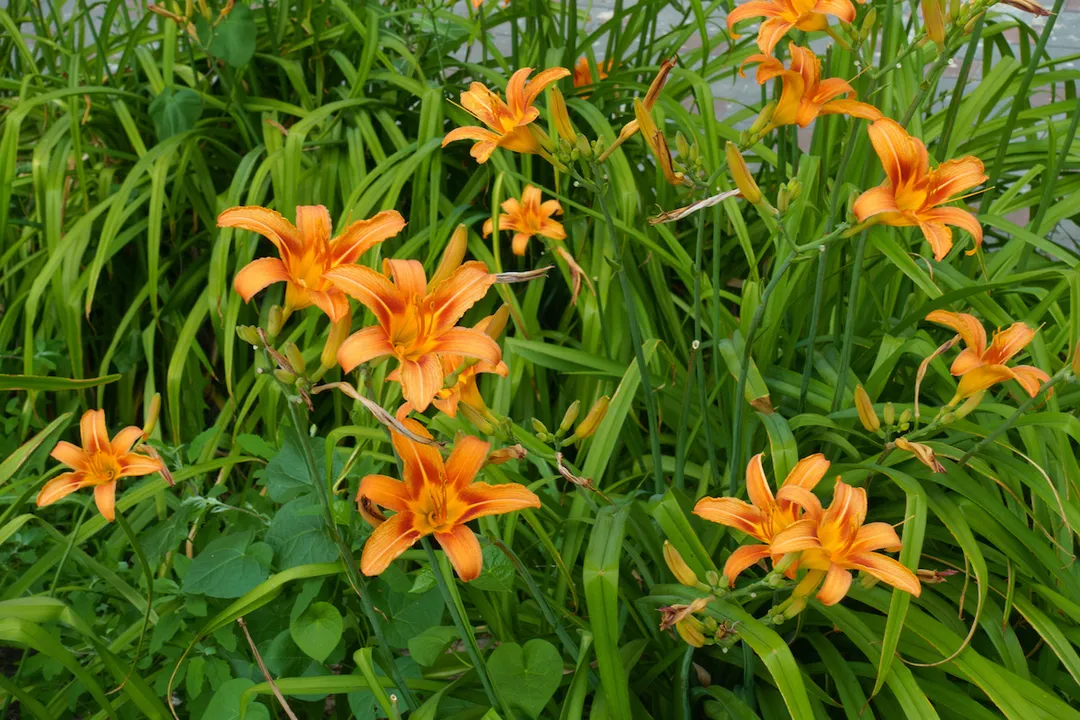
The confusion surrounding the edibility of lilies often centers on a simple but crucial botanical misunderstanding: not all plants called "lily" belong to the same family, and this distinction can be the difference between a delicious snack and a serious health issue. When people ask if lily buds are safe to eat, the immediate requirement is to identify the species. Many plants commonly referred to as lilies are actually Daylilies (Hemerocallis), while others belong to the Lilium genus, often called "true lilies." The safety profiles of these two groups are drastically different.
# True Lily Dangers
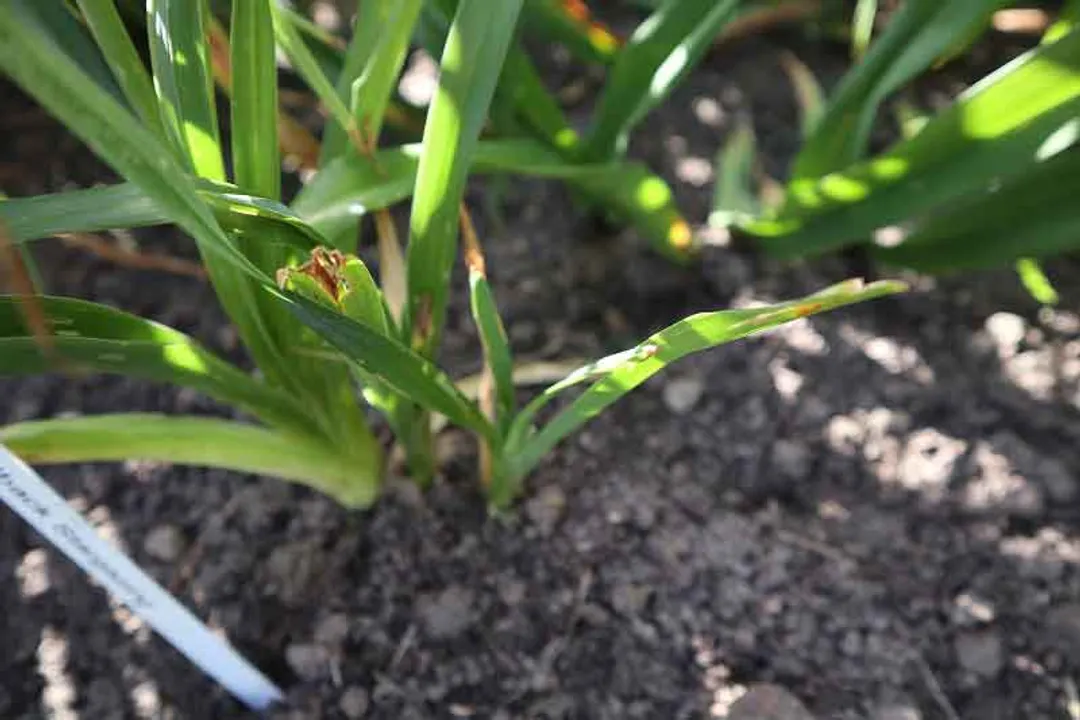
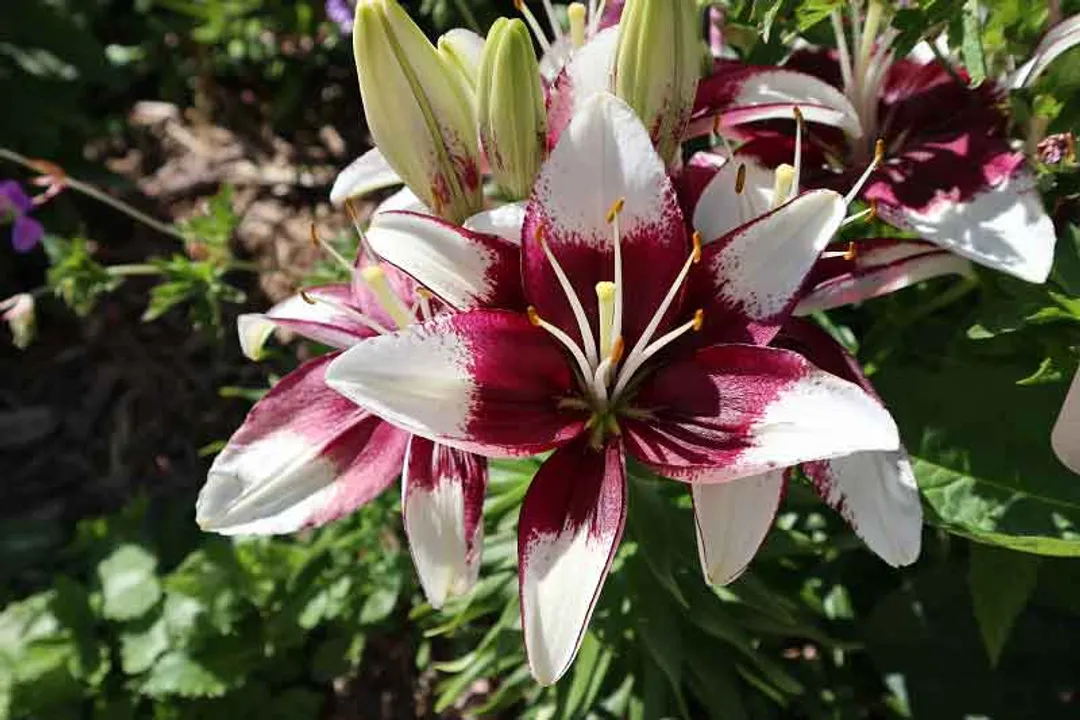
For general readers, the default assumption regarding any plant labeled simply as a "lily" must lean toward caution. The Lilium genus, which includes common garden varieties such as Easter lilies, Tiger lilies, and Stargazer lilies, contains species that are toxic. Ingestion of parts from these true lilies, including the buds, flowers, or leaves, can cause severe illness. The toxicity is particularly concerning for pets, especially cats, for whom even small exposures can be fatal, but humans must also avoid them entirely.
It is important to understand that even within the Lilium group, while some cultures have historically utilized the bulbs of specific species after intensive preparation—often involving multiple soakings or boiling to reduce toxins—the buds themselves are generally not recommended for consumption due to the high risk and the difficulty in positive identification for an average consumer. If a flower is undeniably a member of the Lilium genus, its buds should be left untouched.
# Daylily Identification
The plants that offer edible parts, including the buds, are almost universally the Daylily (Hemerocallis). Daylilies are a completely different genus from true lilies, and parts of many Hemerocallis cultivars are safe and frequently consumed in various cuisines, particularly in Asian cooking. Daylily flowers bloom for only a single day, hence the name, but the plant produces numerous flowers throughout the season, and the unopened flower buds are prized for their texture.
When looking to consume lily parts, it is vital to confirm you are dealing with a Daylily. Daylilies are hardy and adaptable, often seen growing wild or along roadsides. However, this very hardiness presents a critical point for food safety: while Hemerocallis is edible, any plant gathered from an area that has been treated with pesticides or herbicides is unsafe for consumption. It is always best practice to source from a known, untreated garden or purchase specifically for culinary use, rather than relying on roadside foraging, even if the plant type seems correct.
# Edible Components
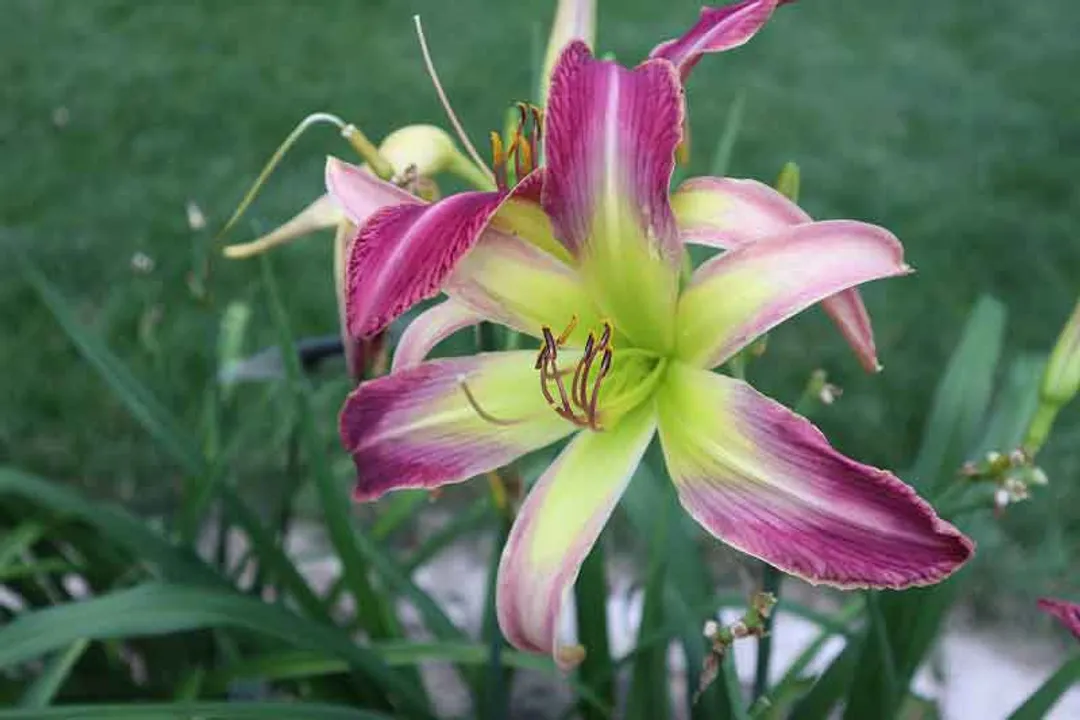
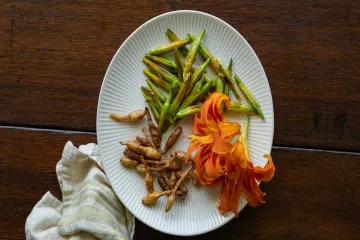
While the question focuses on buds, the entire Daylily plant offers edible components, each with a distinct culinary role.
The primary edible parts of the Daylily include:
- Flower Buds: These are typically harvested when they are tightly closed but beginning to swell, often just before the flower would open.
- Open Flowers: The mature blooms are edible and visually stunning, often used as garnishes or mixed into salads.
- Tender Young Shoots/Leaves: The new growth in spring can be cooked like asparagus or spinach.
- Mature Tubers/Bulbs: Similar to onions or potatoes, the tubers of some Daylily varieties can be cooked and eaten, though this often requires selecting specific cultivars grown for this purpose.
The buds, however, retain a pleasant snap and are versatile for cooking methods that require brief exposure to heat. Unlike the open flowers, which wilt quickly after picking, the unopened buds hold their shape well during cooking.
# Preparing Buds
The process for preparing Daylily buds is relatively straightforward, relying on quick cooking to maintain their fresh texture. Before any preparation, thorough cleaning is non-negotiable. The buds should be rinsed well under cool running water to remove any dirt, dust, or small insects that may be hidden within the tightly wrapped petals.
Once cleaned, the preparation can vary based on the desired outcome. Some cooks prefer to remove the small, slightly bitter-tasting green tip or stem remnant where the bud attaches to the flower stalk. Others leave it on if they plan on sautéing or deep-frying the bud whole.
A common and highly recommended method is quick sautéing. The buds are often cooked with other aromatics like garlic or ginger. Because they cook so rapidly, they should be added near the end of the cooking process. They can also be lightly blanched before being tossed into stir-fries or used in soups, absorbing the flavors of the surrounding broth or sauce. Even when dried for later use, Daylily buds maintain their character, becoming rehydrated and ready for culinary applications.
# Texture Versus Flavor
A key consideration when deciding which part of the Daylily to use is the textural difference between the bud and the open flower. The bud, when correctly harvested and cooked briefly, retains a structure somewhat comparable to a tender green bean or a snow pea pod. This crispness is its defining characteristic in cooked dishes. If overcooked, however, the bud will become slimy, losing all its appealing structure.
The open flowers, conversely, are much more delicate. They possess a softer, almost succulent texture when eaten raw or lightly wilted. While the flowers certainly have visual appeal and a lighter flavor profile, they lack the satisfying "bite" that the bud provides. For instance, a sautéed Daylily bud offers a vegetal, earthy note complemented by its firm texture, whereas an open flower might blend more into a salad, adding color and a subtle sweetness. Thinking about the desired mouthfeel—a quick snap versus a gentle melt—will guide the cook toward using the bud or the full blossom.
# Culinary Context and Sourcing
In various East Asian culinary traditions, Daylily products, including the buds (often called jin zhen, or "golden needles," when dried) are staple ingredients. This long history of consumption provides strong evidence of their culinary value, provided the correct species is used.
If you are growing your own Daylilies, choosing the right variety matters for consistent culinary results. Some heritage varieties were bred primarily for aesthetics, and while they might still be technically edible, their flavor or texture might be inferior to modern varieties specifically cultivated for food. If you intend to harvest the tubers or use the plants regularly, researching Daylily cultivars known for good flavor and tuber size is advisable.
A practical tip for gardeners interested in sampling their Daylilies: treat the buds as a seasonal vegetable that requires frequent harvesting. Picking the buds regularly encourages the plant to produce more flowers, ensuring a longer harvest window throughout the growing season, much like picking beans or zucchini. If you leave the buds to open, the plant directs its energy toward seed production, reducing the yield of subsequent edible parts.
The process of preparing edible lilies, therefore, moves beyond simple identification; it involves understanding the best part to use for the intended texture and being meticulous about sourcing to avoid contamination, ensuring that the rich culinary history of the Daylily can be safely enjoyed. The key takeaway remains the absolute necessity of distinguishing the non-toxic Daylily from the poisonous true lilies before even considering consumption.
Related Questions
#Citations
Edible Lilies: 4 Parts of the Edible Flowers - 2025 - MasterClass
Edible Lily Bulbs: Which ones can you eat and how?
Eating Daylilies: The Dos and Don'ts | Green Bay Botanical Garden
Is this the kind of lily whose buds are safe for people to eat? - Reddit
Edible Daylilies - Identifying and Gathering Edible Day Lilies
Sautéed Daylily Buds - Edible Santa Barbara and Wine Country
Lilies that are edible (and ones that are not!) - YouTube
Lily Bulbs: Westerners Plant Them, The Chinese Eat Them | Red Cook
What Are Dried Lily Buds? - The Spruce Eats