Are Hygrocybe edible?

The question of consuming mushrooms belonging to the Hygrocybe genus—commonly known as Waxy Caps—rarely yields a simple yes or no answer, often leading to more confusion than clarity for those interested in wild edibles. These fungi are instantly recognizable by their characteristic appearance, yet their edibility status is a complex patchwork of historical belief, species-specific classification, and modern cautionary advice. [3][5] For anyone encountering these brightly colored fungi scattered across lawns or fields, understanding where they stand on the dinner plate is paramount, especially given the potential for misidentification among look-alikes. [5]
# Waxy Gills
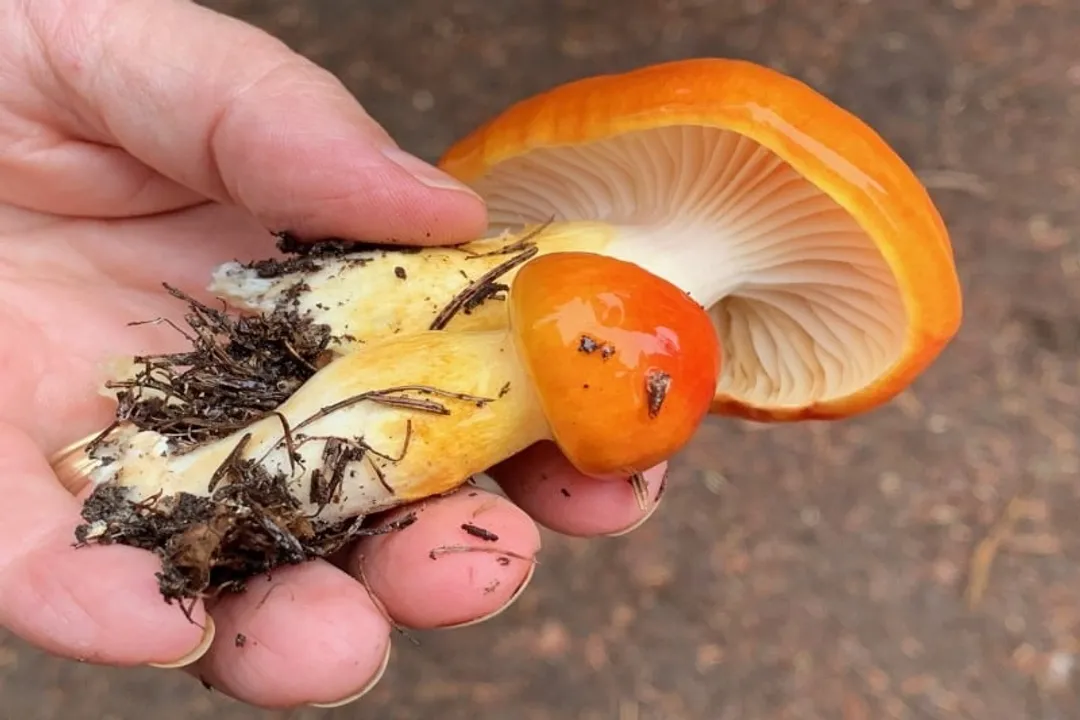
The defining feature uniting the Hygrocybe genus, and the source of their common name, is the texture of their spore-bearing surface. Unlike many common mushrooms with brittle or dusty gills, Waxy Caps possess gills that feel distinctly waxy or slightly sticky to the touch. [3] Furthermore, these gills are often thick and noticeably widely spaced when compared to other genera. [3]
The visual appeal of these mushrooms is undeniable. They frequently boast vivid colors, making them stand out in late-season landscapes. [4] The Scarlet Waxcap, for example, presents a striking red or orange cap, sometimes topped with black spots, supported by a slender, often pale or yellowish stem. [1] The Golden Waxcap, Hygrocybe chlorophana, lives up to its name with a brilliant yellow or orange cap. [6] This visual prominence often draws the eye of the amateur collector, even if they are not intending to eat them. [2]
# Edibility Conflict
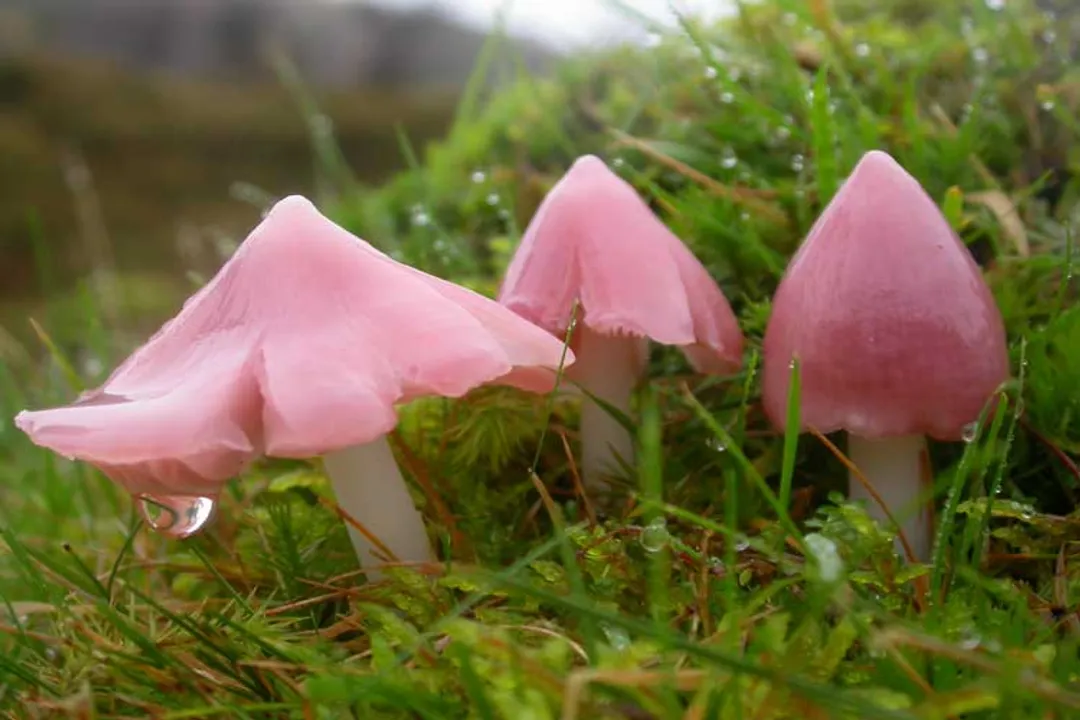
When examining various sources regarding the edibility of Hygrocybe species, a pattern of inconsistency emerges, generally steering toward caution. Some older or less rigorous guides might suggest that certain species are edible, perhaps due to their history of consumption in specific regions or simply based on a lack of confirmed reports of severe poisoning. [3] However, contemporary foraging literature often treats the entire genus with suspicion. [5]
It is crucial to recognize that edibility is not a blanket statement for the genus; it is species-specific, and even within that specificity, opinions diverge. Many mycologists and experienced foragers tend to avoid them altogether, not necessarily because they are known poisons, but because the reward seldom justifies the risk and effort involved in absolute positive identification.
The general consensus among modern guides often leans toward labeling them as 'inedible' or 'unknown edibility' rather than 'edible,' reflecting a high standard for consumption safety.
# Scarlet Examination
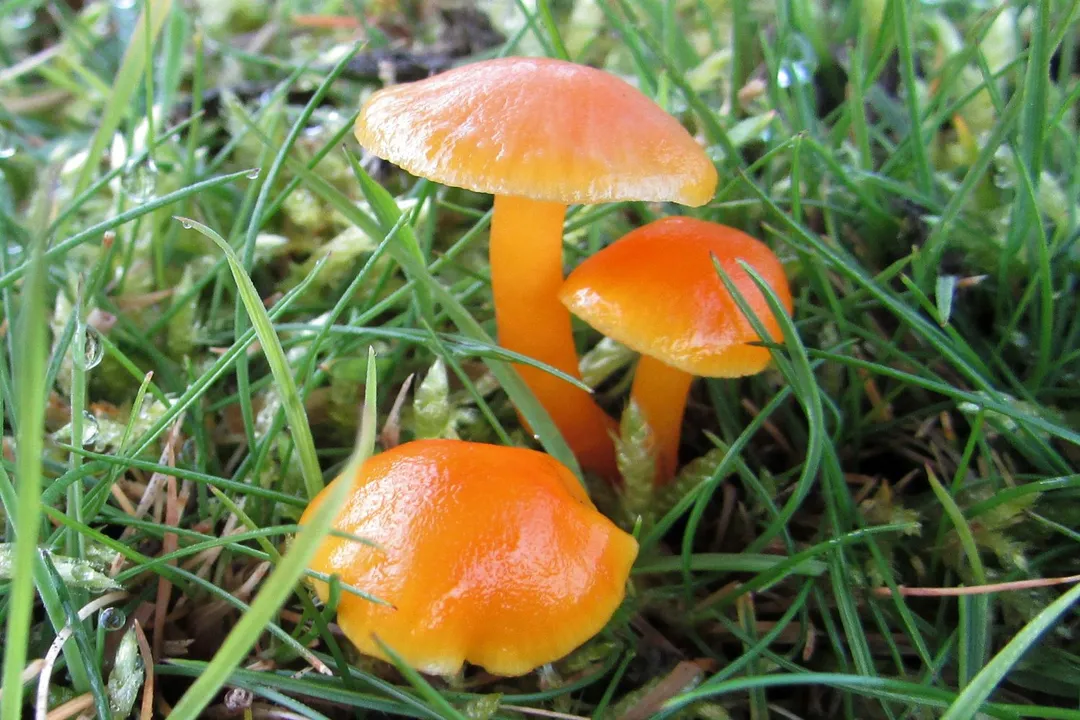
The Scarlet Waxcap, scientifically known as Hygrocybe coccinea, is a prime example of this ambiguity. [1][5] This mushroom’s intense red hue makes it a highly sought-after photographic subject. [5] While some historical accounts suggest it was once considered edible, many current authorities advise against eating it. [5] The primary concern mirrors the general issue with Waxy Caps: positive identification is essential, and the potential for confusion with toxic look-alikes remains a significant barrier to recommending consumption. [5]
Another large red species, the Crimson Waxcap (Hygrocybe punicea), also generates caution. While identification guides note its imposing size relative to other waxcaps, its edibility status is frequently listed as unknown or, more conservatively, inedible. [9] This uncertainty places H. punicea firmly in the "do not eat" category for most practical foraging purposes. [9]
# Golden Status
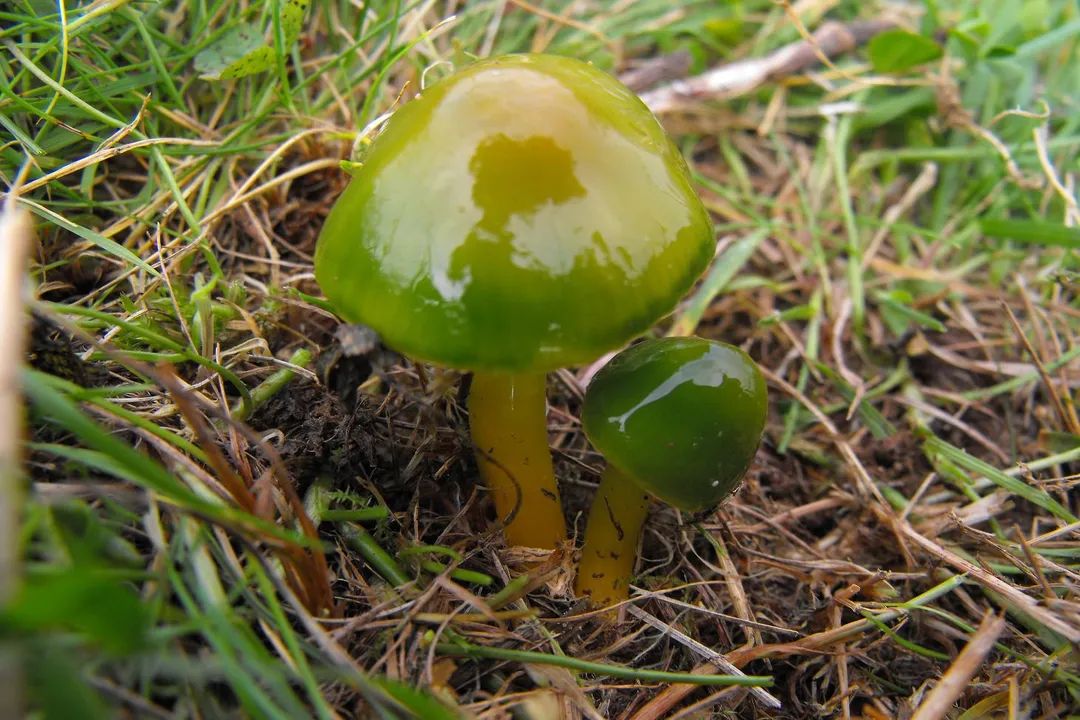
The Golden Waxcap (Hygrocybe chlorophana) provides a clearer example of a species firmly placed in the inedible category. [6] Its characteristic bright yellow to orange cap and waxy gills confirm its membership in the genus, but for edibility purposes, it is explicitly listed as inedible. [6] Finding an example like the Golden Waxcap—where the species name is associated with a definitive 'inedible' tag—serves as an important demarcation point, suggesting that bright coloration alone is never a reliable indicator of edibility across the group. [6]
When observing these fungi in the wild, especially those growing in lawns or garden settings, one must consider the environment as part of the equation. [2] Even if a specific, rare species of Hygrocybe were confirmed to be harmless, its tendency to fruit in proximity to human habitation means it could easily absorb environmental contaminants. The soil in well-maintained lawns might contain herbicides or pesticides, making any fungus pulled from that substrate a potential chemical hazard, regardless of its biological toxicity. [2] This habitat risk compounds the inherent identification uncertainty. [2]
# Practical Foraging Notes
For the dedicated forager, Hygrocybe species present a difficult risk-reward ratio. Many Waxy Caps are small, offering very little culinary yield even if they were perfectly safe. Harvesting them requires patience and a keen eye, often found growing singly or scattered rather than in dense clumps. [4]
When attempting field identification, even key features like cap texture can be unreliable depending on the weather; a cap that is dry one day might be slimy the next. [1][3] A methodical approach to identification demands examining the stem color, gill spacing, spore print color (though not detailed for edibility here), and microscopic features for absolute certainty. [1] Since online identification resources or casual confirmation from social media groups carry inherent risks, relying on visual confirmation alone for consumption is highly discouraged. [2][7]
A helpful mental checklist for approaching any Hygrocybe encounter for consumption purposes might look something like this:
- Confirm Waxy Gills: Is the gill texture truly waxy and thick, not soft or brittle?[3]
- Check Known Status: Does the specific species fall into a commonly accepted edible category? (Currently, very few, if any, do consistently across all guides).
- Assess Yield vs. Risk: Is the mushroom large enough to warrant the intensive identification effort needed to rule out dangerous look-alikes?
- Evaluate Habitat: Is it growing in an area likely to be treated with chemicals, which applies to many lawn-dwelling species?[2]
The historical context of mushroom use shows that many groups once deemed safe were later recognized as problematic, and the Hygrocybe genus appears to be one where the trend is moving decisively away from consumption. [5] For instance, while a novice might group all red mushrooms together, the subtle differences between a Scarlet Waxcap and something else entirely are significant enough that avoiding the group entirely is the safest stance for those without expert knowledge. [5] The vibrant colors that draw people in are, in this genus, more a signal for close observation than an invitation to the table. [1][6]
# Expert Consensus
The collective experience documented in online communities and guides suggests that a vast majority of Hygrocybe mushrooms should be treated as suspect at best. [7][9] While it is impossible to declare that no Waxy Cap has ever been safely eaten by anyone anywhere, the body of reliable, current, and reproducible data strongly suggests these fungi are not suitable targets for general wild food gathering. The consensus prioritizes safety, leaning on the side of caution when a mushroom’s identity results in conflicting edibility reports or an 'unknown' classification. [3][9] Ultimately, the identification process itself, which often requires specialized knowledge to distinguish subtle differences between vividly colored look-alikes, confirms that these mushrooms belong in the 'look, don't touch' category for all but the most seasoned mycologists. [5][7]
#Videos
The Hygrocybes or Wax Caps, Colourful Mushrooms - YouTube
Related Questions
#Citations
Hygrocybe coccinea, Scarlet Waxcap mushroom - First Nature
I get these occasionally in my garden, are they safe? : r/mycology
Waxy Cap Mushrooms: Comprehensive Identification Guide
Waxcap Fungi – Identification, Distribution, Edibility, Conservation
Scarlet waxcap (Hygrocybe coccinea) identification
Golden Waxcap - Wild Food UK
Hygrocybe conica is commonly known as the witch's hat, conical ...
The Hygrocybes or Wax Caps, Colourful Mushrooms - YouTube
Crimson Waxcap (Hygrocybe punicea) Identification - - Totally Wild UK