Besides the fruit, what other Opuntia plant part is often consumed across various cultures?
Answer
The young, tender pads (cladodes)
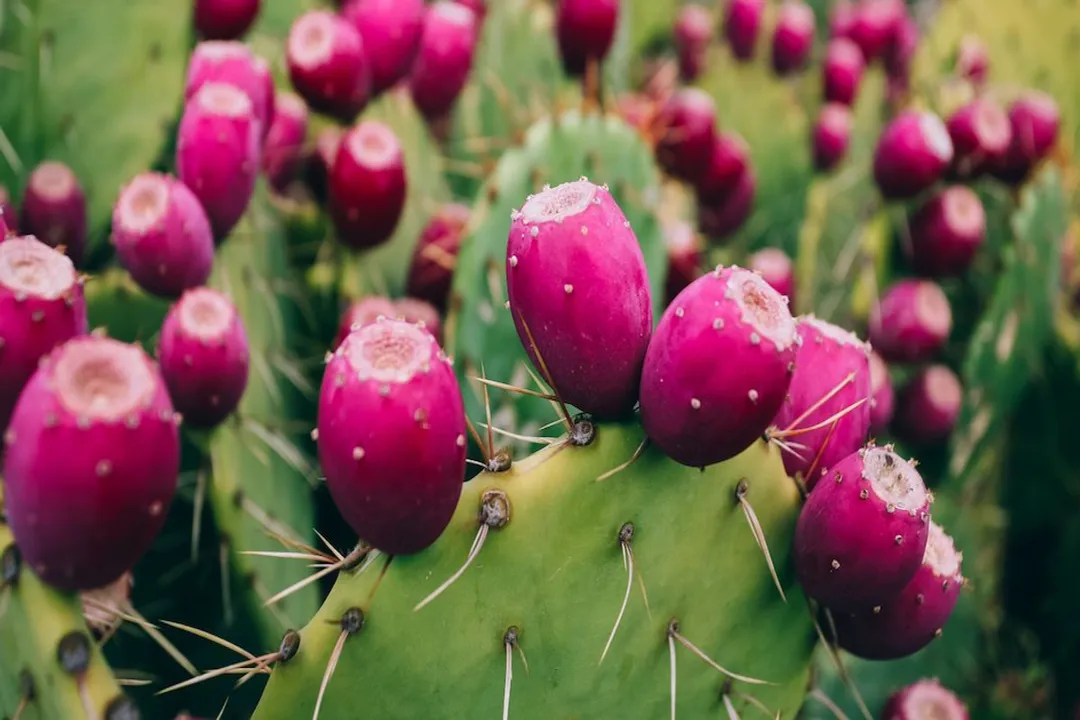
The edibility potential of the Opuntia cactus extends beyond its sweet fruit, often referred to as tuna. The cactus pads, specifically described as young, tender stems also known as nopales or cladodes, are frequently consumed in various cultures. This utilization of the vegetative structure highlights the plant's versatility as a food source. However, just like the fruit, these pads must undergo thorough preparation to remove both the larger spines and the microscopic, irritating glochids before they are safe for ingestion.
Related Questions
What physical defense poses the most immediate threat during Opuntia fruit preparation?What specialized cleaning technique uses brief exposure to an open flame for Opuntia fruit?What are the microscopic, barbed bristles covering Opuntia fruit and pads called?Besides the fruit, what other Opuntia plant part is often consumed across various cultures?What visual cue signals that mature Opuntia fruit is ready for harvest?What final step is required to access the pulp after cleaning the exterior of an Opuntia fruit?Why is local knowledge highly valued when foraging for Opuntia species outside of commercial crops?What taste profile in a wild Opuntia fruit suggests it should be immediately discarded after cleaning?Which specific Opuntia species is mentioned as being a staple crop and cultivated variety?Why are glochids more problematic for novices than larger Opuntia spines during preparation?