What is the name of the durable, freeze-dried product made from ulluco tubers for long-term Andean storage, often ground into flour?
Answer
Llingli
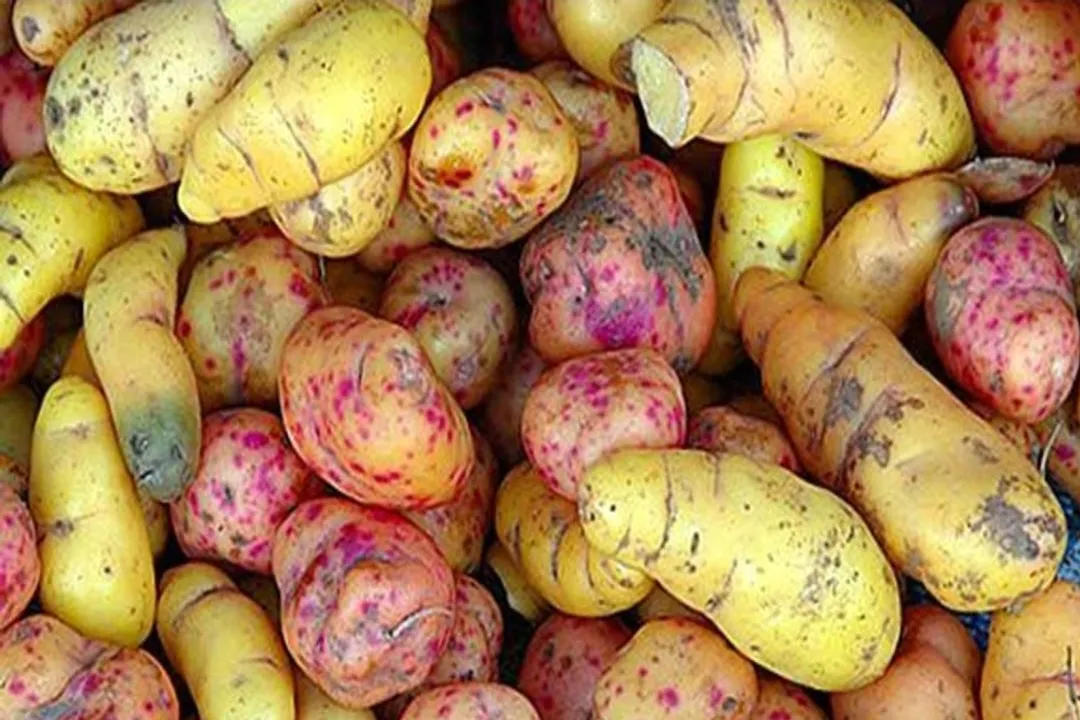
For extended storage periods, particularly through long Andean winters where fresh produce preservation is challenging, ulluco is processed into a durable product known as llingli. This product is created by freeze-drying the tubers, which allows them to be stored effectively for many months if kept cool and dark. Following the freeze-drying process, llingli is typically ground down into a fine flour. This resulting flour can then be incorporated into various cooked foods, representing a highly preserved and reliable carbohydrate source that maintains much of the tuber's inherent value, even though some color might be lost during commercial canning processes.
Related Questions
What powerful pigments, known for antioxidant and anti-inflammatory support, give ulluco its striking colors?What compound is primarily responsible for the characteristic earthy or beet-like flavor in many ulluco varieties, chemically linked to petrichor?How does the Vitamin C content in ulluco compare quantitatively to that found in standard potatoes?What is the name of the durable, freeze-dried product made from ulluco tubers for long-term Andean storage, often ground into flour?Which specific type of betalain is found in high concentrations within the yellow and orange varieties of ulluco?What textural characteristic experienced in raw ulluco, sometimes described as slimy or gummy, significantly reduces or disappears entirely upon cooking?Compared directly to a standard potato serving, how many fewer calories does ulluco typically contain?What is the traditional Peruvian preparation involving strips of meat julienned with ulluco, typically served alongside white rice?What specific environmental condition limits the widespread cultivation of *Ullucus tuberosus* outside of cool highlands areas?Which flesh color in ulluco is suggested as a starting point for newcomers preferring a more neutral, potato-like starch due to minimal geosmin presence?