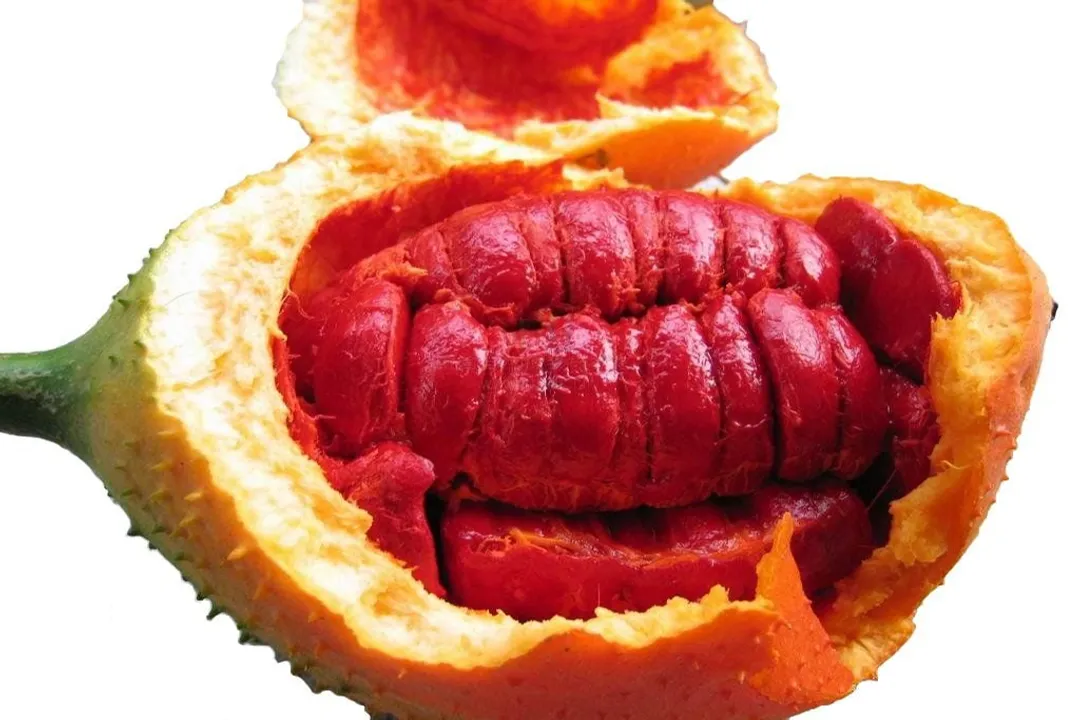
What is the crimson, soft, and oily edible component of Gac fruit most often utilized in traditional preparations like xoi gac?
Answer
Aril
Understanding the specific anatomy of the Gac fruit is essential for its utilization, as different parts serve different purposes. While the seed is sometimes referenced in traditional medicine, the overwhelmingly preferred edible component for culinary and nutritional purposes is the crimson aril. The aril is characterized by being soft and oily in texture. This specific pulp surrounding the seeds is what is incorporated into famous dishes like xoi gac (a traditional red sticky rice) and is the component typically processed into concentrated forms such as purees, pastes, or oils to maximize nutrient intake.
Related Questions
By what factor does Gac fruit's lycopene concentration surpass that of tomatoes, a fruit typically cited as a primary source of this phytochemical?Compared to carrots and sweet potatoes, how much greater is the beta-carotene content found in Gac fruit?What maturity stages, often designated in assessments, ensure the peak concentration of lycopene, $\beta$-carotene, and total polyphenols in Gac fruit aril?What is identified as the primary mechanism through which Gac fruit is believed to confer its wide-ranging health advantages?Which specific carotenoids concentrate in the cornea and retina to act as internal shields, supporting ocular health?What is the crimson, soft, and oily edible component of Gac fruit most often utilized in traditional preparations like xoi gac?What are the two most significant unsaturated fatty acids, detailed with percentages, found within the highly unsaturated aril oil?Which trio of vitamins is credited with supporting the synthesis of collagen, a protein vital for maintaining skin firmness, when consuming Gac fruit?For individuals managing lipid levels, what specific suggestion is made regarding the weekly consumption of Gac fruit concerning cardiovascular health?Which carotenoids are documented as being rich in the Gac fruit peel and pulp, biomass fractions that are frequently discarded during preparation?