How is the flavor profile of opah meat consistently described by culinary evaluations?
Answer
Rich, fatty, and generally flavorful
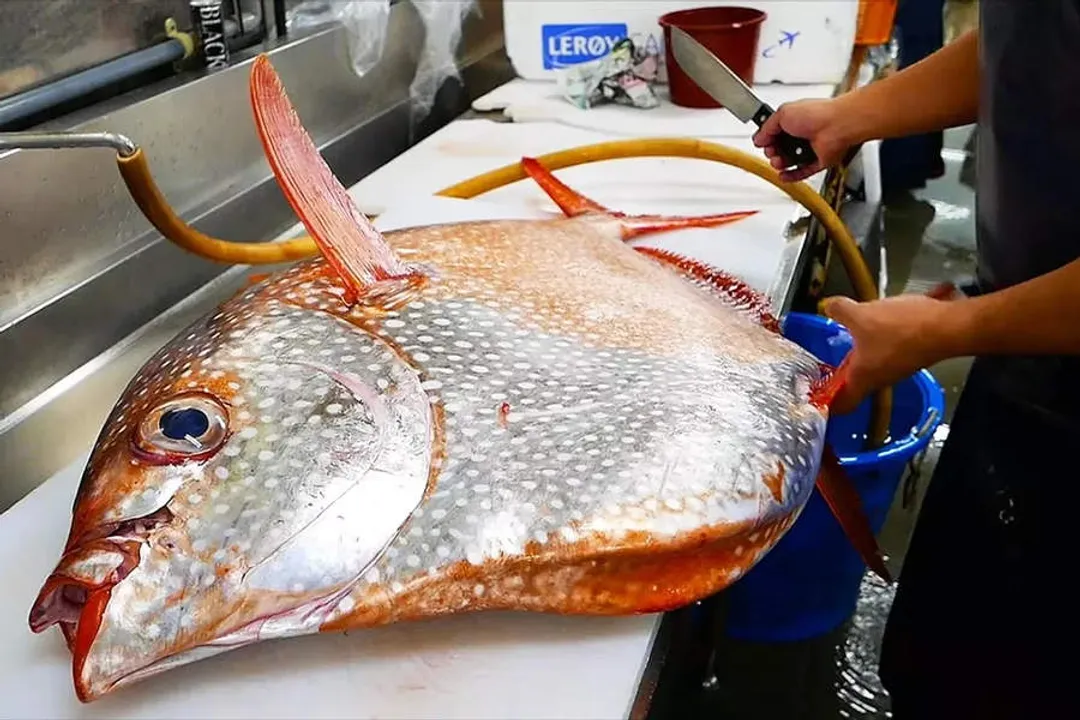
Culinary consensus surrounding the opah strongly favors its flavor characteristics, frequently employing terms like rich and fatty to describe the eating experience. This inherent richness is directly linked to the fish's high-fat content, a result of its physiological adaptations enabling sustained activity in cold depths. When the fish is handled properly immediately after the catch, the resulting taste is intended to be clean and mild, allowing the inherent richness to dominate rather than an overly 'fishy' taste. This combination of high fat content and clean flavor makes it highly desirable, especially for consumers who appreciate the satisfying mouthfeel provided by fattier selections.
Related Questions
What specialized biological mechanism allows the opah to keep its brain and eyes warm?How is the flavor profile of opah meat consistently described by culinary evaluations?What texture description is commonly used for correctly prepared opah flesh?What culinary element is often suggested to balance the high-fat content of opah?What distinction regarding temperature regulation is scientifically recognized for the opah?What is the reported range of color variation for opah flesh?If an encountered opah fillet tastes overwhelmingly "fishy," what does this generally indicate?Opah is gaining traction as a sought-after delicacy, often serving as an alternative to which traditional, richer fish?In what common formats is opah typically sold to facilitate portioning and preparation?How does the opah's ability to maintain higher body temperatures benefit its hunting?