Compared to orange-fleshed sweet potatoes, what essential nutrient precursor is found in lower levels in Boniato?
Answer
Beta-carotene (Vitamin A precursor)
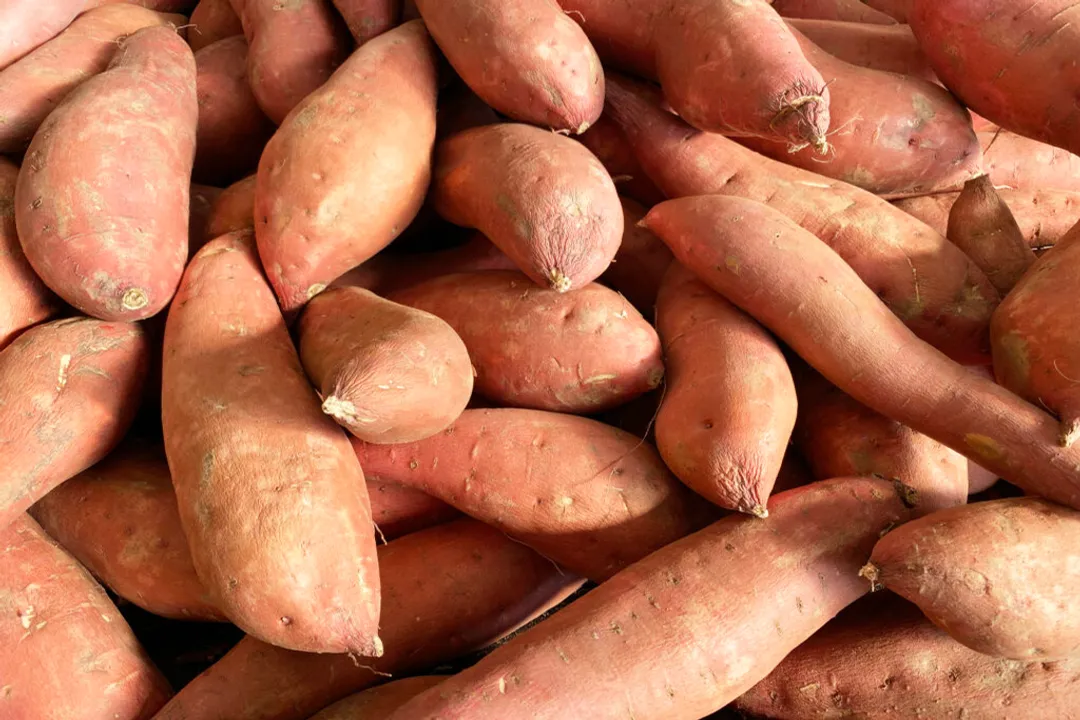
The most notable difference in micronutrient profile between Boniato (the white or pale-fleshed variety) and its orange counterpart lies in the pigmentation compounds. The vibrant, dark color of the orange sweet potato is a direct indicator of its massive doses of beta-carotene, which the body converts into Vitamin A. Boniato, lacking this intense pigmentation, contains significantly lower levels of beta-carotene. Despite this lower Vitamin A contribution, Boniato remains a valuable source of other vital nutrients like Vitamin C and B vitamins, offering a positive contribution to overall nutrient intake even without the high carotenoid load.
Related Questions
What is the characteristic flesh profile of Boniato compared to the common orange sweet potato?For which culinary preparations is Boniato exceptionally suited due to its starchier nature?What specific bodily functions are supported by Boniato's high concentration of Vitamin C?What essential component in Boniato primarily contributes to digestive health and promoting a feeling of fullness?In Ayurvedic thought, what systemic effect are sweet potatoes like Boniato sometimes viewed as having?Compared to orange-fleshed sweet potatoes, what essential nutrient precursor is found in lower levels in Boniato?What preparation method generally results in a lower Glycemic Index (GI) for Boniato compared to baking?What culinary adjustment is recommended to enhance the absorption of fat-soluble nutrients in Boniato?Due to its starchier, drier consistency, to what common root vegetable is the texture of cooked Boniato often compared?For maximizing antioxidant benefit, which component of the Boniato is often recommended for consumption alongside the flesh?