What is the definition of a food store?
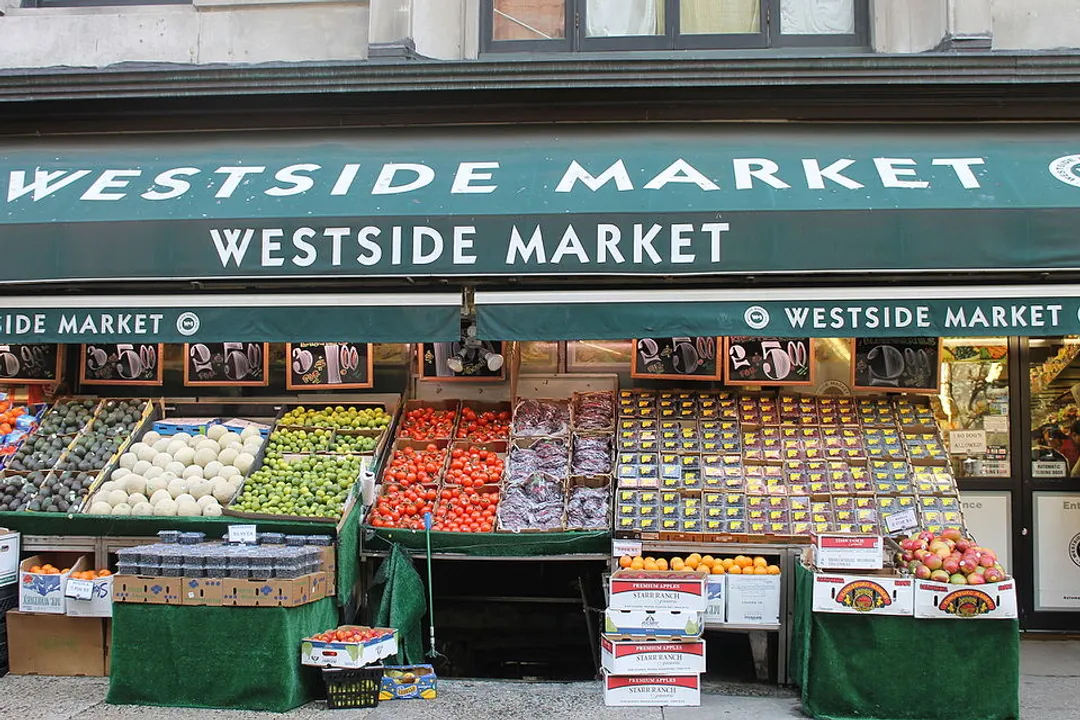
The term "food store" appears straightforward on the surface, conjuring images of familiar places where daily sustenance is purchased. However, pinning down a singular, universal definition reveals layers of legal interpretation, commercial categorization, and historical evolution that extend far beyond simply a building that sells edibles. Understanding what constitutes a food store requires looking at its function, its scale, and the regulatory context in which the term is being applied.
# Core Concept
At its most fundamental, a food store is an establishment primarily engaged in the retail sale of food and drink for consumption elsewhere. Dictionaries often use the term "grocery store" interchangeably, though subtle differences exist in scope and common usage. A grocery store, for instance, is frequently understood as a place selling foodstuffs, and often other household necessities as well. Merriam-Webster defines a grocery store as one selling food and household supplies. Cambridge dictionary notes that a grocery store is a shop selling food and drink, sometimes including household goods.
The concept of the grocery itself points toward staple items—the basic provisions needed for running a household kitchen. In contrast, the umbrella term food store seems to be adopted more readily in regulatory or planning contexts because it encompasses a wider variety of retail formats that might not fit the traditional grocery store mold.
# Retail Differentiation
When differentiating between various food retail formats, one must consider scale and the diversity of offerings. The development of the modern grocery store, as described in retail analyses, moved from small, specialized markets to the large-scale supermarket model. Today, the term "food store" must account for this vast spectrum, which ranges from convenience stores to massive hypermarkets.
A key distinction often lies in the inventory mix. While a dedicated greengrocer or butcher shop specializes, a general food store, like a supermarket, aims to be a one-stop shop for perishable and non-perishable goods. Facility planning documents sometimes categorize these spaces based on layout and stocking capacity, noting that a food store might be defined by the need to manage temperature-controlled storage, display fixtures specific to various food types, and substantial back-of-house processing areas.
For instance, a small corner shop selling primarily packaged snacks and drinks might still qualify as a food store under certain broad definitions, even though its primary business might not revolve around weekly family provisioning like a traditional grocery store.
# Legal Definition Range
The most precise definitions of a food store often arise not from casual language, but from legal and administrative necessity, particularly concerning licensing, zoning, and federal assistance programs.
Legal definitions tend to focus on the business activity rather than the physical appearance of the location. Law Insider provides a definition classifying a "Food Store" as an establishment selling food for consumption off the premises. This clarifies that it is retail, not food service like a restaurant.
Crucially, legal frameworks often impose quantitative tests. The concept of a Retail Food Store often involves meeting a minimum threshold of sales derived from food items. This threshold is vital because it distinguishes a general merchandise retailer that happens to stock a few canned goods from an entity whose main function is food distribution. For example, participation in programs like the Supplemental Nutrition Assistance Program (SNAP) relies heavily on this type of definition, where an authorized store must demonstrate that a certain percentage of its gross sales are derived from eligible food items.
While the specific percentage required can vary significantly based on the governing body—whether municipal, state, or federal—the principle remains: the primary purpose of the retail activity must center on food sales.
If we compare the general dictionary understanding with the regulatory need, we see a shift in emphasis. Dictionaries focus on what is sold (foodstuffs), while legal definitions focus on how much is sold relative to other goods to assign a regulatory classification. This highlights that context dictates the definition's utility.
# SNAP and Federal Application
The United States Department of Agriculture (USDA) Food and Nutrition Service (FNS) has a specific framework for defining stores authorized to accept SNAP benefits, which serves as a strong modern standard for what qualifies as a food store in a major administrative context. According to FNS guidelines, a store generally must meet the definition of a Retail Food Store to participate in the program. This categorization ensures that the subsidized funds are directed toward actual nutritional staples.
In this administrative setting, the focus is heavily on the inventory of staple foods, which typically include items like bread, cereals, canned goods, dairy products, and meats. While the regulations allow for some non-food items to be present, the core mandate centers on the availability and sale of these nutritional staples, making the purpose of the store inseparable from its inventory composition.

# Beyond Staples: Modern Categorization
The evolution of retail means that a modern food store often carries items far removed from basic staples, blurring the lines between a pure grocery store and a general merchandiser. Some larger formats integrate pharmacies, household electronics, and clothing departments alongside extensive perishable food sections.
This diversification introduces complexity when trying to apply a simple definition. Consider a hypothetical local establishment:
- Store A: A small market focused 90% on fresh produce, meats, and dairy, with 10% dedicated to cleaning supplies. This clearly fits the strict interpretation of a food store.
- Store B: A general convenience store where 45% of sales come from gasoline, 30% from tobacco and lottery, and 25% from packaged snacks and beverages. This store might fail the primary purpose test required by some food assistance programs, even though it sells food.
The functional classification often defaults to the retail dogmas established by industry practice—a key idea in understanding how these entities operate commercially. This dogma suggests that while the name might evolve (from "market" to "superstore"), the underlying operation must demonstrate capability in high-volume, short-shelf-life food handling, which requires specific infrastructure like refrigeration and rapid inventory turnover.
One area where local context significantly impacts classification relates to farmers' markets or temporary pop-up vendors. While they sell food, they are usually regulated separately from permanent, year-round stores. The permanence and established business structure are often implicit requirements for being labeled a "store" in zoning or licensing documents.
# Insight into Sales Thresholds
When assessing any ambiguous retail location—perhaps a pharmacy expanding its fresh food offerings or a gas station adding hot food service—the deciding factor often boils down to a specific sales calculation that regulators use for fairness and compliance. While specific numbers are highly variable by jurisdiction, a useful analytical benchmark often hovers around the 50% gross sales mark dedicated to eligible food items. For instance, if a location’s records show that more than half of its total monthly revenue comes from items categorized as staples (excluding alcohol and prepared hot meals, depending on the ruleset), it typically gains the designation of a food store for regulatory purposes. If the food sales fall significantly below that, the establishment is likely categorized as a general merchandise or convenience retailer that simply stocks groceries, rather than being defined by them.
# Store Planning and Layout
The very design of a food store speaks volumes about its definition, especially when contrasted with other retail types. Effective food store layout, which contributes to its operational definition, must account for customer flow tailored to food shopping patterns. Customers typically move through sections in a specific order: beginning perhaps with produce, moving past dairy and refrigerated items, then the center aisles for packaged goods, and concluding near checkout with impulse buys.
This structural necessity—the need for specialized zones for frozen goods, fresh meat display cases, bulk dry goods storage, and efficient perishable replenishment—is a defining characteristic that separates a true food store from a general store that might simply use standard shelving units. The investment in specialized climate control and inventory management systems is inherently tied to the definition of a business focused on selling consumable food products.
# Terminology Evolution
The interchangeability, or lack thereof, between "grocery store" and "food store" warrants a closer look at semantic drift. Historically, the grocery store was the central provider of non-perishable staples. As refrigeration technology advanced and the middle class grew, the store expanded its perishable offerings, leading to the rise of the supermarket, which is essentially a large-scale grocery store.
The shift toward the term food store seems to be a more modern, perhaps bureaucratic, preference. It serves as a necessary, broad descriptor that can legally encompass the supermarket, the small convenience mart, and the specialty ethnic market under one regulatory umbrella without getting bogged down in the specific historical connotations of "grocery". If a regulation needs to apply to any retailer selling staple foods, "food store" is the most inclusive and legally defensible term.
# Original Consideration on Local Food Systems
It is also interesting to note how economic development shapes the modern food store definition, moving beyond simple retail metrics. In many regions, there is a conscious effort by local governments to support local food economies. This has led to a third category sometimes seen in zoning laws: the Local Food Hub or Producer-Retailer. While legally they function as food stores because they sell food for off-premises consumption, their operational definition sometimes mandates a certain percentage of inventory sourced locally (e.g., within a 100-mile radius). This layered definition means a store can satisfy the general sales threshold and meet a quality/sourcing mandate, effectively gaining a specialized status that a national chain meeting only the baseline sales test would not achieve. This reflects an attempt by policymakers to use the simple definition of a "food store" as a tool to drive specific community outcomes, rather than just categorize a business type.
In summary, while a person walking down the street knows a food store when they see it—a place stocked with bread, milk, and fresh vegetables—the formal definition is a construction built piece by piece: dictionary meaning providing the foundation, retail models illustrating the scope, and legal requirements providing the necessary quantitative boundaries for consistent application across diverse business structures.
Related Questions
#Citations
GROCERY STORE Definition & Meaning - Merriam-Webster
Grocery store - Wikipedia
Food Store Definition | Law Insider
SNAP Store Type Definitions - USDA Food and Nutrition Service
Retail Food Store: Understanding Its Legal Definition
Grocery Store: Definition, Differences & Examples | Retail Dogma
[PDF] food store: definition and types - IHM Notes
GROCERY Definition & Meaning - Dictionary.com
GROCERY STORE definition | Cambridge English Dictionary
[PDF] Food Store: Definition and Types - Gyan Sanchay