How does the structure and density of Tortilla Española set it apart from delicate French-style omelets?
Answer
It is thick, substantial, and dense, holding its shape like a savory cake
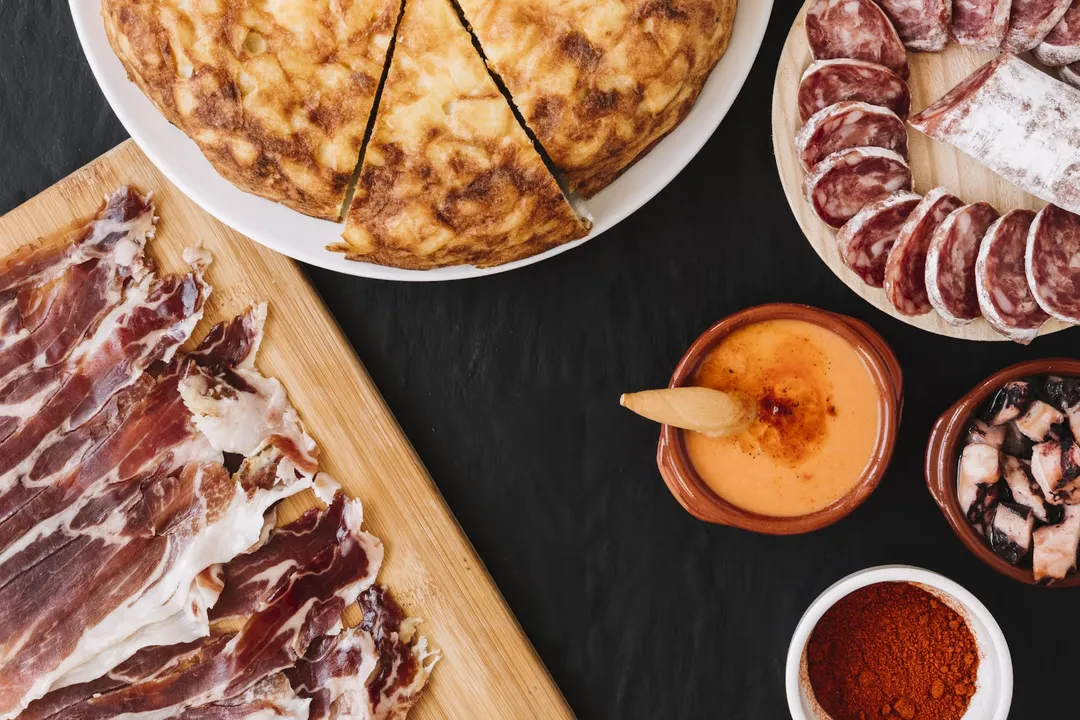
The Tortilla Española is distinguished by its heft, density, and substantial nature when compared to French-style omelets, which strive for a delicate, barely set texture. The Spanish version is designed to be thick and robust enough that it can be sliced into wedges (pinchos) or eaten as a main course while maintaining its structural integrity, functioning more akin to a dense frittata or a savory cake. This density makes it an excellent, filling option compared to lighter fare, reflecting a culinary tradition focused on substantial, sliceable food rather than runny interiors.
Related Questions
To which region is the dish Paella intrinsically tied according to its authentic spirit?What is the name for the desirable, slightly toasted, caramelized crust on the bottom of a perfectly cooked Paella?What three primary ingredients define the core of the deceptively simple Tortilla Española?What specific ingredient inclusion in Tortilla Española sparks one of the most enduring culinary debates in Spain?From which southern region does the iconic cold soup Gazpacho, reflecting reliance on sun-drenched produce, originate?Which vine-ripened vegetable forms the bulk of the body and sweetness in the foundation of Gazpacho?How should the rice in a well-made Paella be characterized regarding its liquid content and texture?How does the structure and density of Tortilla Española set it apart from delicate French-style omelets?What ingredient is irreplaceable for providing Paella's signature color and aroma?What substantial chickpea and vegetable stew contrasts sharply with Gazpacho's raw freshness, often found in the north or center?